Monster Hunter Rise: Sunbreak Review
A review of the Sunbreak expansion for Monster Hunter Rise: a new European-style setting in the port of Elgado, Master Rank, 17 new monsters and Follower Quests, but lifeless maps, an ignored Rampage mode, toothless difficulty and a monotonous late-game grind.
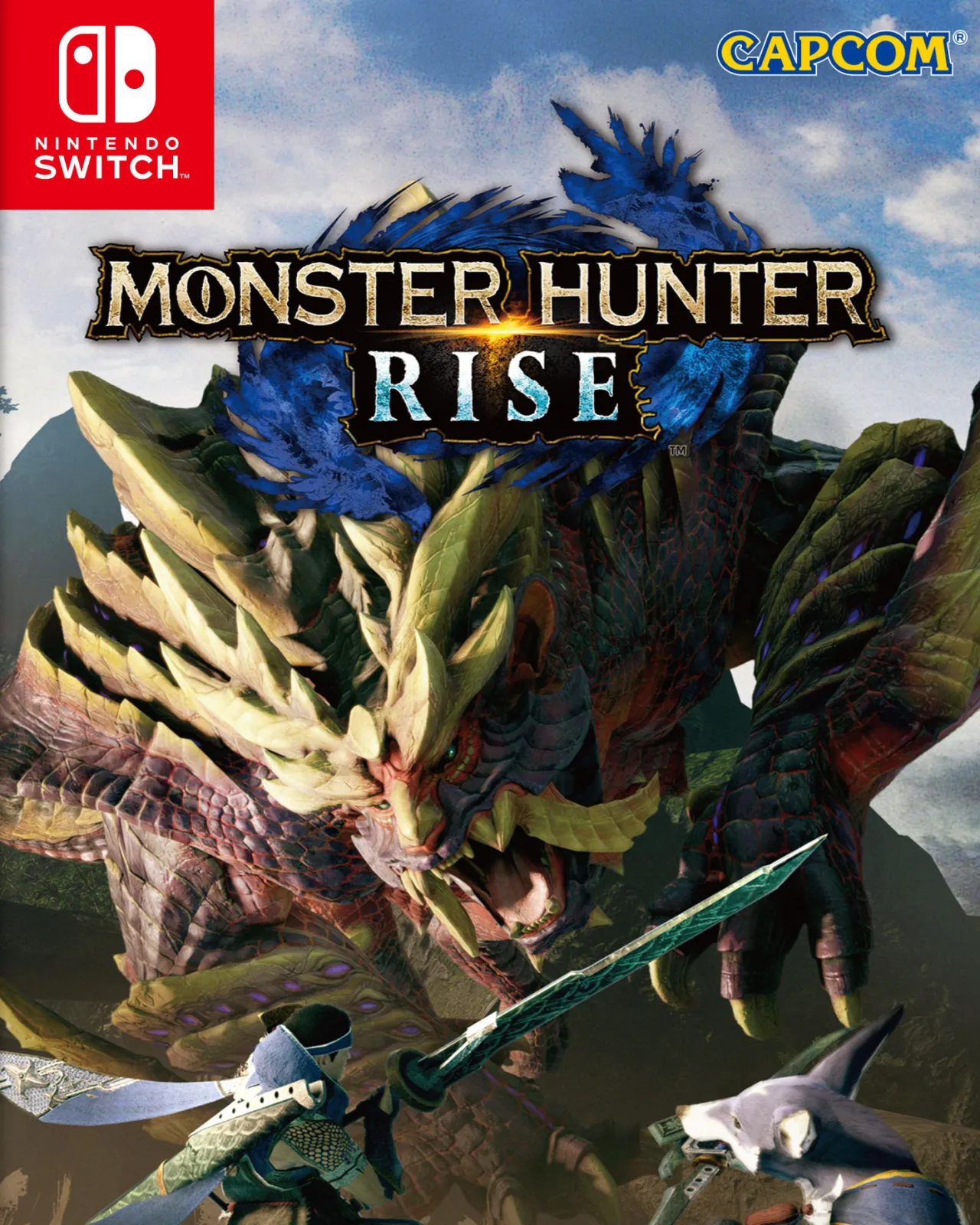
As part of the support for its hit action game Monster Hunter Rise, Capcom has released a major content expansion subtitled Sunbreak. The developers have stocked up for players a new difficulty mode, an additional story campaign and many minor fixes. The DLC came out on Nintendo Switch and PC simultaneously, on the same day.
Monster Hunter Sunbreak — is a global expansion for Monster Hunter Rise. For context, it is worth reading the review of Monster Hunter Rise.
After the victory over the ancient serpents Narwa and Ibushi, the Rampage of monsters finally ended, and the village of Kamura is no longer threatened by anything. However, danger came from where it was not expected. An ancient beast awakened on overseas land intends to destroy the local kingdom, because of which the state's defense forces were forced to turn to Kamura's great hero for help.
The main action of the expansion unfolds in the trading port of Elgado. While the base version of the game was based on Japanese culture and folklore, the expansion draws inspiration from European style with giant castles and shining armor. The approach to storytelling has also changed — Sunbreak features far more story cutscenes than Rise.
In its first hours the expansion unfolds rather slowly. The vast majority of new monsters are saved for the second half of the story campaign, so at first you will have to hunt familiar creatures from the original Rise. In all, Sunbreak features exactly 17 new monsters, which is quite few compared with similar expansions of the series' previous games.
Incidentally, among the refreshed zoo there are several creatures iconic to fans. First of all, Gore Magala — the titular monster of Monster Hunter 4, which inflicts on hunters a unique status effect called Frenzy. The second interesting specimen is Espinas, the first monster in more than ten years to debut in Monster Hunter Frontier and be added to the mainline games.
The developers have already announced a “roadmap” of free updates, judging by which until the end of 2022 hunters will receive about a dozen new monsters and their variants.
The expansion's main feature is traditionally a new mission difficulty mode — Master Rank. Ingredients obtained in these missions can be turned into powerful armor and weapons or processed into talismans.
The overall difficulty of the gameplay has noticeably risen but will still seem trivial to long-time fans of the series. Monsters have become faster, stronger and more aggressive, yet they still lack the strength to stand equal against hunters and their companions. Given the expanded arsenal of skills using the Wirebug, even the slowest and clumsiest weapon can become incredibly mobile and strong, leaving monsters not a single chance to resist.
Besides monsters, the expansion brought several new locations to the game. The first of them, the Jungle, is a reworked version of the zone of the same name from Monster Hunter 2. The second is a completely new map called the Castle, which is a complex mountain biome with many man-made structures.
Unfortunately, both old and new locations feel rather lifeless. Monsters wander the ground aimlessly in random directions, interacting neither with their own kind nor with the world around them. The developers equipped the fresh maps with a couple of natural traps, but they are all rather primitive and bring no variety to the fights.
One of the most interesting innovations is Follower Quests. In missions of this type the player goes hunting together with story NPCs controlled by artificial intelligence. About 10 allies are available to choose from in all, including both old friends and new acquaintances. Among the possible partners you can find the main characters of the original Monster Hunter Rise, such as the elder of Kamura village, Fugen, or the twin sisters Hinoa and Minoto.
During the hunt, followers enter into dialogues with each other and with the player, which lets the characters be revealed from a new side, unobtrusively advance the main story and fill out the overall picture of the world. Follower Quests could have become an excellent alternative to multiplayer hunting, but computer allies can be used exclusively within special quests, of which there are quite few relative to ordinary missions.
At the same time, the developers completely ignored the Rampage mode, which was one of the key novelties of Monster Hunter Rise. Quests in this mode stop appearing right after the final mission in Kamura village, which of course makes sense from the standpoint of story narration.
Rampage was received coolly by the community. Among the main problems players noted excessive length and repetitiveness, but still expected the developers to at least try to fix these shortcomings with the release of Sunbreak.
The core gameplay that players love the Monster Hunter series for is gradually developing and only getting better. Nevertheless, some key aspects of Rise and Sunbreak, such as the hunters' high mobility, sometimes seem excessive.
In the end, Sunbreak does not captivate as strongly as one would like. Fights with monsters pose no serious challenge, and rewards for completing hard missions are entirely tied to luck. The lack of timed events, unique quests and collaborations turns gameplay in the late stages into a monotonous grind for a ghostly chance of obtaining slightly better gear.
Monster Hunter Rise became one of the most controversial releases in the series, and Sunbreak did not improve the situation. On the one hand, we have a classic Monster Hunter with plenty of beasts to beat and hurricane-paced gameplay. On the other — the feeling constantly lingers that something is missing. Enemies could have been stronger, locations livelier and the story more interesting. If you turn a blind eye to the minor flaws, it is easy to drown in Sunbreak for tens or even hundreds of hours, but on the whole the game turned out too ordinary and bland, which is why it can bore you right after finishing the story campaign.
Based on material from GameMAG. Translated from Russian.