Cereza in Wonderland: Bayonetta Origins: Cereza and the Lost Demon Review
A review of Bayonetta Origins: Cereza and the Lost Demon: the author praises an accessible fairy-tale game with control of two heroes at once, its visual style and soundtrack, and notes the low difficulty, simple fights and an almost pointless potion system.
As if mocking the drawn-out silence between the formal announcement of Bayonetta 3 and the game's release last year, the news of the existence of Bayonetta Origins: Cereza and the Lost Demon was dropped on the public like a bolt from the blue. And what news: instead of hypersexualization there would be a fairy tale, instead of dynamic hack-and-slash madness it was time for cozy walks in the forest, and elaborate executions of angels with demons gave way to puzzles and asymmetric control of two heroes at once.
But surely it cannot be that simple? What fairy tales, puzzles and asymmetry, and in a Bayonetta game at that? Somewhere there must be a surprise, the ground knocked out from under your feet. After all, this is the brainchild of the PlatinumGames team.
And there really is a surprise, but in a completely unexpected format. Bayonetta Origins: Cereza and the Lost Demon is an extremely accessible, clear and easy-to-grasp thing. A neat children's toy that does not try for a second to be more complicated than it seems at first glance, in which, ultimately, its main value lies.
The secret of any good fairy tale is a talented storyteller, a convincing figure capable of giving even the simplest narrative the necessary texture and mood. In Cereza and the Lost Demon a talented storyteller is present: a soft voice leads the player through a thick and bright book full of memorable illustrations, and the story of the coming of age of a young witch and her unexpected ally.
Born of a forbidden union, from early childhood the girl Cereza grew up as a lonely outcast. Her separation from her parents added to the problems — her father was sent into exile, and her mother became a victim of indefinite imprisonment in a dungeon. Cereza could still see her mother, but that joy did not last long either — soon the family was broken up for good. Unwilling to put up with her situation, Cereza escaped from her town and settled in the house of the mighty hermit witch Morgana. The sorceress took the girl under her wing and began to teach her the basics of magic, planting in the heroine's heart a faint hope of being able to save her mother and once more sink into her embrace.
The following months Cereza spends in diligent training, but despite the strictness and kindliness of her new mentor, the restless young witch does not abandon the idea of rushing to rescue her family as soon as possible. The girl is spurred to action even more by a mysterious vision in which an unfamiliar figure addresses her through a dream, calling Cereza to go to the Avalon forest, from which an ordinary person has no way back.
Deciding that the key to saving her mother is hidden in the crowns of the magic trees, the witch turns a blind eye to Morgana's warnings and recklessly sets off toward a great adventure. An adventure that almost ends in tragedy. Cereza ends up in a trap, the way is barred by unwelcoming fairies — evil creatures with no habit of showing mercy to strangers. With her last strength Cereza summons a nameless demon to her aid, and it successfully copes with its mission. But here is the catch — by a joke of fate the hellish spawn ends up bound to a rag doll of the cat Cheshire — the last gift to Cereza from her beloved mother. Finding in the animated Cheshire her only companion and ally, Cereza finally begins her journey, where, of course, dangers, discoveries, small defeats and big victories await her.
It is very important to convey in detail the subtleties of the setup of Bayonetta Origins: Cereza and the Lost Demon. For the reason that until the last act the game will serve up no more big narrative surprises. Instead a simple but functional story becomes a straight road on rails that rolls you through familiar dramatic episodes and the general game structure. This does not mean, however, that there will be nothing to be surprised by. The characters and key events described here are a new component of the common canon of the universe (or by now the multiverse) of the Bayonetta brand. But for comfortable enjoyment of the game all these details are not required at all — Cereza and the Lost Demon is not at all about complexity, including with regard to the plot threads prepared by the writers.
At the same time the game's overall accessibility in the first stages of getting acquainted with it may somewhat contrast with the unusual control model. This is because instead of Cereza alone you will also have to control Cheshire's actions. And most often both at the same time. The system is implemented as follows: the left Joy-Con controller is given entirely to the actions assigned to the young witch, and manipulations of the right controller let you make decisions for the big demonic cat. The camera always stays fixed and keeps isometric shots, changing depending on scenes and certain contextual situations, creating the accents the designers need. You cannot lead the two characters away from each other by a significant distance, so Cereza and Cheshire usually always stay within one “screen”, and if one of the heroes falls outside the camera, the game conveniently highlights that character with a small icon.
In essence the whole game can be completed without particular obstacles in a sort of cooperative mode on one screen. It is enough to split the controllers between two players and put up with the compromises of the limitations imposed on Cereza and Cheshire. The main thing to remember is that the girl is the central character and the main vector of progress, while the kitty performs mainly combat tasks and the “dirty” work.
Cereza's key feature is the ability to perform magic spells with a modest dance that requires you to catch a light rhythm with a stick movement. With magic the heroine activates various elements of the environment — opens flower buds, grows tree branches and opens new paths. Another use of magic is closing immobilizing shackles on opponents, thanks to which enemies temporarily lose mobility. Besides, the girl can carry the Cheshire doll in her arms and use it as an additional tool for interaction or toss it into places she cannot reach herself.
The kitty, in turn, becomes the duo's brute force. If a fight is brewing, Cheshire can easily dispatch enemies with fangs and claws. Nothing extravagant, especially in the early stages — three consecutive attacks and a charged bite, which serves as a combo finisher or an automatic finishing blow on an already weakened enemy. No launchers or aerial strings — everything is very modest. Gradually the combat system does take a few cautious steps forward. For example, Cheshire gets four elemental forms at once, each with unique properties. One of the options, for example, lets you parry attacks, the second takes away the fairies' shields and protection, and the third can soak up far more enemy damage.
The need to control Cereza and Cheshire at the same time gives battles an edge. Only the girl has a full health bar, while the cat, having taken too many attacks, simply turns into a doll, after which you have to wait some time before it pulls itself together. However, considering the demon is your only attacking option, it is in the player's interest not to put it under fire unnecessarily. Thanks to such simple dynamics even the most ordinary skirmishes demand a certain amount of attention — you deftly dodge parallel attacks with both heroes, keep Cereza close to the opponents to immobilize them in time, and use Cheshire's arsenal to finish the battle quickly with minimal losses.
Nevertheless, you should most definitely not expect any serious difficulty from the fights. The game is simple, very simple. Moreover, if for some reason the standard difficulty seems uncomfortable to you, it can be adjusted modularly, effectively automating entire game mechanics. Obviously this approach was implemented out of PlatinumGames' wish to reach a broad audience of users, including very young players.
It is impossible to formulate serious complaints about the game's low demands on your skills, especially considering that fights take up an insignificant part of the whole playthrough. The only serious remark regarding difficulty is the fact that the accessibility of the fights almost nullifies one of the gameplay mechanics, namely the potion system. Jars and vials with caustic brews can restore Cereza's health, her magic potential and Cheshire's strength, but you are unlikely to find a reason to use them — battles end faster than the need for the concoctions arises.
One of the charms of the mechanical modesty of Bayonetta Origins: Cereza and the Lost Demon lies in the deft and consistent use of a limited number of gameplay systems in the most inventive variations. All of Cereza's and Cheshire's abilities available to you in combat also find use in exploring Avalon. The blows of the strong kitty break dry tree branches, revealing unexplored trails, the witch's spells breathe life into still-sleeping plants, and the rag doll stretches into a magic rope capable of carrying you to the other side of an unwelcoming precipice. All these actions are performed through intuitive controls that remain true to themselves regardless of the interactions on screen.
The game also manages to keep an equally even pace, neither stalling in place nor sliding into excessive self-quotation. Over ten to twelve hours of playthrough Cereza and the Lost Demon never betrays the set dynamics — literally every half hour you are shown new enemies, abilities and puzzle combinations, changing the scenery along the way and bringing new characters onto the stage, diluting the story with small sketches in comic or touching colors.
In spirit, Cereza and the Lost Demon tries to take on the design philosophy characteristic of many classic Japanese adventure games. Among the most direct and obvious associations are The Legend of Zelda and Okami. For various reasons united by one idea — natural gameplay progression, where complex and bright levels gradually yield to the powers of players driven by natural curiosity and a steadily expanding arsenal of skills.
The thickets of Avalon are a complex labyrinth where hundreds of treasures are hidden. Magic artifacts that let Cereza and Cheshire grow stronger, potion ingredients and Spirits in trouble — far from all of this is carefully scattered along obvious paths and routes, which means that to find all the secrets you have to look carefully under every little bush or suspicious tree. Most prizes will not require excessive effort or a serious investment of time; literally a couple of minutes is enough to find another chest and hear the game melody accompanied by the ringing laughter of Cereza, delighted by a useful find.
The most detailed part of the optional content in Cereza and the Lost Demon is the pocket dimensions — special rifts in reality found in remote corners of the forest. You will find some of them in the course of natural progression, but a substantial part will have to be sought out on your own. The rifts are small “dungeons”. If you played The Legend of Zelda: Breath of the Wild, you can imagine the Shrines — the concept is the same. In these dungeons some trial awaits you — a series of rooms or arenas honing your skills. In some you have to fight opponents under special conditions, in others avoid damage. Some rifts hinge on solving spatial puzzles, others become a test of dexterity, and the most interesting ask how well you have mastered controlling Cereza and Cheshire in parallel. Visually, true, all the rifts look absolutely identical, but this can be forgiven against the background of the beautiful visual execution of the other sections.
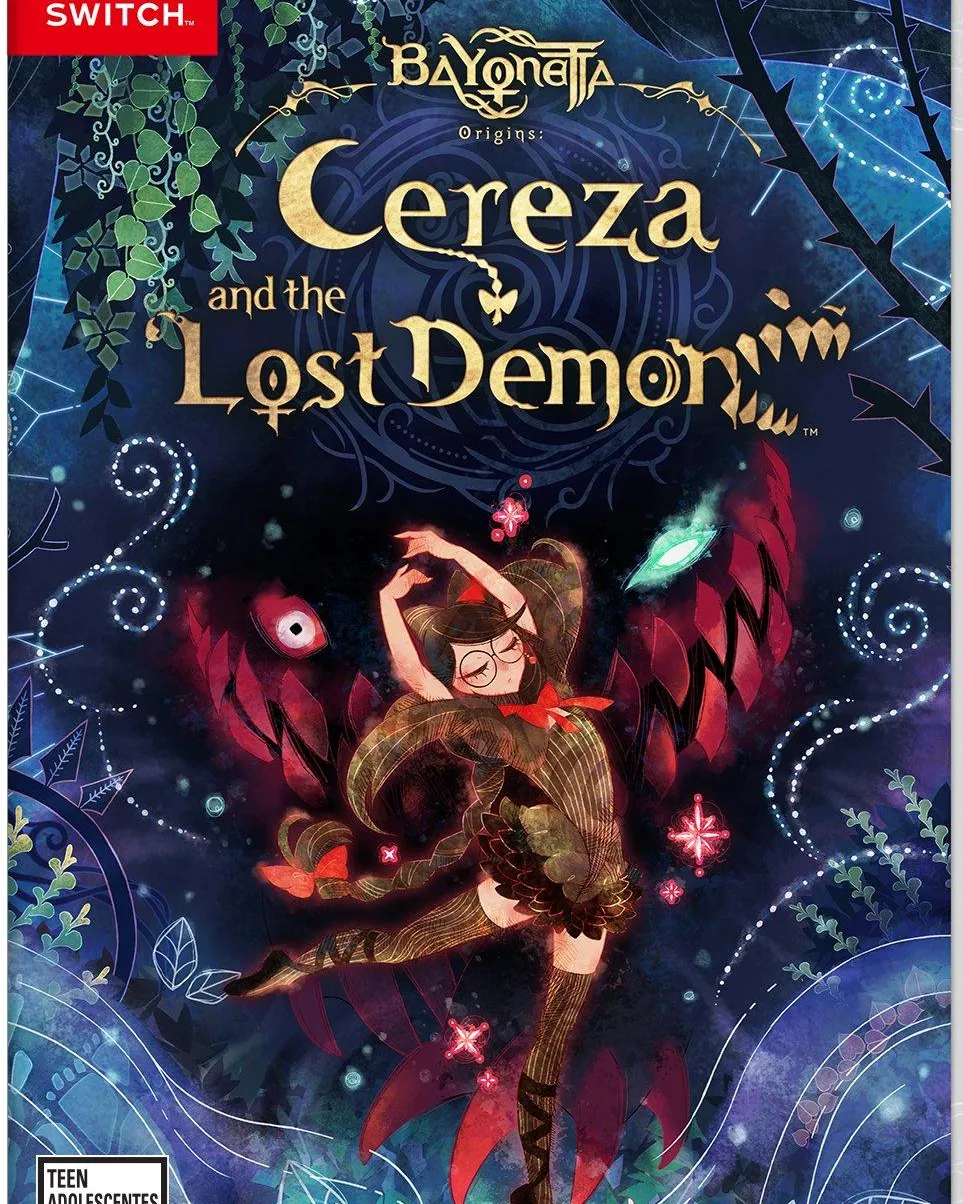
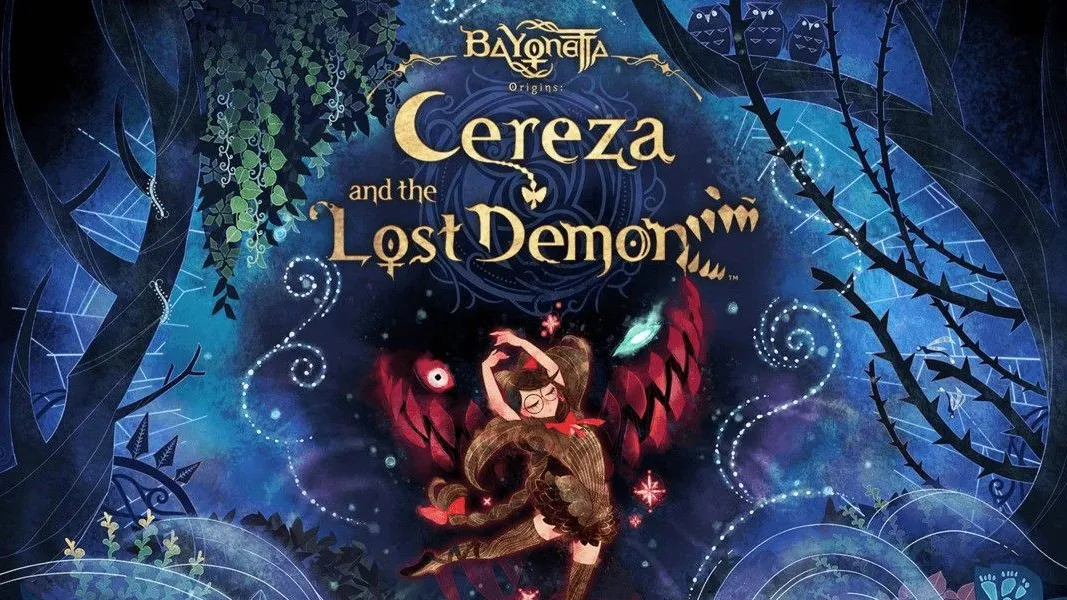
Bayonetta Origins: Cereza and the Lost Demon is a most beautiful game, where the alternative to high detail was a bet on pastel stylization with contrasting deep tones and shades. Do not look for the beauty in screenshots — the project's resolution is low and the rendering algorithms do not flatter the picture in a still — all the magic collapses at once. But take my word for it, or better yet watch live gameplay — almost every level here looks like a soft sketch by a talented illustrator, refined with a dozen dynamic details. The greatest wonder is that despite the “noisiness” of the image, levels very rarely lose legibility — it is always clear where you need to go, where you can go and where you should not go. And if you do get confused, you can resort to the help of the map — it shows at once where you are, but plotting a further route on it is somewhat inconvenient, this point is not implemented in the best way.
The character models, despite their obvious minimalism, also turned out expressive in the artists' hands. In large part this is achieved through very cute animations — Cereza performs all actions with fluffy theatricality, like a toy figure in the hands of a careful and creative child. The animations also have a certain number of variations — even familiar actions the heroine gradually starts performing differently, settling ever more into the role of a young sorceress. Cheshire deserves praise too — bites and swats with paws almost like a real demonic cat.
The impression of the external presentation of Bayonetta Origins: Cereza and the Lost Demon is finally sealed by an amazing soundtrack. A lush album of varied music was recorded for the game, suitable both for forming the emotions appropriate during the playthrough and for separate listening. The tracks turned out varied and distinct — gloomy ambient, light instrumental parts, tender melodies and a most beautiful closing song with vocals in Irish. Some compositions even evoke a pleasant and highly unexpected association with the music that Nobuo Uematsu wrote for games of the Final Fantasy line in the era of the original PlayStation — there is something nostalgically light in them. And if you are familiar with the musical picture of the previous Bayonetta installments, you can prepare your ears in advance for splendid fan service — there will be plenty to enjoy.
By the end of the playthrough Bayonetta Origins: Cereza and the Lost Demon is perceived as a sudden gift packed in an elegant box decorated with a lush, bright bow. A wonderful example of a confident and engaging game suitable for the widest audience, including children. But even if you are a big, stern grown-up with a thick beard — still do not pass it by, for even grown-ups sometimes want to believe in fairy tales. And you will be able to believe in the story of Cereza and Cheshire from the very first moments.
Based on material from GameMAG. Translated from Russian.