You Are in a Ubisoft Game, Harry: A Review of Hogwarts Legacy
A review of Hogwarts Legacy from Avalanche Software: an open world with a wonderfully recreated Hogwarts and a varied combat system, but with formulaic loot-shooter content, a weak story and school life, a fake choice between good and evil and technical problems; the author calls it a good gift for fans but not a masterpiece.
The video game path of the Wizarding World turned out to be quite thorny. Electronic Arts gave the franchise a powerful start with a whole bunch of solid games, but the growth in financial and time costs of production as two console generations changed in a row led to new projects gradually degrading into absurdity, when Harry Potter in the style of Gears of War hid behind cover using a magic wand as a machine gun.
After the license moved under the wing of WB Games the situation did not improve. Despite a couple of solid LEGO games, the publisher released frankly weak projects. And only now has a project come to market that fans of the “Potter-verse” dreamed of. And let us be frank — there are criminally few big games about schoolchildren's adventures on the market; right now only Atlus with its Persona series carries the load for everyone.
The nuance is that against the background of the Warner Bros. company's problems all internal projects landed in production hell, and their creation began at a time when big publishers were sure that the future of the industry lay in live-service games. And this is clearly visible in Hogwarts Legacy.
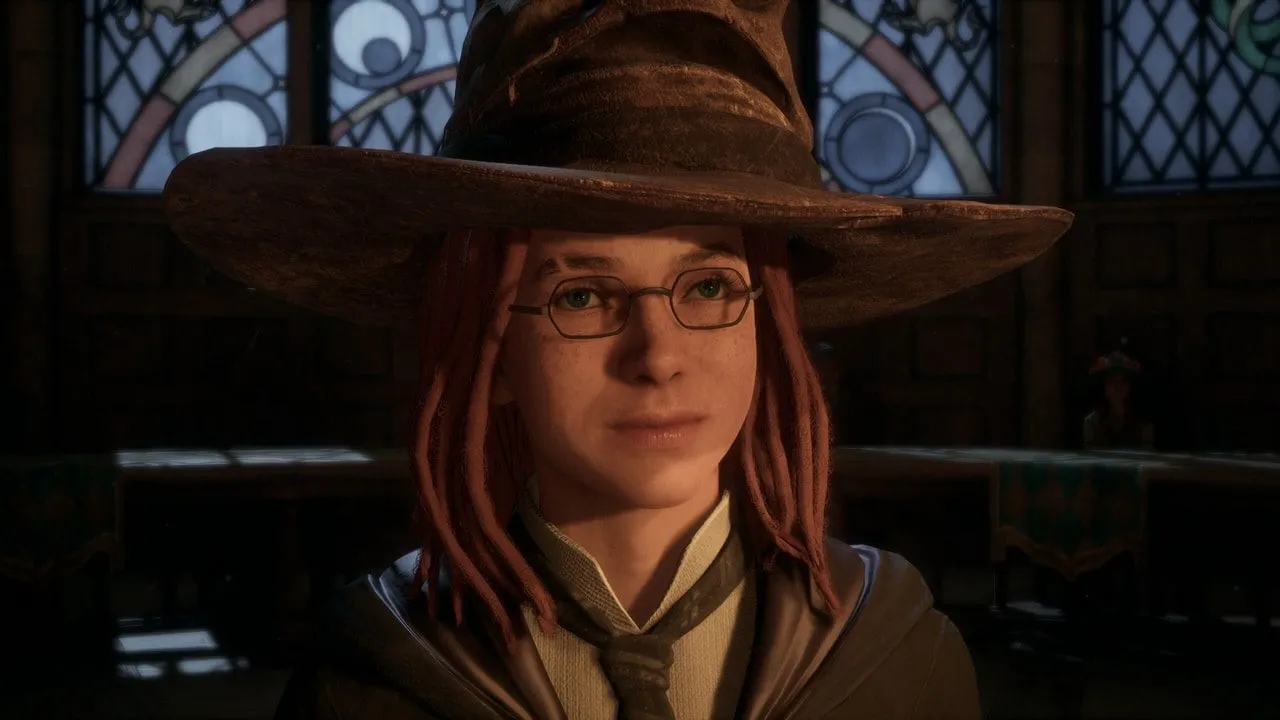
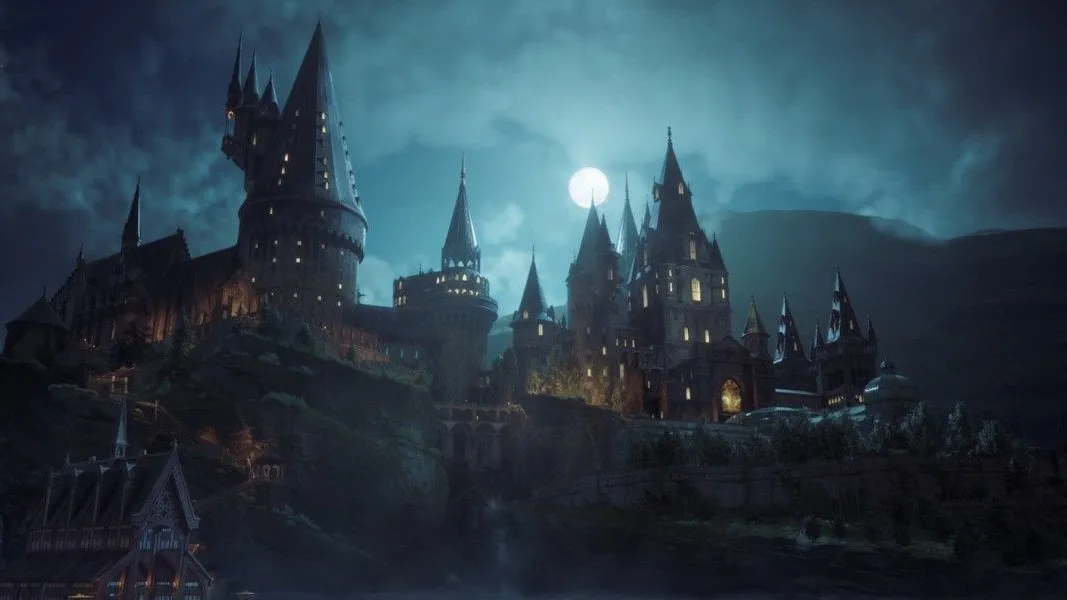
The introduction causes sincere delight. Yes, the storyline turned out rather toothless, and you have to play as a Mary Sue. But you do not want to pay attention to this, since Hogwarts and Hogsmeade look simply stunning, sending shivers down your skin. The atmosphere of the books and films is conveyed so accurately that for the first 10 hours the player will simply run around the castle and its surroundings with a silly smile on their face in search of numerous secrets.
On this is strung a combat system that entertains with a variety of possibilities. You have to build powerful combinations from spells, and some enemies require an individual approach. Say, Inferi (the local undead) become vulnerable to attack only if they are set on fire. A group of opponents can be pulled toward you and then hit with an area fire spell. Or you can turn the victim into a red barrel and launch it into a crowd of opponents.
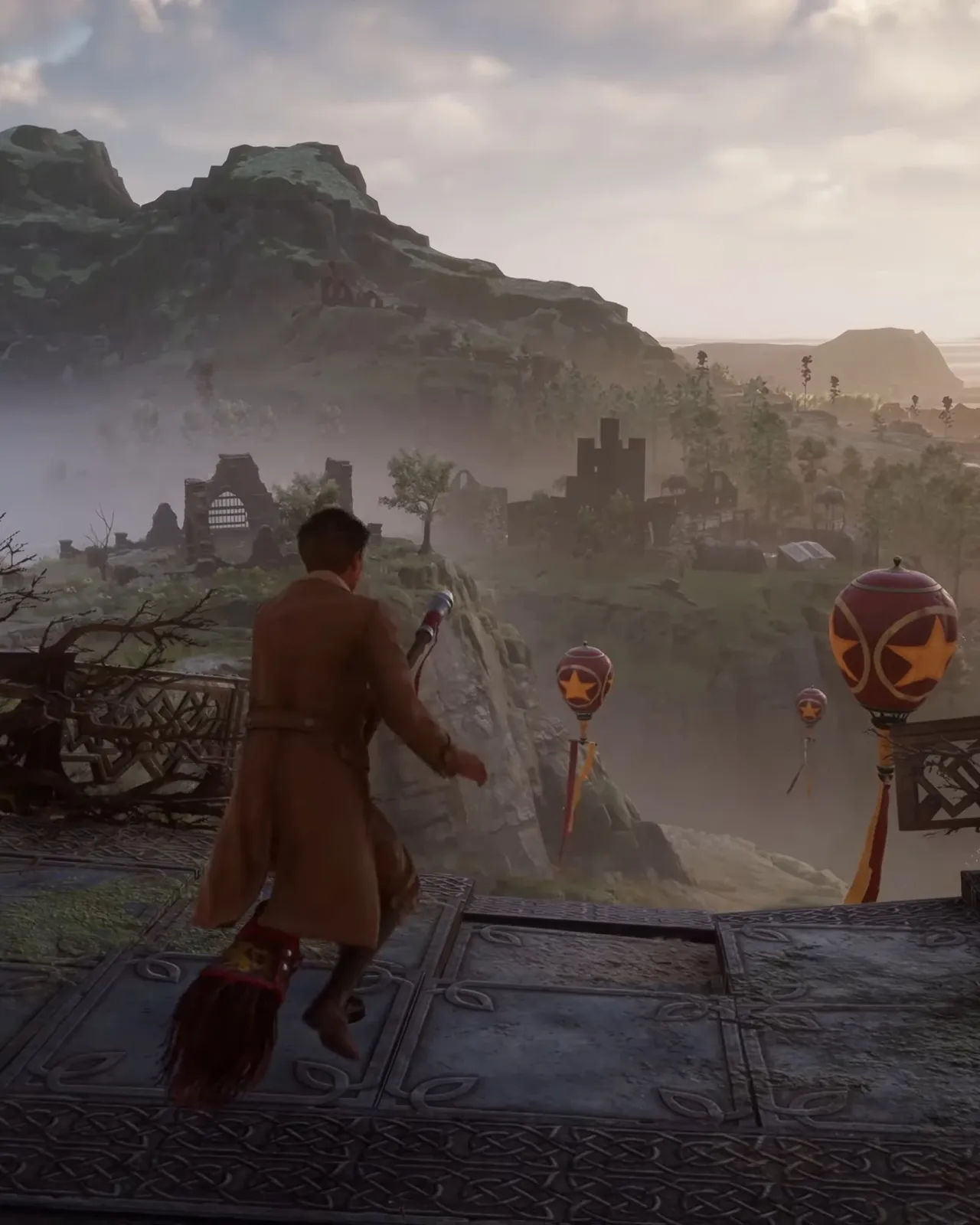
So that the gameplay does not get boring, it is periodically alternated with stealth or unusual gameplay conditions are thrown in. For instance, at one point the hero ends up in a book based on “The Tales of Beedle the Bard”. And one should not forget about broom flight, which in the middle of Hogwarts Legacy you are allowed to replace with a hippogriff or a thestral.
However, over time you begin to realize that at some point development turned the wrong way. Although it is the school activities that arouse the greatest interest, their development leaves much to be desired. Most lessons are presented as cutscenes, professors are given minimal time, and Quidditch was simply “forgotten”, the omission covered with the explanation “Headmaster Black banned the matches”.
At the same time, here and there the developers' original vision shows through, as they clearly wanted to make something in the spirit of Bully. For instance, characters several times advise the player not to roam Hogwarts at night, since prefects patrol the corridors. In reality this is demonstrated in just a couple of story missions. The companion system has also been cut (modders have already restored everything).
The rivalry between houses is not manifested at all either — the hourglasses for counting points standing in the castle literally do not work. And there is no feud between the groups — everyone is pointedly tolerant and cloyingly friendly.
The main focus in development was placed on creating a huge map with loot-shooter elements. Here there are uniform bandit camps, ruins, dozens of collectibles, several villages, trials, animal lairs, caves and so on and so forth. The reward for clearing the space is chests with randomly generated clothing.
There is no desire at all to explore the world beyond Hogwarts, Hogsmeade, the Forbidden Forest and the Black Lake. One reason is that the local map resembles a narrow gut, where the most interesting is concentrated precisely in its upper part. There is even an analogue of an appendix here — several big regions that can only be reached through a goblin tunnel. The appendage turned out so unnecessary that even the season-change system does not affect it.
Weighty reasons in favor of clearing locations get lost at some point altogether. Especially telling in this respect is the collection of demiguise statues. Initially this is necessary to get new levels of the Alohomora spell, but then the developers themselves waved a hand and said — the rest are collected for the achievement. And as for the landing trials with platforms, Avalanche Software simply forgot to tell the players about them.
The prevalence of quantity over quality also hit Avalanche Software's favorite feature — the sandbox location. In Hogwarts Legacy it is implemented in the form of the Room of Requirement, where you can set up the surroundings yourself, put up tables for brewing potions and beds for growing plants. The passages to habitat biomes where fantastic beasts rescued from poachers run around are there too.
But the sandbox noticeably lacks depth. There are only a few plants and potions, and the possibilities for interacting with pets are fewer than in the cheapest analogue of the “Tamagotchi”. In the end it all comes down to banal collection of fur and feathers needed for upgrading equipment. But even that makes no sense, since this is a loot shooter in which new equipment pours down in a constant stream.
The storyline turned out too superficial and skimmed, although it is full of fan service. The main conflict revolves around attempts by revolutionary goblins to seize vaults of Ancient Magic scattered around the Hogwarts area. And it just so happened that only the main hero can use this ancient magic.
Three side lines devoted to schoolmate friends are tied to the main story. Only the line of Sebastian Sallow arouses any interest, who, to save his sister from a curse, starts down the path of a dark wizard. The quest hierarchy is closed by secondary mini-stories and various trials.
Only there is practically no variability in dialogue, and you are offered to play either a purely positive character or a slightly self-assured one. This looks especially silly in a side task in which the hero helps a Ravenclaw student find her Snargaluff stones. We can refuse to return them, after which the upset girl will go out to the yard to… play with the stones taken from her.
In those moments where you are nevertheless offered a choice between good and evil, everything is staged so absurdly that it can destroy all immersion. This applies especially to the “good” and “bad” endings, the differences between which are so minimal that it is unclear why a single variant could not be enough.
The picture is completed by the typical syndrome of recent years — rawness and unfinishedness. The game has plenty of optimization problems (on Xbox Series S when moving between different parts of Hogwarts you have to admire a full loading screen), and bugs can range from impassable quests and trials to a character falling through the ground textures. More than once or twice when teleporting from one location to another the surroundings may turn green or purple.
We also managed to find a cave for which the developers forgot to add an entrance. The cherry on the cake is the loss of three hours of progress, because after completing a trial to destroy five waves of enemies for some reason an old save loaded.
Xbox Series S
Hogwarts Legacy cannot be called a bad game. It is an excellent gift for fans of the “Potter-verse” and lovers of Ubisoft-style projects. But to acknowledge Avalanche Software's creation as “game of the year” is also silly — the project clearly suffered from long development, production hell and the wish of WB Games' management to make a safe project for a wide audience that would meet modern AAA industry standards.
In the first two weeks of sales Hogwarts Legacy sold 12 million copies, so production of a sequel is inevitable. And one hopes that in the next game the development team will nevertheless focus on fixing the shortcomings, shifting the emphases along the way.
Based on material from GameMAG. Translated from Russian.