Triple Nightmare: Resident Evil Village: Winters' Expansion Review
A review of Resident Evil Village: Winters' Expansion: the author praises the third-person mode and the updated Mercenaries mode but calls the Shadows of Rose campaign weak, short and unnecessary and believes the modes should have been released for free.
After a long pause, the publisher Capcom invited the audience to return to Resident Evil Village. The occasion for another trip to grandma's village was the release of Winters' Expansion — a set of add-ons in three parts.
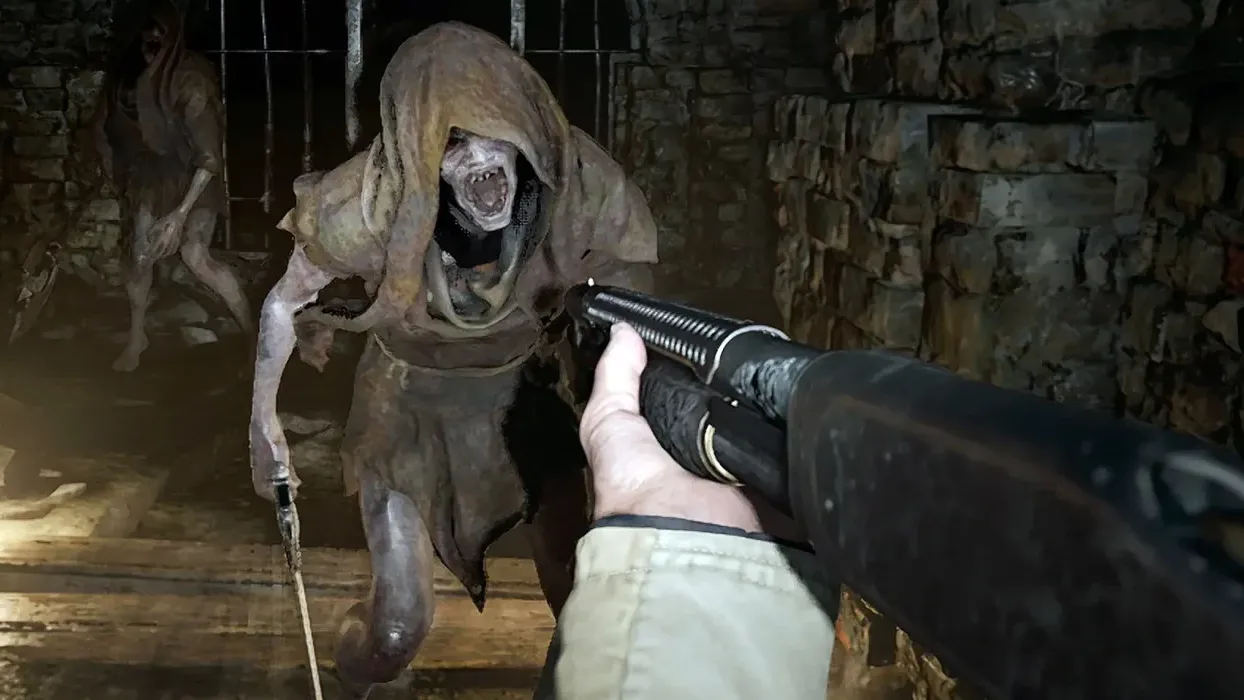
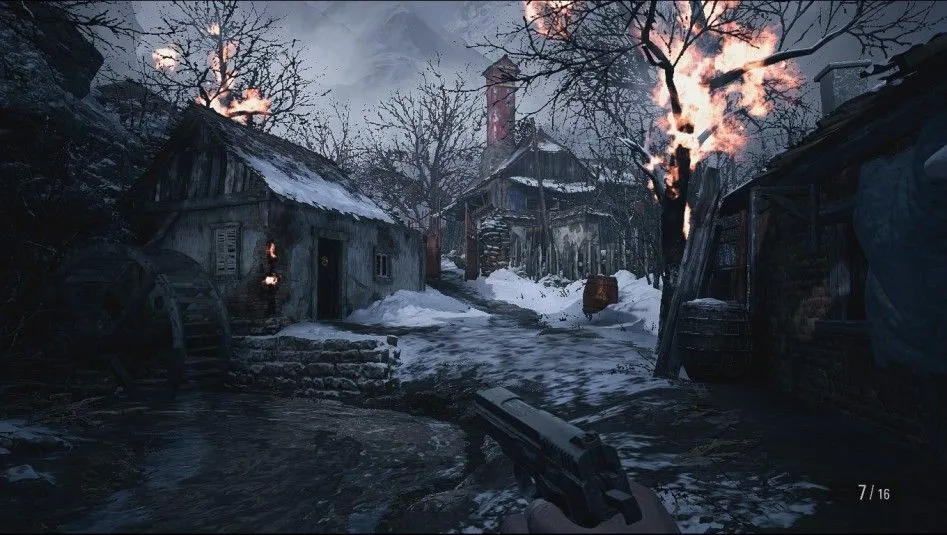
The first item in the package is an option that lets you play the main story campaign of Resident Evil Village from a third-person perspective. All the content of the original game stayed in place, but you can now look at it not through the eyes of the anxious and unhappy dad Ethan Winters but from behind the broad shoulders of a reluctant hero.
The second part of the DLC is an expansion of The Mercenaries mode (“Mercenaries”), adding three new playable characters — Chris Redfield, Alcina Dimitrescu and Karl Heisenberg — and two additional maps.
The cherry on top of Winters' Expansion is meant to be Shadows of Rose — an additional story campaign that endows the Village story with new details and the gameplay with new mechanics and situations.
More on everything below.
Third-Person Mode
The announcement of Resident Evil 7 was met negatively by part of the audience. Besides a number of thematic, narrative and artistic changes, conservative fans were very worried by the new camera — far from all players wanted to look at scary pictures through the protagonist's eyes.
In Resident Evil Village, preserving natural sequence and continuity, the camera was kept the same. This, however, by no means means that Capcom didn't listen to complaints and criticism, the natural reaction to which was the implementation in the game of a third-person mode as part of Winters' Expansion.
Visually the option is easy to describe. In essence the camera here is almost identical to the one presented in the remakes of Resident Evil 2 and Resident Evil 3. With the correction that the virtual cameraman cannot dance around the main hero — the developers still hide Ethan's face, so as soon as the shot moves a bit farther than his profile, the character fully turns toward the direction of the camera's movement.
The Capcom specialists tried to enrich Ethan's movements with a lot of detail — the character moves naturally, interacts organically with the environment, performs contextual actions and looks appropriate against the background. There are no problems with the scale of locations relative to the hero's model either.
The obvious “but” in all this is the implementation of cutscenes. Capcom didn't re-record tens of minutes of material, so all story episodes that take control of the character from the player are still done in first person. In such moments the camera almost always works without hard cuts and smoothly zooms in on Ethan, after which the game goes into the cutscene.
In most situations there are no complaints about this approach, but in the opening sections of Village, where the number of cutscenes per hour of gameplay is very large, funny and somewhat awkward episodes result — jumping from tiny interactive stretches to staged cutscenes, the camera has to adjust and constantly change perspective. Fortunately, there are very few such moments in the entire game.
At the same time the technical execution of the mode as a whole deserves praise. The designers successfully balanced all external attributes without sacrificing gameplay convenience — aiming is easy, the field of view value is high enough. Ethan responds quickly to button presses and even gained in mobility — the game feels slightly faster, probably precisely thanks to the increased FOV. One can scold only the somewhat awkward process of picking up items — the camera has to be placed at a very specific angle, otherwise the needed bush or box of ammo can't be pocketed.
An important clarification — the new camera can be turned on and off freely at any moment of the game (though for this you have to go to the main menu). In the campaign there is also exactly one moment where the gameplay camera is still limited to first person only — this happens in the fight with one of the climactic bosses.
From the artistic point of view, however, it is much harder to evaluate the new camera of Resident Evil Village. Even if you have never played the game with the “through-the-eyes” camera before and immediately switch on third person, at some point you will still certainly feel that the game was created with the first-person view in mind. Behind Ethan's broad shoulders many visual details of the beautiful interiors, the scale of the surroundings and all manner of scare tactics are simply lost — it is very hard to flinch at a barely flickering shadow, especially if seeing it does not seem possible.
And yet, if the intimacy of Village's original camera puts you off, the new mode may become a salvation for you, even if somewhat clumsy in places. For a replay of the game the third-person camera will also do — it gives exactly what is most reasonable to expect from it, namely an unfamiliar look at familiar things.
Updated The Mercenaries
The “Mercenaries”, which debuted back in the original Resident Evil 3, is an almost traditional-for-the-series gameplay-oriented arcade mode betting on quick and effective destruction of large waves of enemies.
In Resident Evil Village the mode is obviously inspired by Resident Evil 4 with the correction of ability modifiers and intermediate stops with the option to buy supplies and upgrade weapons.
Winters’ Expansion adds three new playable characters and two additional maps to “Mercenaries”. The integration of the bonuses into the game is the most direct — if the mode is already unlocked for you, then after buying the DLC you can immediately get to know the new content. The only condition is natural gameplay progression.
So, to unlock the first new map you will first have to clear four standard levels with an “A” rank. The second new map opens after clearing the first with the same “A” rank.
Unlocking characters follows a simple scheme. Ethan and Chris are available right away, Heisenberg is added to the roster as soon as all maps, including the new ones, are cleared with an “A” rank, and Alcina can be played only after getting an S on the Bloody River map.
Chris is an analog of Ethan, but with an excellent weapon set and unique abilities — the ability to deliver crushing boulder-like blows with his hands. Melee attacks also build a special gauge, filling which Chris goes into “berserker” mode, because of which his mobility, reload speed and damage sharply increase.
But Alcina and Heisenberg differ from the first two characters in gameplay noticeably more. Both lords have no access to standard weapons and rely on their unique features. So, Lady Dimitrescu attacks with claws, grabs enemies and summons her daughters, and Heisenberg delivers crushing hammer blows.
A note for trophy lovers: “clearing” The Mercenaries with the new characters is much easier than with Ethan. So if your path to the platinum was previously cut off by this mode, Winters' Expansion may help.
Also Capcom for some strange reason refused to integrate the new third-person mode into “Mercenaries”, so all gameplay, as before, is presented here exclusively from a first-person perspective.
Story Campaign Shadows of Rose
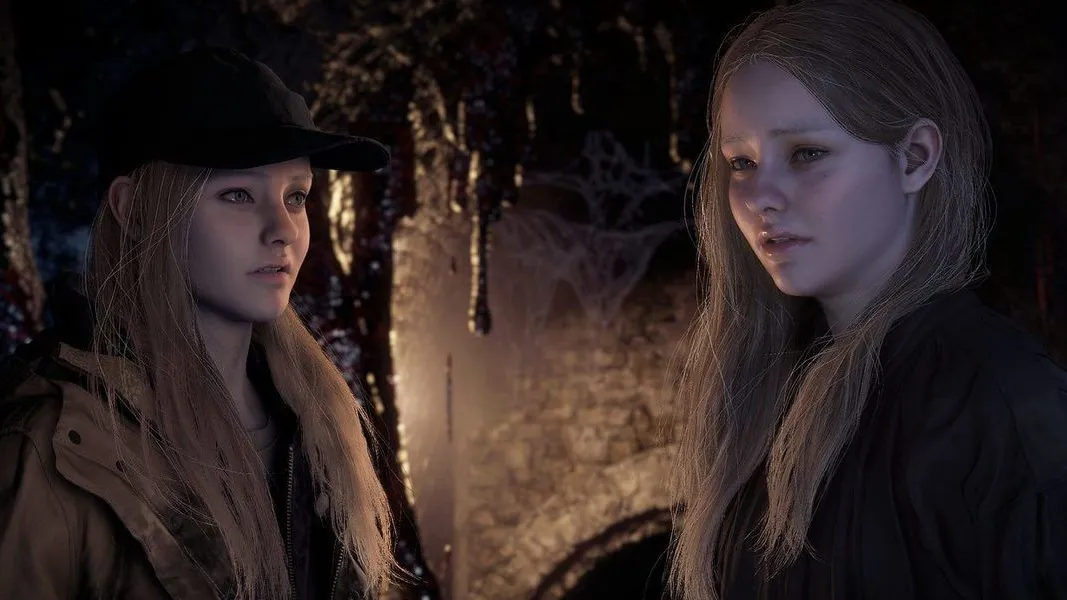
Taking the finale of the original game as a basis, Shadows of Rose tells of a small episode from the life of Rose Winters — the daughter of Ethan and Mia, who has had time to grow up and is now under Chris's care because of the unique features of her organism. The so-called “powers” negatively affect the girl's life — at school she was bullied and still has difficulties socializing.
Fortunately, fate gives Rose the chance to bury her gift and become an utterly ordinary person. For this she has to literally immerse herself in the collective consciousness of the megamycelium, where a whimsical and distorted reality awaits her, based on the misfortunes Ethan went through.
The concept of an unreal space as a setting is used by the authors of Shadows of Rose both for reuse of existing materials and for experiments with the available format — a fantastical reality unties the designers' hands and allows integrating into the add-on ideas that in the framework of “traditional” Resident Evil would risk standing out too much from the general style and mythology.
Like the main storyline, Shadows of Rose can conditionally be divided into several parts — peculiar attractions with differing innards and landmarks.
For the first quarter the add-on diligently portrays gameplay classic for horror games with limited resources and a multitude of deadly opponents. Next comes a section focused on creating a tense atmosphere and fear. After a brief nightmare an awkward stealth segment suddenly crashes in, and after it the narrative rushes on to the final confrontation.
The add-on will hardly take you more than three hours in total. It would seem that with such a length and structure one could count on a very rich and vivid work. In reality problems make themselves known literally in the first minutes.
The add-on's pace is drawlingly unhurried. Rose is very much and for a long time surprised by what is happening, and then gets used to the gravity of her situation even longer. In the process of all this narrative riot the player acts as a passive spectator — a short run down a corridor, collecting notes, a non-blood-pumping chase and another cutscene.
At some point the heroine gets her first means of defense, and here a timid ray of hope flares up — the game has started. Alas, hope quickly fades when it becomes clear that Lady Dimitrescu's castle in the new interpretation received no noticeable structural changes, only small cosmetic adjustments. Moreover, the process of getting through it is as simple as in Village — there are no forks or alternatives, just a set of straight corridors with expected and not too difficult obstacles.
Yes, Shadows of Rose presents a new gameplay mechanic — Rose's special abilities. But those are for the most part spent on destroying evil fungal buds and temporarily freezing enemies — like “stasis” in Dead Space. Because of the general unhurriedness of what is happening it begins to seem that such solutions were not an accidental mistake but a deliberate reflection of a cynical authorial intent, since the heroine even moves slower than Ethan.
After Rose escapes death in the castle, it's time for her to face the horrors of the era of Twitch horror games. The previously collected inventory evaporates, and ahead await not-too-scary corridors drowning in semidarkness and sounds of dubious origin. And to keep it from being boring, the writers tell a caustic and vulgar story about the bullying of an unfortunate witch girl by her mean classmates.
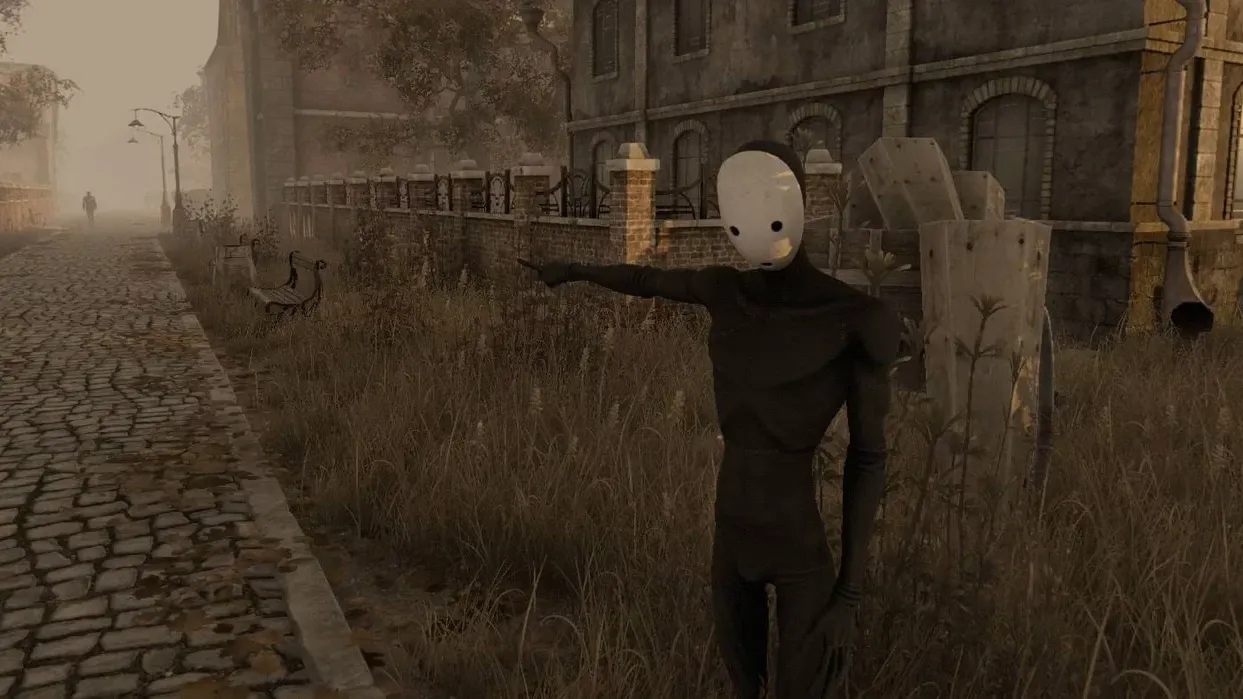
The peak of this section is the encounter with a new type of enemy. The creature concept is long since worked out and familiar, but I still won't spoil the surprise, because from an audiovisual point of view everything turned out very great.
There is no particular point in describing the following episodes in detail — they are fleeting and simple. The hide-and-seek is extremely schematic, and the final boss you have most likely already seen — now you can even dodge him with the “circle” button (no Dark Souls jokes).
In the end Shadows of Rose leaves a very strange aftertaste. It is a competently made expansion to a competently made game, but the question remains about the reasons for its existence and its target audience.
Creating a standalone story expansion is, at the very least, a reason for a bright creative experiment. One can try fresh solutions and techniques, work on mistakes or assemble ready-made pieces of a mosaic into a new whole picture. Unfortunately, Shadows of Rose does none of the above.
The main reward for completing the add-on can be considered the theatrically emotional (even if partial) conclusion of the Winters family's story arc. But even here the game offers a strange surprise with the cyclicality of its finale, which leaves all the chess pieces in their initial positions.
Perhaps it's easiest to perceive Shadows of Rose as a simple attraction not pretending to anything grand. It's only a pity there is no reason to return to the add-on — one playthrough should be enough for you.
Summing up, Winters’ Expansion would be called an acceptable set of content. Especially if you get it as part of the full “gold” edition of Resident Evil Village. But a recommendation to buy the add-on separately depends entirely on your attitude to the base game.
The third-person mode and the expansion of “Mercenaries” would have been far nicer to see either as free updates or as items sold outside the general bundle. As it is, you are offered to pay in addition for Shadows of Rose too, which is almost like Resident Evil Village, only more modest, shorter and much worse.
Based on material from GameMAG. Translated from Russian.