Space Come Alive: Dead Space Review
A review of the 2023 Dead Space remake: the author praises the seamless Ishimura, the new weapon system, the sound and the lighting, and notes that the game follows the 2008 original too literally and at times turns into a meat-grinder simulator.
In its short and eventful life the Dead Space franchise managed to tell a truly frightening story in three dramatic acts. A creepy, unhurried setup, a dynamic escalation and a tragic finale in which all further prospects were buried under an unliftable layer of snow.
The organizers of the celebration itself were also caught in the cold avalanche — the Visceral Games team never managed to recover from a series of poor decisions and difficult external circumstances. The studio was no more. A tragic end, inevitable death. After all, what else could one expect from a horror game?
For example, unexpected resurrections.
One day the dead are sure to tire of the comfort of their burial chambers, and they will surely try to return to the world of the living. At the very least, to give somebody a good scare.
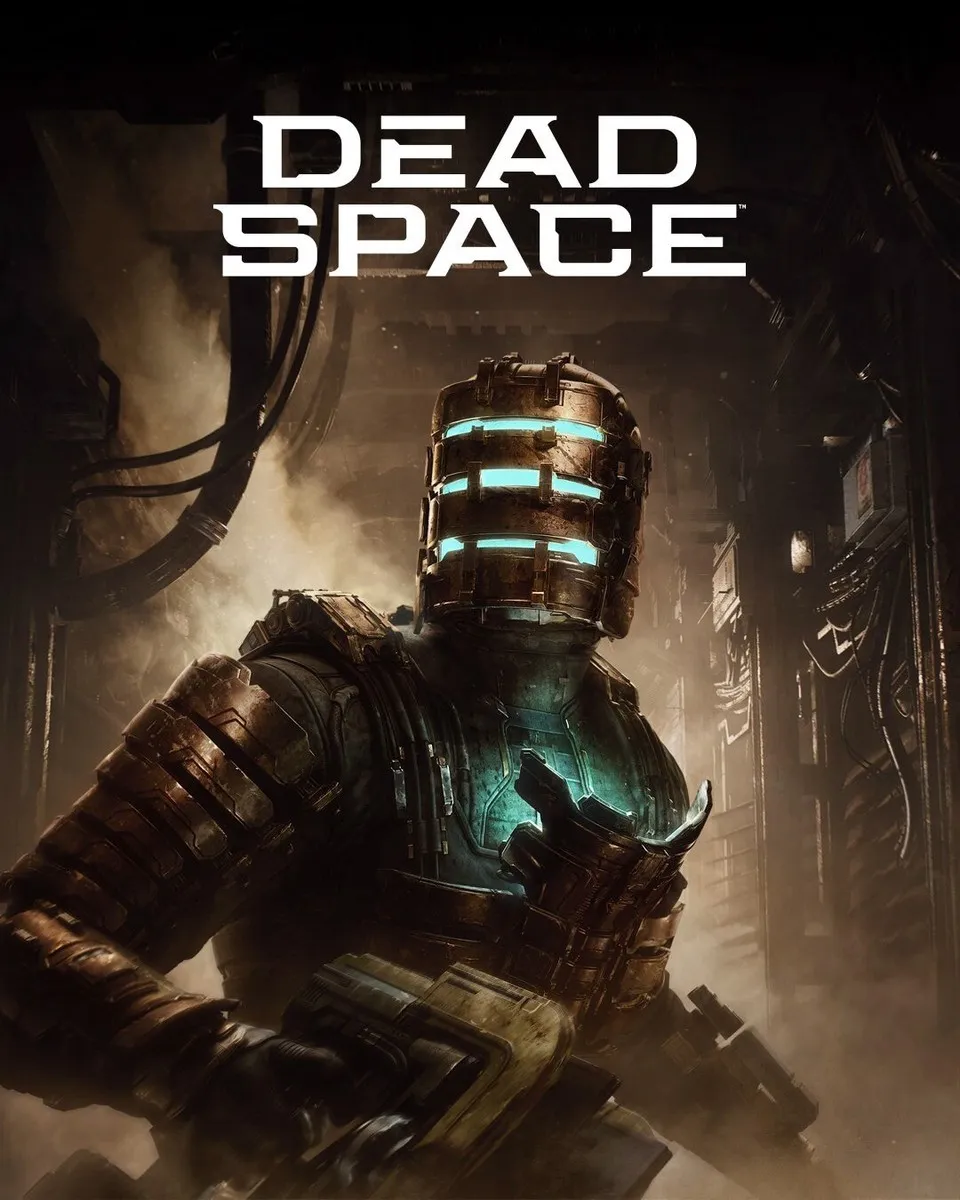
The Canadian team EA Motive took on the resuscitation of Dead Space. On paper the operation is quite simple — launch a lone middle-aged man into space once more and drag him again through the meat grinder of cold and unwelcoming corridors full of creatures with an excess of limbs.
The lone man is the engineer Isaac Clarke. And he flew into space in order to escape loneliness, seeking a meeting with Nicole Brennan, who is dear to his heart and serving as a medical officer on the USG Ishimura, a ship engaged in planetary-scale mining. The vessel stopped responding, as a result of which a rescue mission was launched, kicking off the main chain of narrative lines.
Upon arrival Isaac and the crew accompanying him meet an extremely alarming scene. The ship is in disrepair, the technical staff is nowhere to be seen, and a foul stench hangs in the air. The situation is entirely abnormal and, most importantly, unpredictable.
But from the player's standpoint everything is more than fine, and, in equal measure, predictable. The Dead Space remake presents itself as an almost word-for-word quotation of the original. The order of scenes, their content and the course of development — the elements are familiar and customary. Only the necromorph is hiding in the details.
From the very first moments Clarke talks actively, and in the textured voice of the actor Gunner Wright. New details slip into the dialogues — references to interesting events of the wider game context. The environment has grown over with geometry and exploded in scale — a small hangar bay has grown into a gigantic platform housing machines of colossal size.
From such an angle you can consider all interaction with the fresh version of Dead Space. Yes, you may have seen all this before. But it looked quite different, and sounded different too. Questions remain only about the gameplay. It surely could not have undergone noticeable changes. Praise the Marker that the plasma cutter never went out of fashion.
The deck of the Ishimura is an ocean of dangers. Around every corner a terrible monster awaits, machinery gone mad and grinding bones, an environment unfit for life, or a combination of all of it at once. Dangerous monsters can be dealt with using an arsenal of work tools and an assault rifle, while unruly iron is overcome with engineering cunning and ingenuity — not for nothing did Isaac receive a specialized education.
The necromorphs are very cunning and vicious. They can hide, run fast and hit hard. They have to be disposed of cleverly — by depriving them of mobility or combat potential, literally shooting off sharp dagger arms and thin legs. All of this is accompanied by a nastily beautiful soft-tissue deformation effect — skin slides off bodies, exposing rotting flesh, behind which twisted bones glint in flashes.
The monsters come in many kinds. Some prefer a frontal attack, some shoot from afar, and some can feel comfortable on any plane and any surface. By the middle of the playthrough monsters are dropped on your head in all sorts of combinations, forcing you to make hard decisions on the fly — fire off the last of your rifle rounds or spend the precious flamethrower fuel?
Why precious? Because the flamethrower has started to fry, incinerate and simply work well, unlike its progenitor. For the remake the burner was redesigned. As, in fact, were all the other weapon types. In places the changes are minor, in others they change the whole approach to battles. Among the obvious ones are alternative firing modes, which are entirely new. An underbarrel grenade launcher, a gravity well, an electronic tripwire. Everything will find a use, the main thing is not to miss the coveted gun, because they are now scattered around the game world rather than waiting their hour on a dusty shop shelf.
Add to that the upgrade workbench. Its principle of operation has not changed — you collect power nodes and spend them on a web of available upgrades. If in the original some cells were empty, in the remake the approach is different — every point offers an increase in damage, magazine capacity, rate of fire and reload speed. There are also special upgrades acting as especially strong modifiers — these have to be found or bought.
The constant of the combat system between the remake and the original turned out to be the auxiliary skills — kinesis and stasis. The first is a gravity glove able to pull to the hero everything that is not nailed to the floor. Including, of course, explosive canisters and the claws of vicious meat sacks. Stasis is a tool for temporarily freezing objects, letting you slow their movement. It is used to control large and predatory crowds, or to converse with a life-threatening environment — centrifuges, predatory doors and other entertaining things suited to creating small puzzles naturally integrated into the scenery.
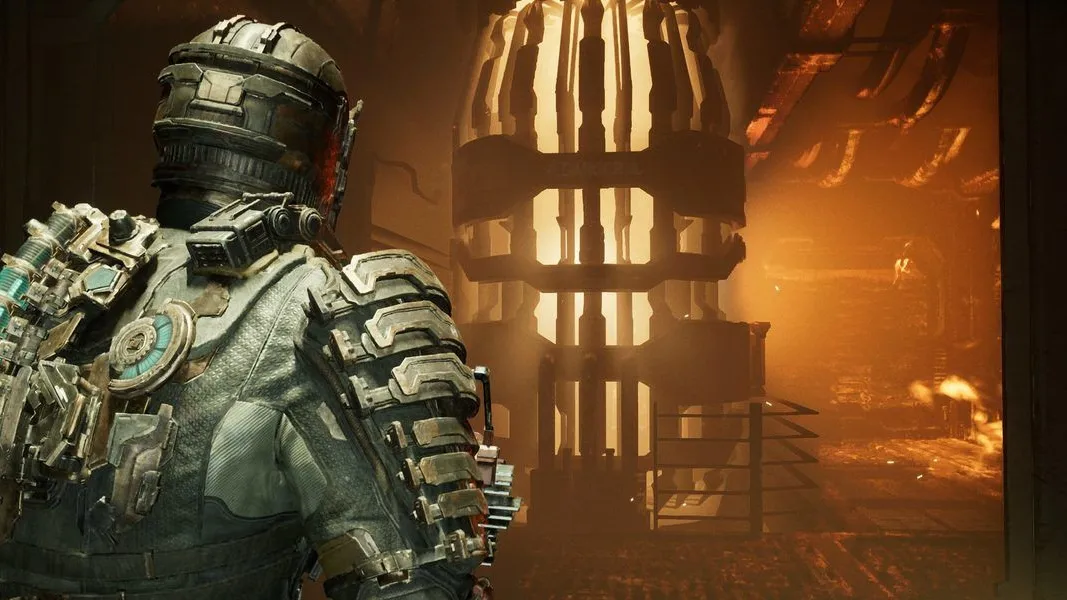
Into the scenery, which became the main star of the 2023 release of Dead Space. Setting about making the remake, the authors from EA Motive were fired up by a rather curious idea — to bring the cult Ishimura to life not as a set of disjointed sections stitched into a series of traditional game levels, but as a whole and consistent place. To make a venue offering not only an interesting virtual excursion but a portal into a new world which, despite its fantastic nature, can follow an inner logic and spatial integrity.
The ambition paid off. The new Ishimura is the same ship, with the same compartments and decks, but now they flow smoothly into one another, loop back and are not broken by illusion-destroying artificial loading screens. From the medical wing you can get to the greenhouse. From the bridge to the crew quarters. Through the cargo bay reach the work areas. A colossal anthill.
The inseparability of locations also dictates the approach to their design and structure. So that everything obeys the general plan, the remake's levels gained many transitional spots, elevators, nooks, and sometimes whole new sections. Say, all the zero-gravity zones were changed. Now instead of jumping off walls Isaac can float freely as in the second and third parts. The developers used this possibility not only to simplify navigation but also to create new obstacles and difficulties.
As you play, the ship gradually opens up. You make your way to new areas and restore the tram system uniting them. With their help, as in the original, you can make a fast trip from one compartment to another. These trips will have to be made not only within the direct plot progression but also to find new optional content.
Side missions have appeared in the Dead Space remake. The process of receiving them is woven into the main narrative fabric, and in content they are small sketches telling about some crew members and their last days before the Ishimura plunged into a chaos of death and ruin.
These lines have no significant influence on the central narrative core. Their main task is to motivate you to examine the surroundings more carefully and to return again to already explored locations. In many of them special doors and crates appeared, locked behind a higher access level. A small reward is sure to await you there, but you will not be able to get it right away — first the required access level has to be earned.
Surprisingly, in rare moments the Dead Space remake is capable of giving impressions almost comparable to the emotions of playing System Shock or Prey. When you start drawing in your head a mental map of a complex metal labyrinth only to come out at yet another unexplored corridor, thoughts of the Citadel or Talos-1 suggest themselves.
So that traveling through previously explored levels does not seem boring, Dead Space implements a “Stress Operator” system. In essence it is a randomizer of various gameplay scenarios and audiovisual techniques. The game constantly tracks your position, the amount of resources and your behavior pattern, after which, on the basis of this data, it presents some gift. For example, if the virtual director senses you are too comfortable — a growling necromorph will leap out of the nearest vent. Even in a small and safe room, to make it scarier. Returning there again a few hours later, you will no longer meet the monster there — instead you will be scared with loud sounds and flickering light. Very simple, effective and interesting. Especially for repeat playthroughs.
The question of loud sound and bright light is another strong trait of Dead Space. Having taken over the old game's artistic focus with warm tones covering lifeless and bloodied metal, the remake tries to follow this formula meticulously.
In the new version the detail of all assets has grown significantly, additional geometry has appeared, the number of interactive objects has increased. Most noticeable is the changed lighting — it seems that almost every bulb or light makes an effort to jointly disperse the gloom that has fallen on the ship. Sometimes the artists resort to very dramatic techniques, creating maximally contrasting canvases where, with the right camera position, the deepest shadow can sit beside the brightest flame. It is very important to play this game on a good screen.
Enjoying the beauty of the picture on PlayStation 5 was hindered only by an unpleasant error caused by a conflict between the rendering system chosen by the developers and the way dynamic resolution works. Because of the conflict of these two technical solutions the game image would often start drowning in noticeable artifacts. Sometimes they were visible even on interface elements. This situation was observed both in performance mode and in the higher-resolution mode.
On Xbox Series X this problem does not exist. And on PC it is solved by a small manipulation of the game settings. Notably, by the time of publication of this material the project had received a fresh patch on all platforms meant to fix this error.
The soundtrack, of course, comes to the aid of the visuals. The approach to Dead Space's audio design was always very interesting. The roar of monsters often receded into the background, giving way to the roar of engines and the clang of metal. Sometimes these instruments merged into a single composition, so that it was no longer possible to pick out one element from another — you hear only the cacophony of imminent death.
In the remake this approach is preserved. Moreover, according to specialists from EA Motive, a comprehensive system for simulating the propagation of sound waves was created for the game. Before playback, a sound takes into account its position in space and even the physical materials of surfaces. This information is used to introduce the necessary modifications into the audio track and change its final sound. Depending on the character's position, the knock of a door can be perceived as a distant echo or as an aggressive drumroll.
In some sections the habit of listening closely to a scene can give unexpected emotions. For example, when somewhere in the background echoes of a church choir begin to sound. Right after you have become acquainted with the mad practices of the followers of Unitology.
Such attention to detail pervades the whole game. It is easy to understand how much the authors of the remake love the original. In the new game all plot lines, sequences of events, locations and gameplay sections are preserved. Each of them is, if not improved, then noticeably refined. Something underwent small edits, and something, like the engaging asteroid shooting so beloved by fans, changed completely.
Building a coherent picture out of old and new material, the EA Motive team even took care of entirely unnecessary things, such as optional dialogues emphasizing the player's actions performed in an unusual sequence.
The first playthrough opens access to a new-game mode keeping previously accumulated progress. A new suit awaits you there and a chance to see everything you may have missed by mistake. In addition, in this mode a new kind of enemy and a new unobtrusive mission have appeared — it lets you see an alternative ending with a sweet and creepy hint at the continuation of the familiar story.
The maniacal adherence to the form of the original Dead Space may at times seem even excessive. Like the original, by the last hour the game increasingly turns into a meat-grinder simulator, where small rooms spit out a dozen fat monsters that have to be shot without much enthusiasm. Hardly anyone would greatly regret a reduction in the number of such gameplay episodes.
And yet the most important thing the Dead Space remake manages is to skillfully underline the inviolability of almost all the artistic and design decisions of the 2008 original. As then, we have a very well-formed and accessible game. Without excess exposition, cutscenes or sagging. A game with a high tempo and uncompromising authenticity, where even the diegetic interface works to immerse you in the industrial nightmare of space horror. The great journey of a tin woodman in the rotten belly of a steel monster.
Dead Space truly died. But if at least one lesson can be drawn from arriving at the USG Ishimura, it is that the dead have a way of returning. That the deceased are capable of rising again and wearing the most hideous grimace — familiar and very scary. The main thing is to draw the cutter in time.
Based on material from GameMAG. Translated from Russian.