Slow and Boring: Review of Season: A Letter to the Future
A review of Scavengers Studio's Season: A Letter to the Future: a meditative adventure about the girl Estelle in the mountains; a strong premise, but empty locations, almost zero gameplay, an incoherent story and an uneven picture on PlayStation 5.
On the last day of January the independent Canadian team Scavengers Studio releases Season: A Letter to the Future. The company was founded in 2015 and previously made a mark with the debut “battle royale” Darwin Project, which was released three years ago.
For its second project the studio chose a meditative adventure based on contemplation and reflection, with gameplay pushed into the background. How well the authors' idea worked and how the execution turned out we will examine below.
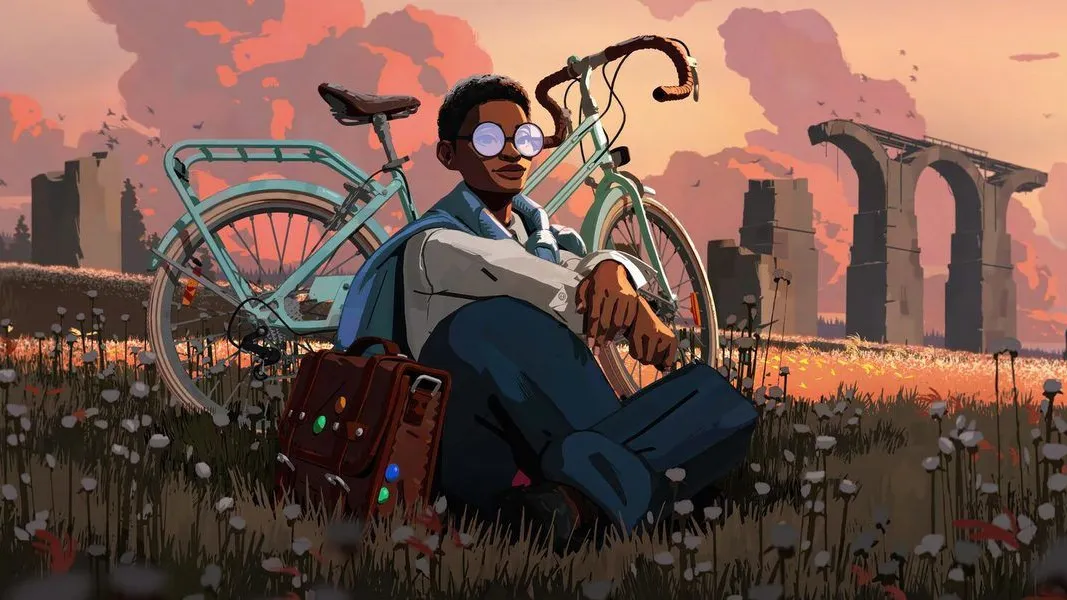
The story tells of a girl, Estelle, who lives far from the bustle high in the mountains, where there is a village that not one resident has left for a whole generation. Because of the change of seasons, which in Scavengers Studio's creation play the role of epochs and are brought out in the title, the heroine decides to be the first to break the rule and set off to explore the world.
The impetus for this was the idea of capturing and preserving the existing order on the border with the unknown. Estelle says goodbye to her mother and leaves her native home toward the unknown. The girl begins a journey through an unusual land, observing a world that has found itself on the threshold of inevitable and mysterious changes.
The premise of Season: A Letter to the Future is excellent, but it is never developed over the course of the game. The locations are large and empty, connected by transitions lasting several minutes during which nothing happens. Estelle meets so few residents that they are easy to count on the fingers of one hand. There is almost no one to talk to, so the whole gameplay boils down to wandering across meadows and forests in the hope of hearing birdsong.
For interaction with the world the player is left with the ability to read inscriptions, take photographs and record sounds through a microphone. Occasionally you can pet cows and goats.
Estelle keeps a journal all along the way, which fills with the finds mentioned above. For some reason only a single spread is allotted for each area, and it fills almost immediately. Users are simply not allowed to fit in everything found and, as intended, to keep in memory the quotes, images and sounds that were spoken.
For variety in the gameplay mechanics and convenience of movement the developers gave players a bicycle. Estelle handles it deftly, getting off if she gets stuck in textures and walking it in front of her. Interestingly, the vehicle, as in other open-world games, can be summoned, but unlike a horse's whistle and the subsequent wait, the bicycle teleports straight into the heroine's hands.
The story in Season: A Letter to the Future is completely incoherent. The project is dotted with a jumble of incomprehensible locations that are utterly uninteresting to explore. The design of the game, made in Unreal Engine, is minimalist and lifeless, the characters of the people you meet are not written out, and dialogues are boring to watch. The speech mentions no events to latch onto, and the text is presented as a useless set of phrases.
The picture is finished off by the lack of necessary animation, including facial, and by the general style of the image, thanks to which, for example, it is hard to recognize a girl in the protagonist. Still, the voice acting in the game is good, and the actors especially succeeded with Estelle.
Season: A Letter to the Future greets players on PlayStation 5 with an uneven picture and occasional FPS drops. The optimization of the pre-release version for Sony's most powerful console leaves much to be desired — throughout the game you cannot shake the feeling that it is running on an Xbox Series S. The authors should also be scolded for the black bars narrowing the view “for authenticity”. Because of them the frame is cut, and performance still limps.
In the press materials the developers claimed that the recordings would help you study the music, art, architecture, as well as the culture and history of the people, get to know bright memorable characters and uncover the secrets of the departing season. However, the game boils down to exploring an empty world with practically zero gameplay, where you do not want to stay longer than the 6 hours set aside for the journey.
The PlayStation console exclusive turned out surprisingly unsuccessful. Players tempted by colorful videos should take into account that the market is full of run-of-the-mill, unremarkable indie projects, one of which turned out to be Season: A Letter to the Future. Still, among the multitude of games of this category pearls sometimes turn up, like the recent Blacktail or the very cheap but interesting Broken Pieces, which deserve attention.
Based on material from GameMAG. Translated from Russian.