Shinji Mikami in the Land of PlatinumGames: A Review of Hi-Fi RUSH
A review of Hi-Fi Rush from Tango Gameworks: a rhythm slasher in which strikes, dodges and even the environment are synced to the music, with a bright visual style and licensed tracks; the author praises the bosses, the soundtrack and console optimization and calls the game a contender for game of the year.
The father of Resident Evil, Shinji Mikami, has long become a hostage of his own success. He is constantly expected to reinvent Capcom's main hit, which is why Bethesda gave the renowned developer funds to develop his studio.
But Mikami is not at all a stranger to experiments. It is enough to recall that he directed the development of such bright and unconventional games as Vanquish and God Hand. No wonder that after the disappointing releases of The Evil Within 2 and Ghostwire: Tokyo the staff of Tango Gameworks, under the patronage of the leadership of Microsoft, decided to shake things up and… pass themselves off as the studio PlatinumGames.
Hi-Fi Rush is the result of the policy of Xbox head Phil Spencer aimed at filling the Game Pass library with the most diverse content. This implies releasing not only expensive AAA blockbusters but also more budget-friendly and unconventional projects that take less effort and time to develop. The first pancake came out lumpy with the unsuccessful Bleeding Edge from Ninja Theory, yet in 2022 it was precisely the small games from Obsidian Entertainment (Grounded and Pentiment) that kept Xbox fans afloat.
Tango Gameworks' new creation can be described as a blend of Devil May Cry and a rhythm game in the style of Metal: Hellsinger. This should not be surprising, because the project's game designer is Masaaki Yamada, who was responsible for the gameplay of Bayonetta and the experimental Vanquish. As for the project's direction and script, they were handled by John Johanas (The Evil Within 2).
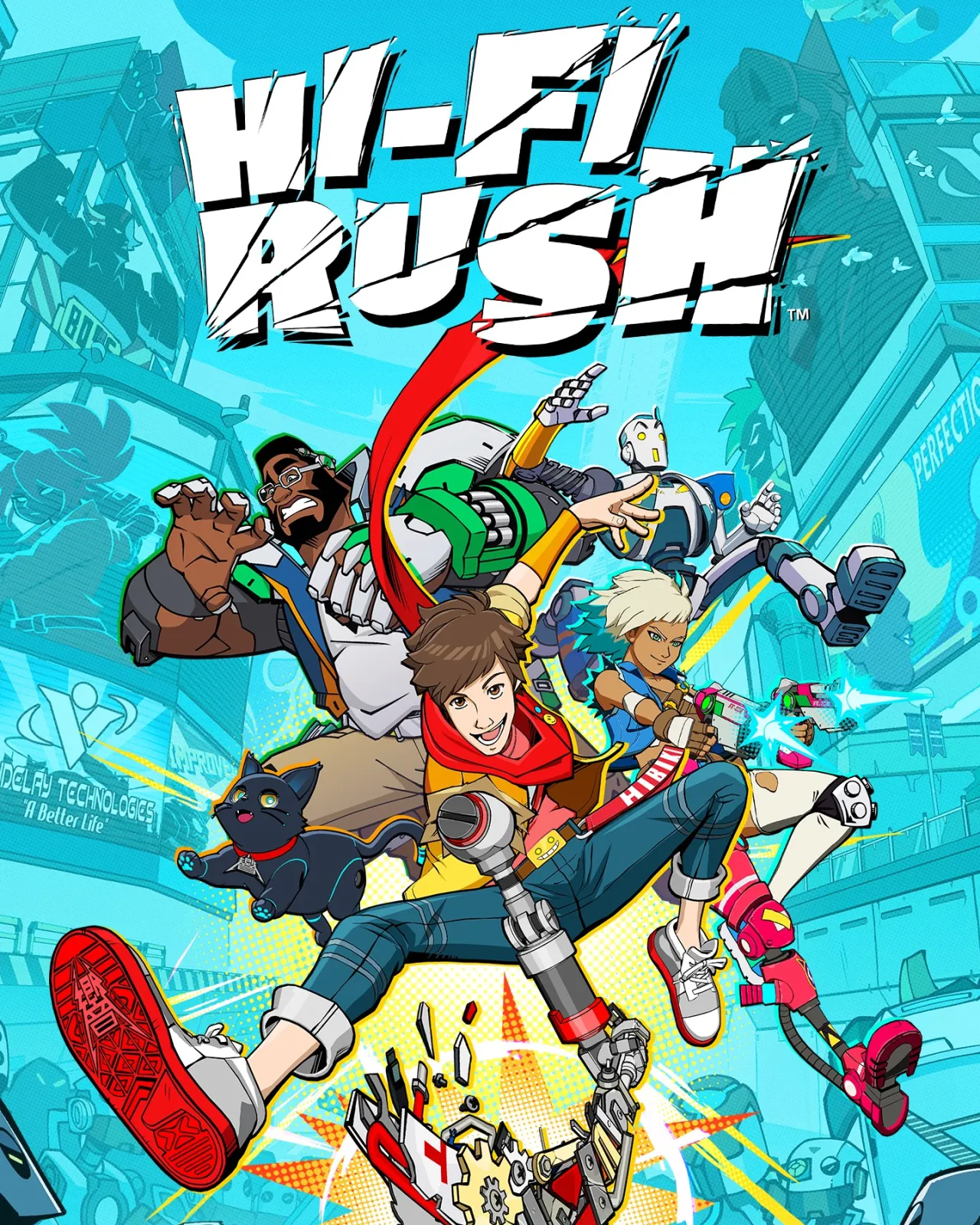
The game's protagonist is a loser named Chai who dreams of becoming a rock star although he cannot even play the guitar. So he volunteered for the Armstrong project in order to get a cybernetic prosthetic arm.
However, the operation does not go as planned. An MP3 player is accidentally implanted in Chai's chest, thanks to which the young man begins to “feel” the rhythm of the world around him. The management of the Vandelay corporation writes him off as a defect subject to liquidation. The aspiring rock star has to fend off the bosses of the evil company and save the world by joining forces with a group of outsiders.
The key difference of Hi-Fi Rush from Devil May Cry or Bayonetta is that the player must not just quickly and stylishly dispatch enemies by chaining combinations of blows while avoiding incoming damage. No, all of the above has to be done in time with the background music.
The developers tried to make this difficult task as easy as possible. As in the shooter Metal: Hellsinger, in Hi-Fi Rush you can turn on a metronome. However, it is optional, because the environment itself reacts to the music, including bushes, steam from pipes and various mechanisms. And Chai's companion, a robot cat nicknamed 808, constantly emits a rhythmic wave.
The main hero always moves rhythmically, which affects even running and jumping. The rule also applies to blows with the club, which is a guitar assembled from scrap metal. Even if the player does not hit the beat, the blows are still synchronized with the music, but misses negatively affect the score and the number of spare parts and medkits dropped by enemies.
As befits any self-respecting Japanese slasher, Hi-Fi Rush has an extensive list of combos. The system is complicated by finishers that have to be performed precisely on the beat via QTE. And an element of tactics is brought by Chai's companions, who have unique skills. Say, the girl Peppermint (many characters were given names of plants and dishes) destroys the energy shields of enemy robots, while the shy giant Macaron helps break through heavy armor.
The QTE mini-games are the most serious barrier to mastering the game, because players are required to repeat actions precisely on the beat. And that is far from always achieved. Already on the way to the third boss, enemies appear that can go berserk. Then a duel mode switches on, and Chai has to repeat combinations of dodges and parries that appear above the opponent.
Given the concept of Hi-Fi Rush, it is impossible to ignore the music, which directly affects the gameplay. With improper handling of the soundtrack the whole idea risks falling apart. Fortunately, Tango Gameworks did a perfect job, offering a dynamic set of memorable compositions.
The pleasant original soundtrack was diversified with remixes of iconic performers. In this respect one of the late levels, with the assault on the corporate cafeteria, which turned out to be the apotheosis of the whole Hi-Fi Rush, is especially memorable. That is when the developers crank up the iconic “Invaders Must Die” by The Prodigy, which after the boss encounter flows into… “Symphony No. 5” by Ludwig van Beethoven. And we answer the main question from music lovers — the developers did not forget about Trent Reznor and Nine Inch Nails either. As for the streaming mode, when it is enabled the licensed music is replaced by almost identical-sounding and identically rhythmic compositions written by the studio itself.
The music is complemented by a bright visual style that evokes persistent associations with Jet Set Radio, Sunset Overdrive, the fighting games from the studio Arc System Works and the cartoon “Spider-Man: Across the Spider-Verse”. The impression is completed by memorable characters, excellent humor and an absurd world in which an evil corporation turned combat robots into office plankton.
The locations turned out visually very memorable. Tango Gameworks densely filled the environment with fat references to its old projects, the works of colleagues in the industry and iconic works of pop culture, including Persona 5, Xenogears, creations by Sega, “JoJo's Bizarre Adventure”, “Twin Peaks” and so on. As for optimization, on consoles the project looks and runs simply great, delivering a juicy picture and a perfect 60 frames per second.
The bosses are a topic of their own. Each of them has not only themed zones and personal musical compositions but also unique gameplay mechanics. Say, the corporation's second leader, the mad scientist Zanzo, must not be defeated in battle but… ruined, forcing him to squander the corporate budget on idiotic projects. And the fight on stage with the head of the public relations department, Mimosa, turns into madness in the style of Space Channel 5.
Hi-Fi Rush is a representative of the concept “Easy to learn, hard to master”. Adapting to the basic mechanics is no trouble, but on the bosses you will have to sweat. When you begin to feel the rhythm of the music and the flow of fights, you can slip into a state of euphoria, getting sincere pleasure from what is happening on screen.
But for complete mastery of the game and completing all the bone-crushing challenges you will need nerves of iron, steely endurance, many years of experience playing Japanese slashers and a perfect sense of rhythm. Endgame content is prepared for such perfectionists.
The main campaign takes 10-12 hours, and after finishing it Chai can replay the levels in search of previously inaccessible rooms and collectibles, as well as visit secret rooms with combat challenges. In addition, Tower mode, a higher difficulty level, a store with gear and pleasant bonuses in the spirit of the jukebox at the headquarters and an album with 3D models of heroes and enemies are unlocked.
Hi-Fi Rush turned out to be not only a pleasant surprise for Xbox fans hungry for new projects but also a serious contender for game of the year. And this when only January has ended. Tango Gameworks definitely should climb out of the swamp of horror games more often and experiment.
Based on material from GameMAG. Translated from Russian.