Sergey Semenych Changes Everything: A Review of Cities: Skylines II
A review of Cities: Skylines II from Colossal Order based on a pre-release build: a city-building simulator with large maps, a convenient interface, smart traffic and beautiful graphics, but with poor optimization and frequent crashes; the author lowers the rating for the technical state.
In modern realities niche game genres are becoming the domain of indie developers, but big city-building simulators have been lucky all the same. Although EA killed SimCity, Cities: Skylines quickly came to replace the masterpiece from Maxis, and now the Finnish studio Colossal Order is trying with its sequel to prove that the “crown of the genre” has passed to it by right.
The initial setup has not changed. At the start of Cities: Skylines II the player is offered a choice of one of the plots of land to build on. The nuance is that the size of the territories has grown roughly five times compared with the original. In addition you are allowed to choose the region's climate, which affects the heat and cold figures in the city. A building style (European or North American) is also available, which can be changed on the fly.
Judging by the achievement list, the developers also created a map editor, but it was not available in the pre-release build. But what definitely will not be there on the official release day is mod support. It is promised to be added later — as an in-game service also available on consoles.
At the initial stage players need to create a branch off the main road and also power buildings and utilities from power lines. The latter are laid together with roads, even dirt ones, and zones for development form in parallel — residential, commercial, industrial and offices.
They can be built up all at once or selectively — it all depends on the needs of the settlement or on your preferences. What is more, the sequel offers more residential zone options, among which mixed ones stand out, where shops are located on the ground floor.
Actually, roads themselves are much easier to lay in the new game, since the developers do not force you to choose sides for placing zones. In addition you are allowed to quickly rebuild intersections into roundabouts.
Traffic lights and road signs forbidding turns can be placed on problem stretches of roads. You can also build tunnels and erect overpasses simply by changing the height of the roadway. Railways, including the subway, are built in the same way. The only downside is that the end result does not always look beautiful, although this does not affect functionality in any way.
The developers also solved one of the original's shortcomings, when for a city's development you had to demolish everything in sight. Now there is a context menu through which one element can be replaced with another, while nearby zones automatically adjust to the new realities. As for important buildings, they can be moved simply to a new plot.
As the map expands, your town will be able to establish water, rail and air links with other settlements beyond the map's border. And building an international airport will let you provide a tourist flow. Freight transport works in a similar way.
At the start the player needs first of all to focus on infrastructure: landfills, hospitals, police, fire stations, water supply and so on. The city may be divided into districts, tying specific services to them. The process has also been simplified, since now you can simply mark off the needed area with lines instead of painting it with a brush. Zones for resource extraction are outlined in the same way.
Buildings are also upgraded, although some of the modifications will require extra space. So it is worth reserving room in advance so as not to demolish nearby buildings.
A city is a living organism that constantly needs resources and goods. However, it is not necessary to provide for their production — in a shortage or a surplus they are automatically imported and exported.
As you progress the player will unlock special buildings that improve the parameters of the area around. The city's global development is divided into levels — as you level up you gain the ability to expand territory, get cash bonuses or development points, which are also spent on unlocking new objects, including the subway, nuclear power plants and highway interchanges.
If a budget deficit arises, money can be obtained by redistributing funding of city services, raising the tax burden or taking out a loan. But the main thing is not to rush the development of a settlement by erecting buildings that are expensive to maintain, since then a financial crisis is inevitable. However, then you can turn on legal cheats, but in exchange the developers disable achievements.
Cities: Skylines II still simulates air, soil and water pollution, so it is extremely important to take wind direction and water flow into account when building. Otherwise you will have to build water treatment plants or switch to renewable and environmentally clean energy sources.
The season is not static either. For every in-game 24 hours the month changes. So in winter road services clear snow and energy consumption rises. However, the latter also happens in summer, since residents start using air conditioners and refrigerators more often.
Disasters should not be forgotten either. Besides standard accidents and fires, special phenomena such as a tornado may appear on the map. To minimize damage you will have to build a warning system and shelters.
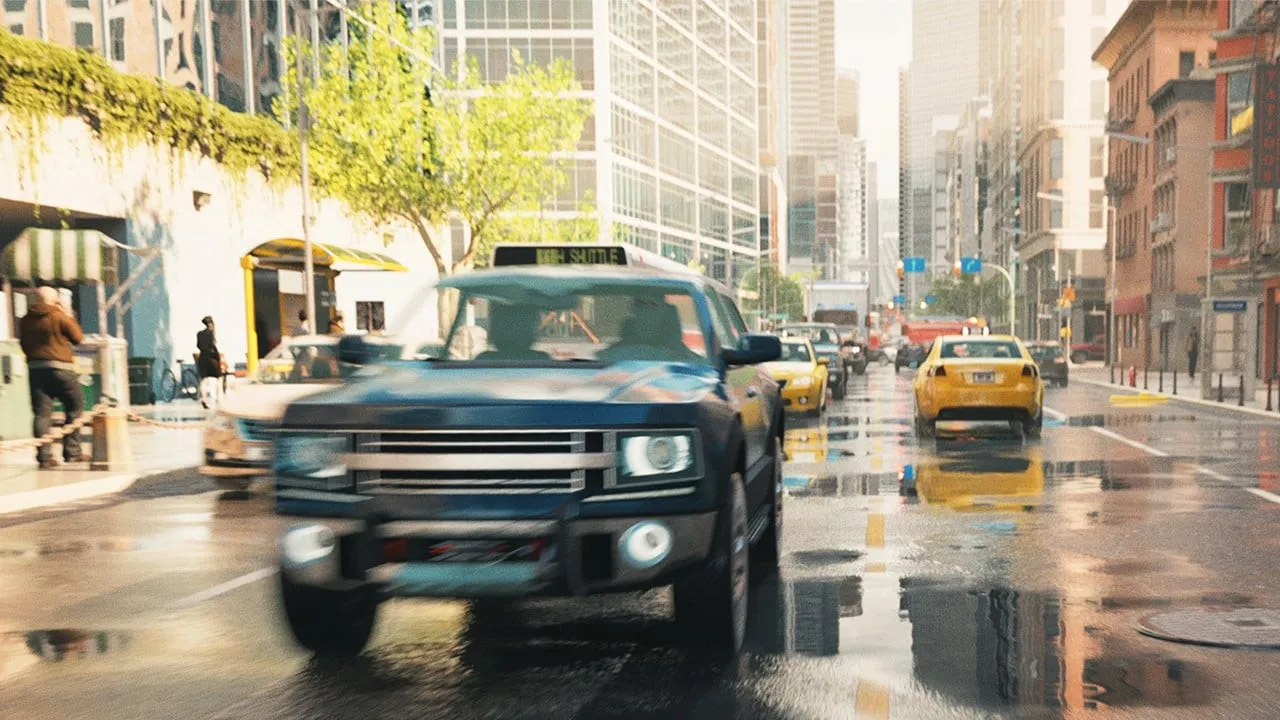
Traffic in the sequel has gotten smarter. Virtual citizens now plan routes much better, so the traffic jam problem is not as acute as in the original. At the same time the detail of crashes has increased significantly — the player can now see a driver lose control and crash.
The main pluses of the second part should be recognized as ease of use and ease of mastering. Practically all interface elements are intuitive and supplemented with contextual tutorials.
Only manipulations with the landscape and underground utilities cause discomfort. For the latter you have to find a convenient viewing angle to connect the network together correctly. You also have to sweat when laying tunnels. First you have to attach one end of an element to a road and then change the height at which the other edge sits.
In addition, the developers do not let you choose the needed landscape height at once, only gradually add or subtract. And this is the only element of the game that irritates greatly and does not let you quickly get the desired result. However, when most objects are built the landscape adjusts automatically.
If in the original citizens shared their opinions about living conditions in a local analogue of Twitter, in the second part a radio has been added with announcers telling facts about the city. In addition, the player can not only follow the citizens but also include their “favorites” in a special menu.
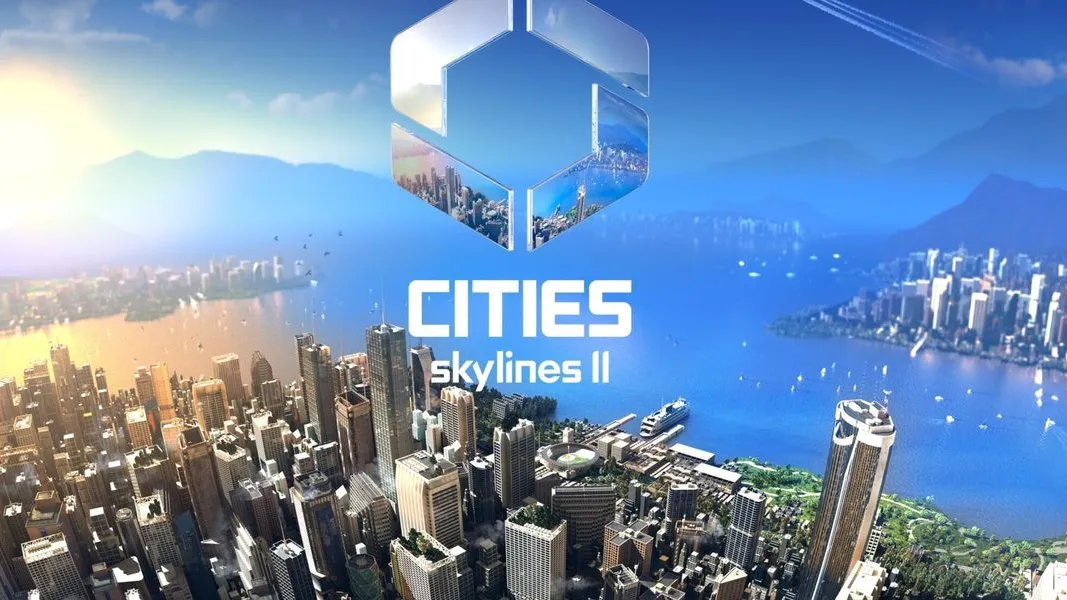
The Finns call Cities: Skylines II a “next-generation game”, but what impresses most is the increased detail and draw distance of objects on the map, while the graphics themselves can be called pretty and moderately cartoonish. When the camera zooms in, small moving details are visible — you can even peek into the windows of houses.
But what definitely betrays a “next-generation project” is the optimization. At the time of writing this review acceptable performance could be achieved if detail was lowered to the minimum. At full settings you have to contemplate a slideshow at around 10 frames per second or an error message. The main minus at the moment is constant crashes, which can happen even at the moment of saving, as a result of which all progress is lost.
After launch Cities: Skylines II draws you in and does not let go of its clutches. The Finns have successfully developed in the sequel their ideas, which rest on the solid foundation of the original. However, the technical state of the project is disappointing — the rating is lowered for that.
One can only hope that Colossal Order will be able to resolve the problems quickly so that Skylines II can rightfully earn the title of the best city-building simulator. The creators have already officially acknowledged the existence of problems and are working on solving them.
Console versions will come out in 2024, and then it will be worth returning to the game again.
With reduced detail chosen to improve performance, the game crashed at least 10 times in 16 hours.
Based on material from GameMAG. Translated from Russian.