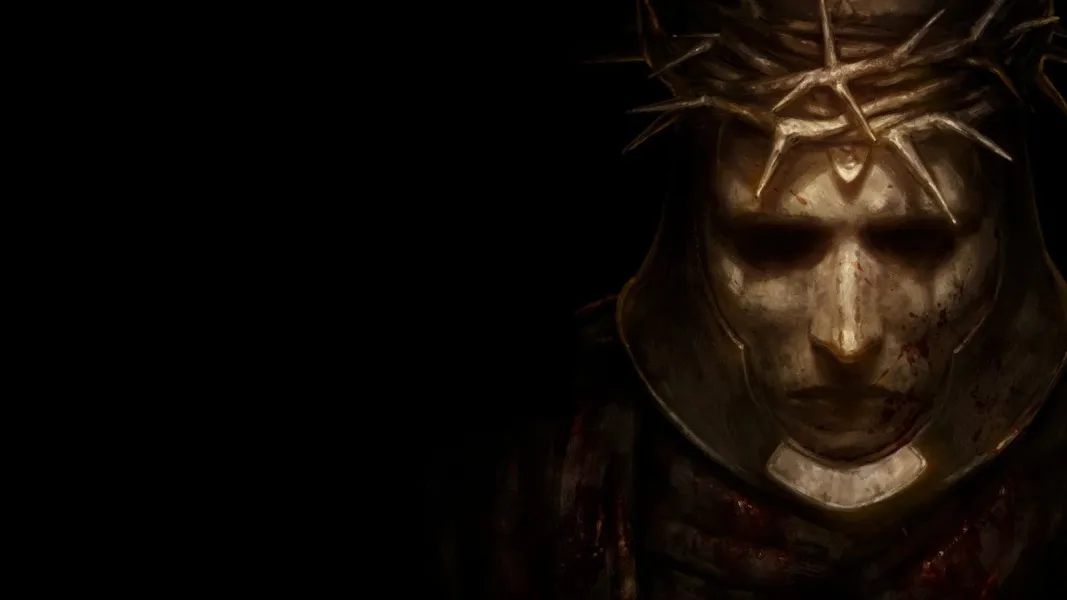
Sadomasochists in Miyazaki's Service: Blasphemous 2 Review
A review of Blasphemous 2: the author praises the art design, atmosphere and historical basis of the game, but reproaches it for template mechanics and overly easy bosses, calling it a competent but safe sequel.
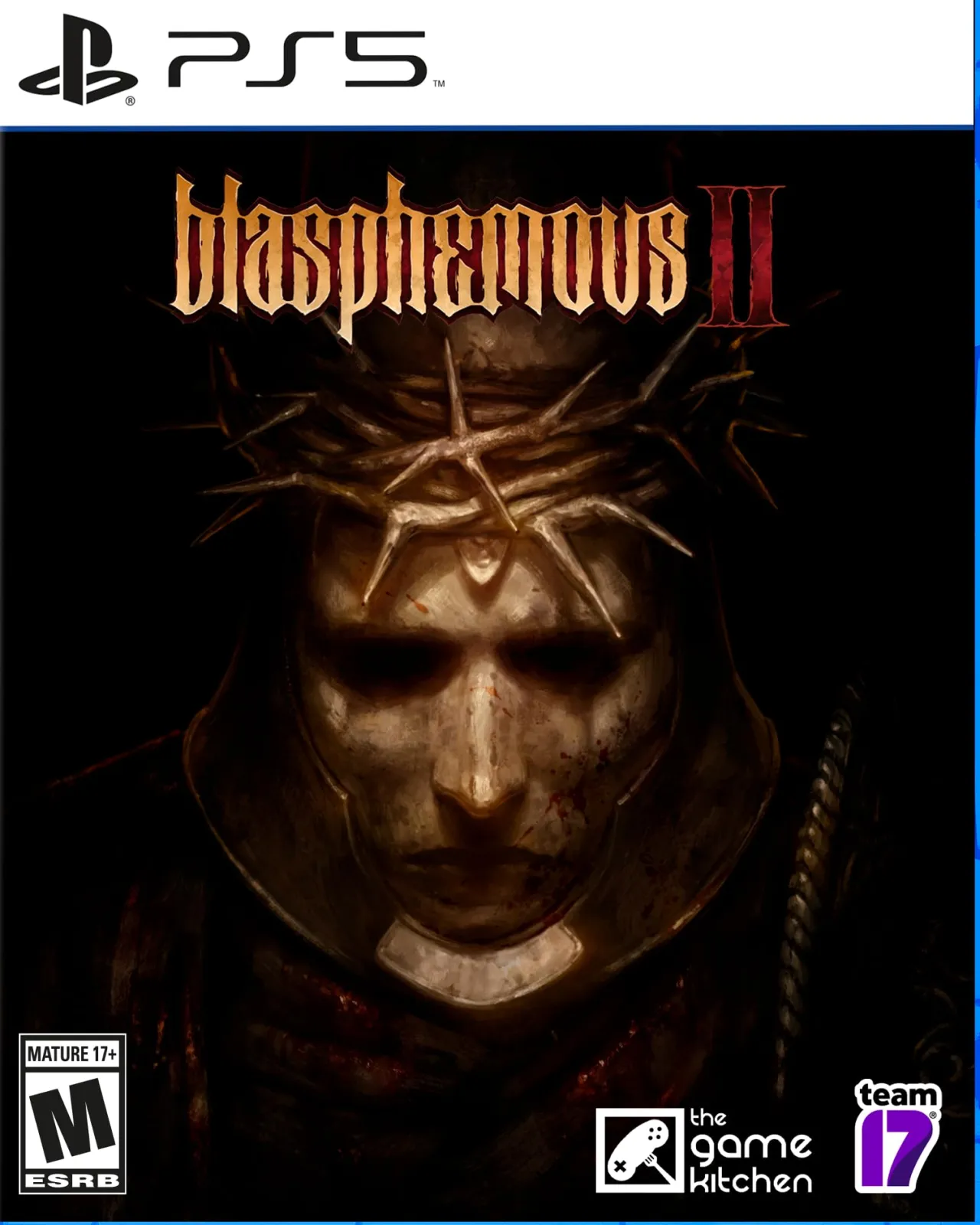
Making sequels to successful multimillion-selling projects is often associated with producers' wish to earn even more money using a proven formula. Even if the continuation is inferior to the original in quality, there will always be grateful fans ready to slurp the same cabbage soup a second time. In the world of modest independent games, where development funds are raised through Kickstarter, the situation is somewhat different, because the authors are not under such tough pressure from publishers. The direct client, even when no financial support is involved, is the fans of the first part, eager to go to the beloved universe once again. At the same time, fans are extremely demanding and nitpicky about any little thing, which puts additional responsibility on a small development team. For that reason the sequel to the already cult gothic “Metroidvania” Blasphemous from the Spanish studio Team Kitchen, released in 2019, draws particular attention.
The word Blasphemous means “sacrilegious” or “irreverent toward God” and has roots stretching deep into the centuries, to ancient Greece and Rome, from where it later passed into Christian medieval Europe. Like the word itself, the game is permeated with religious themes and symbols. It is no accident at all that the concept of such a project was born precisely among Spanish developers. Today a calm European country known for football, seafood and resorts was, at the turn of the late Middle Ages and the Renaissance, the chief supplier of all manner of horrors, which found expression both in real life and in art. At the end of the XV century, during the final phase of the Reconquista, that is, the expulsion of Muslims from the Iberian Peninsula, the Spanish rulers Isabella of Castile and Ferdinand II of Aragon created the well-known Spanish Inquisition — an independent judicial body in charge of religious affairs and not directly subordinate to the Pope. In essence, under the aegis of the Christian faith, Spanish Catholics began pursuing a policy of cruel repression aimed first of all at Jews and Arabs who had not managed to flee. The strengthening of state power went hand in hand with religious fanaticism, which gave rise to grotesque phenomena such as the auto-da-fé — theatrical ritual processions in which, to the cries of the crowd, public penances of heretics dressed in jesters' costumes were staged and, of course, burnings at the stake of those condemned to death.
This historical excursion is very important for understanding the origin of the Blasphemous concept. The shadow of the Inquisition and of specific Catholic rituals left a significant mark on Spanish culture. The works of painters such as Francisco Goya, Francisco de Zurbarán, José de Ribera and many others, up to Salvador Dalí, are imbued with gloomy tones and frightening images closely tied to religion. Blasphemous creative director Enrique Cabeza specifically stressed the key influence of religious Spanish painting, citing as an example Goya's painting “Procession of Flagellants”, in which we see a procession of half-naked, bloodied people in masks and pointed capirote hats beating themselves with whips amid the people and clergy. The image of the zealous flagellant became the basis of the visual design of the protagonist of Blasphemous and its sequel. The inseparable bond between Spanish culture and the game is felt everywhere: in the surrounding space, the story, the music, the design of secondary characters and the numerous monsters who seem to have stepped straight out of the etchings of that same Francisco Goya. Notably, despite the abundance of religious references, the authors carefully avoid showing crucifixes, any images of Jesus Christ, saints, and also any mentions of God, the Devil, Heaven and Hell. In this respect the world of Blasphemous is entirely fantastical and self-contained.
Waking from sleep, the Penitent One sees a majestic cathedral supported by gigantic statues rising above the City of the Blessed Name, whose look was inspired by the architecture of medieval Seville. People and other creatures in the city gossip about the birth of a Miracle that grants either grace or curses. Everyone speaks in riddles and half-hints. Sending prayers to the Miracle, the city's inhabitants torment themselves to show the degree of their piety. Under the bright orange sun reigns an atmosphere of pain and suffering.
Recalling the events of the first part, it is obvious that nothing good can be expected from the perverted religious sect that has enslaved the minds and hearts of the locals. Taking up arms, the Penitent One is again called upon to decide the fate of this mysterious world. As is proper, the game has several endings, and the lion's share of the plot and lore may slip past players who do not want to untangle the elaborate half-hints of strange characters and assemble the story mosaic from item descriptions in the inventory, as bequeathed by the beacon of the modern games industry, Hidetaka Miyazaki.
Like the first part, Blasphemous 2 has the structure of a two-dimensional “Metroidvania” and encourages free movement through locations. Compared to other representatives of this genre, travel between different areas of the map is not so strongly restricted by obtaining the necessary upgrades, which makes the playthrough smoother. If some location seems too hard or confusing, you can almost always go off to explore other places. The game zones are linked by secret passages and a network of teleports, and are also united by a central hub where you can spend accumulated resources and found artifacts on various improvements. On the whole the map's construction painfully recalls Hollow Knight, so if you have already despaired of torturing your body with nails while trying to hasten the release of Silksong, Blasphemous 2 will let your fanatic wounds close up for a little while. At times the similarity to other “Metroidvanias” seems even excessive. The feeling of déjà vu strikes the brain especially hard when at the very start you descend from the city into a huge well — into a network of underground ruins. The impression is as if the developers played a bit too much of the bug knight, and the game design of that worm-ridden odyssey sank into their minds like the thorns of a bramble.
As for character progression and the combat system, we see a solid symbiosis of the ideas of two-dimensional “Metroidvanias” and the Souls series, or more precisely, Bloodborne. By default the Penitent One can parry attacks and dash sharply forward and back, dodging more powerful blows. The fights themselves are tuned for maximum aggression from the player. Enemies are for the most part passive and move rather slowly, but when they attack they do so in groups of several foes of different types at once, using various attacks: close-range, ranged, horizontal, vertical. There is no way to sit out in defense, so you will need to dispatch opponents quickly, and do so tactically smartly, for example by luring dull “heavy” monsters into a corner, freeing up space for the fight with the nimbler scoundrels.
In the Penitent One's arsenal there are now three kinds of weapon: a balanced curved sword, twin rapiers for those who like to move faster and sting enemies like a bee, and a massive fiery hammer-censer on a chain. Each weapon feels different and has unique features; for example, when landing a large number of sword blows in a row, the Penitent One can stain the blade with the Penitent One's own blood, which gives a temporary attack bonus but costs a hefty portion of health. Veterans of Bloodborne will certainly recall the bloody samurai sword Chikage, which worked on a similar scheme. Among other things, weapons in the game are actively used to interact with the environment to solve fairly easy but quite interesting acrobatic spatial puzzles. Say, by striking a magic bell with the hammer you activate a chain of platforms hovering in the air that must be crossed in a short span of time, and at the end you have to manage to switch to the rapiers to deftly teleport through special mirrors with their help. Some irritating moments from the first part have been fixed, in particular falls onto sharp spikes, which used to end in instant death, but in the sequel merely take away part of your health.
To restore health, the Penitent One zealously gulps down flasks of bile — an analogue of the Estus from Dark Souls — and instead of souls collects tears of atonement from defeated enemies. Upon death the Penitent One's guilt grows, limiting the fervor gauge, which in turn governs the use of spells and special attacks. Guilt can be atoned for at the confessor's for... a small fee.
While playing it is impossible to shake the thought that you have already seen all the mechanics here somewhere, they are simply called something different now. The authors follow the unwritten patterns of gameplay with fanatical persistence, and after a certain amount of time spent in the game a lump of bitter disappointment starts creeping up your throat. It does not prevent enjoying the stunning art design, the mysterious atmosphere or the convenient combat system, but it becomes truly disappointing that even in indie projects developers now act ultra-conservatively, not trying to surprise the player with anything original in terms of mechanics. Unfortunately, we must admit that despite the artists' work, Blasphemous 2 leaves the aftertaste of a game made from a template.
The bosses in Blasphemous 2 are executed very well, both in looks and in gameplay. Each has a decent set of moves which, importantly, does not restrict the player's actions, allowing an offensive tactic while keeping the enemy constantly under pressure. Following Miyazaki's playbook with Pharisaic literalness, the Spanish novices added several phases to the bosses' fights, added double bosses and extra health bars. During our playthrough we even encountered such an amusing bug — in one heated fight the boss's health bars began multiplying on their own and did not disappear from the screen even after the battle ended. The moral for developers is this — do not abuse extra bars unless you are Miyazaki! In the authors' favor, let us note that this visual glitch was the only one during the entire playthrough.
Speaking of difficulty, we admit that the Spaniards managed to find a smart balance between the hackneyed hardcore and the serene walking simulator. The game's main sections, filled with enemies and all sorts of secrets, will not cause serious problems, because the authors wanted to preserve a certain unhurried pace of narrative that would let players fully enjoy exploring the beautiful locations. On the approach to bosses the difficulty rises, while the climactic fights themselves may evoke contradictory emotions in some. As we have already written above, the bosses are made competently, but do not expect them to make you truly suffer. The Penitent One's mobility, the responsive controls, numerous upgrades and magic give the player a tangible advantage.
In conclusion, we would like to once again separately praise the magnificent artistic design. Unlike the first part, the sequel emphasizes locations filled with light and bright colors, combining them with unattractive images of death, decay, rot, self-flagellation, bodily torments and other horrors in the spirit of medieval body horror. The bizarre characters we meet along the way recall the canvases of Velázquez, on which the painter depicted dwarfs, jesters and commoners whose appearance repelled their contemporaries, but thanks to the genius of the great artist, who looked into their bright souls, their faces were captured forever. A pair of wandering merchants in the game is a reference to real people who lived in the late XIX century in Syria: the blind Mohammed, who carried on his shoulders the sighted paralyzed dwarf Samir. Among the rich bestiary of enemies we note the design of the faceless giant hiding inside a large cracked golden bell. Sensing the approach of the Penitent One, the giant rams the Penitent One blindly, crashing into obstacles. Upon hitting a wall a characteristic ringing sounds, the giant breathes in a stifled way, and blood seeps from the cracks in the bell.
The musical accompaniment, however, in no way matches the torments and sufferings. The compositions mostly consist of national Spanish motifs, dance rhythms, acoustic guitar picking and melodious tunes played on the piano. It cannot be said that there were compositions you would want to listen to separately again, but in the context of the game the soundtrack works as it should. In boss fights the music impressively adapts to the dynamics of the battle, progressing in drama along with the phases of the fight in the best traditions of Dark Souls and its ilk.
Also, a special flavor is given to the game by the option to set the Spanish voice-over in the settings.
Blasphemous 2 is a competent and safe sequel that will certainly appeal to fans of atmospheric “Metroidvanias” and nontrivial visual aesthetics, but in large doses the game can quickly bore jaded hardcore players, since it offers neither serious challenges nor innovations in gameplay or narrative structure. The text and subtitles in the game are fully translated into Russian.
Based on material from GameMAG. Translated from Russian.