Pirates of the Japanese Sea: A Review of One Piece Odyssey
A review of Ilca's One Piece Odyssey: a turn-based JRPG about the Straw Hat crew on a magical island; the author praises the design, cutscenes and animation but criticizes the filler-like plot, long locations with silly tasks and the railroaded structure; it is recommended mainly to anime and manga fans.
Game experiments with the popular One Piece series over the past few years have included visual novels, all sorts of action games, fighting games and even musou. Taking note of Sega's success with Yakuza 7, Bandai Namco also decided to try exploring the mysterious depths of turn-based JRPGs. As a result of this decision, the Straw Hat crew ended up in a bland yet at the same time amusing filler from the original manga's author Eiichiro Oda, about adventures on a magical island interspersed with flashbacks.
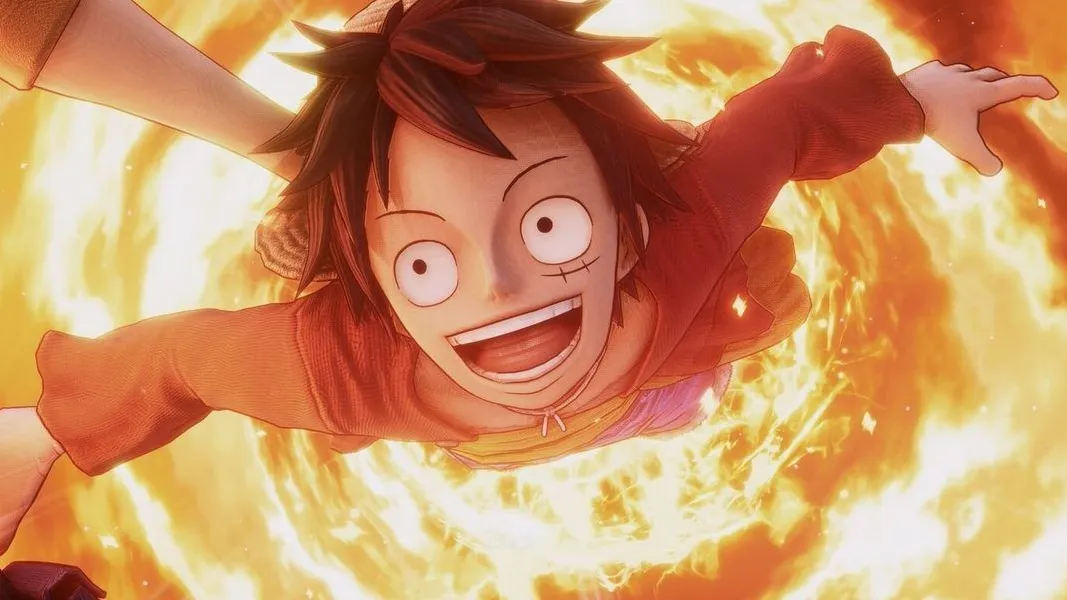
Monkey D. Luffy with his crew of cutthroats sets off in search of new treasure, but runs into a storm and ends up on a tropical patch of land. Now the rubber hero has to find his friends, repair the wrecked ship and get back his beloved hat — and, while at it, his lost fighting skills. After the original introduction the team of heroes indulges in memories, visiting arcs of the original series, including the Battle of Marineford and Dressrosa island.
Inspired by JRPG classics, the studio Ilca makes a curtsy toward the Persona series. The squad has ordinary attacks and special abilities that consume action points. The latter are restored by ordinary strikes. At the start of the game all skills are open at once, and the team begins on the leveling road immediately at level 40. But then, following the genre's precepts, the heroes are reset to zero and made to climb back on their own. Still, there is no need to be upset — by the end of the first chapter you will already be level 15. Collecting the lost skills and reaching new facets of talent is accompanied by exploring the island and boss fights.
The battles themselves look familiar: by using abilities that enemies are weak to and moving around the terrain, you can win even the most hopeless fight. To other people's ideas the authors add zoning of the battlefield — that is, enemies can be in different parts of the map, and only heroes standing nearby can deal damage to them. Sometimes partners are surrounded and you have to break through to them, and in other cases a successful combo can throw an enemy from one zone into another.
In the early stages of the game the authors offer a system of patches that can increase a party member's health or health level. Patches are found in the field after a successful battle and in numerous hidden chests in the locations. In addition, you can level up abilities you have already found, boosting their effectiveness in battle. Tactics and proper interaction of the heroes become the key to victory from the second chapter. This is also where the story's filler nature shows. Arcs with the series' best moments turn into endless walking through long locations with silly tasks and fights with overleveled enemies. All this is incredibly tiring and drives you into boredom.
At the same time all heroes of the team with their unique abilities are drawn into the rare exploration elements. Luffy can punch through walls with rubber fists and pull himself up to distant ledges, Chopper can squeeze through narrow openings, Zoro can cut through obstacles, and Usopp can knock down various objects with a slingshot. Sanji's cooking and Usopp's love of crafting will help you in the battles ahead.
Carefully copying competitors' ideas, One Piece Odyssey suffers from problems of its own. It wants to seem like an epic open-world adventure, but the developers literally lead players by the hand through the story's gut, restricting movement with partners' shouts or invisible walls. The transitions from gameplay to cutscenes are done very clumsily, and moving around the island with constantly popping-up dialogues sends “Odyssey” into the category of an interactive visual novel. Attempts to throw a lasso and keep the player within the strict bounds of the original idea spoil the impression and cause disappointment. The numerous puzzles are not difficult enough for a mental challenge, but at least they do not irritate. The already mentioned flashback sections do not make the game more interesting, just stretching the running time.
The bestiary, including bosses, is done in the style traditional for the series, with giant squirrels, ogres of all colors and kinds, as well as huge monkeys and evil pirates, scorpions and reptiles. The heroes' special abilities brighten the picture with bright and saturated battle scenes, which gives the adventure the needed cartooniness.
One Piece Odyssey offers excellent design that matches the animation canon, good cutscenes and pleasant battle animations — in other respects the game cannot boast any high degree of technology.
Anime fans will be glad to learn that the Western versions of the game contain Japanese voice-over, and Bandai Namco did excellent work on the Russian localization, which, unlike past experiments, features good literary polish and accuracy of wording. But the musical compositions by Motoi Sakuraba, the cult composer known for the Tales of and Dark Souls series, do not make a particular impression.
One Piece Odyssey is a light story with popular heroes and a magical setting in the format of a turn-based JRPG. The drawn-out tasks in the world of memories and the filler plot through which the authors lead players by the hand were disappointing.
If from the trailers you suddenly expected an epic adventure on the level of a numbered Dragon Quest from One Piece Odyssey, then alas. It is yet another licensed game aimed first of all at anime and manga fans — this time in a JRPG wrapper.
Note from the original outlet: the review copy was provided to its author by the store of the company Buka.
Based on material from GameMAG. Translated from Russian.