One of the Brightest Games of the Year: A Review of A Plague Tale: Requiem
A review of A Plague Tale: Requiem from Asobo Studio: the continuation of the story of Amicia and Hugo, with expanded stealth, new ways to use the sling and fire, chases and strong sound work; the author praises the story and atmosphere but notes that the game punishes unconventional solutions, and calls it one of the brightest games of 2022.
It took Asobo Studio three years to prepare the quite expected continuation of its story about the plague, a little boy and his brave sister. Drawing on the experience of the original, the creators carry us in time a few months past the end of the first game. Amicia de Rune, her brother Hugo, their mother and the young alchemist Lucas spend their time carefree far from the ravaged cities and the defeated epidemic. Green meadows, clear streams and abandoned castles stir their young imagination, pushing them to adventurous acts. And it is precisely one of these that revives the contagion dormant inside Hugo — the Macula. So the new place gradually turns from a sweet provincial paradise into a hellish nightmare. Now Amicia and Lucas, with the support of the master of a secret order, try to stop the growing epidemic…
A Plague Tale: Requiem uses techniques from the first game, with leisurely narrative development and a transition from carefree days to a crumbling world around, but the authors constantly experiment with mechanics and surroundings. The tutorial in the colorful opening is one of the highest-quality and most natural I have seen in the last several years. The game does not impose new mechanics but makes them a natural part of exploring the world around. Stealth elements, which took up a considerable part of the playtime in the original, are now at the center of the story. You avoid enemies through the flower fields of a still-peaceful world, hunt lone guards while hiding in cover and behind massive crates, make your way along thin ribbons of light, and also use rats and fire to pass the new stages of the game. Amicia's already legendary sling returns with several kinds of projectiles. The heroine can throw stones by hand, luring or distracting guards, hurl rocks at the unprotected heads of enemies, use fire, extinguishing and tar projectiles, and also place them in collected pots for a larger area of effect. A little later Amicia also gets the coveted crossbow for bloody hunts of armored guards and knights, but the small amount of ammunition will make such fights episodic. Even rarer are the one-use knives, which can save you from direct confrontation with protected opponents.
Having the sling, you solve simple puzzles by putting out torches and bonfires and opening the way for carnivorous rats, or conversely by using fire projectiles to escape the creeping catastrophe. Combinations of alcohol and tar in some stages let you create whole lakes of fire, and throwing a black clot into a bonfire causes a bright flash that scares off the rodents. All the components needed for crafting projectiles are located in numerous chests, openly scattered or secretly hidden in the levels. The authors do not forget about secrets and collecting either, which come down to bright memories and gathering flowers and feathers for Hugo's collection.
Against the background of stealth and action the authors do not forget about vivid chases, which are implemented a little better than in the original but still bring turmoil to the leisurely rhythm of the game. It is clear that the creators badly wanted to bring a few Uncharted-style scenes into the viscous narrative, and sometimes it really works. For example, the run through the streets of a city collapsing under the onslaught of rats looks incredibly impressive, but all the ailments of the original, with getting stuck on turns, have not gone anywhere. The rare moments of interaction between the heroes, when one turns a wheel or runs across fields with rats under cover, create excellent dynamics and proper variety.
Although A Plague Tale: Requiem offers many ways to interact with the environment and overcome obstacles, its main difference from The Last of Us Part II, comparisons with which are unavoidable, is that these ways do not work if at some point the authors want some specific solution to the problem.
For example, in the first third of the game you need to pour alcohol out of a giant barrel and set three pools on fire. The resulting fire is not enough for Lucas to get through the hordes of rats and reach you. The game requires you to throw tar at a specific bonfire, and the flash will disperse the living mass for a while. But if you throw the black clot at a torch on the wall next to Lucas, you get the same effect, but Lucas just remains standing there. What is more, you can go back on the platform and reach Lucas from the other side and, for example, throw a pot of fire at the rats. The problem is solved again, but Lucas will not go anywhere; he will stand and wait until you perform the single combination that is right in the game's view. Finally, you can walk up to Lucas, throw tar at the right bonfire, and he will go where he needs to, but you will remain in a closed zone and progress will be stopped — you will have to replay the scene. There are enough such critical solutions in the game, and if you play outside the rules, be ready for some disappointment.
The upgrade system in A Plague Tale: Requiem has, along with the main mechanics, undergone changes, somewhat reminiscent of The Last of Us. For ordinary weapons and the backpack you will have to use workbenches, where you can upgrade the sling or the capacity of your satchel in exchange for parts. Personal skills level up depending on your play style — active use of stealth will give you a light step and unnoticeability, while aggression will strengthen your direct attacks. Upgrading items at the workbench is done more for show. Improving the sling and satchel on the go can hardly be called a great necessity — 6 or 7 fire projectiles in the satchel do not change the situation much.
Compared with the original the authors have done colossal work on sound. The ASMR whisper in A Plague Tale: Requiem is a truly excellent find and an unusual stealth solution. As for the music, the authors remained faithful to the symphonic original with a sprinkling of play from a star guest — Lindsey Stirling.
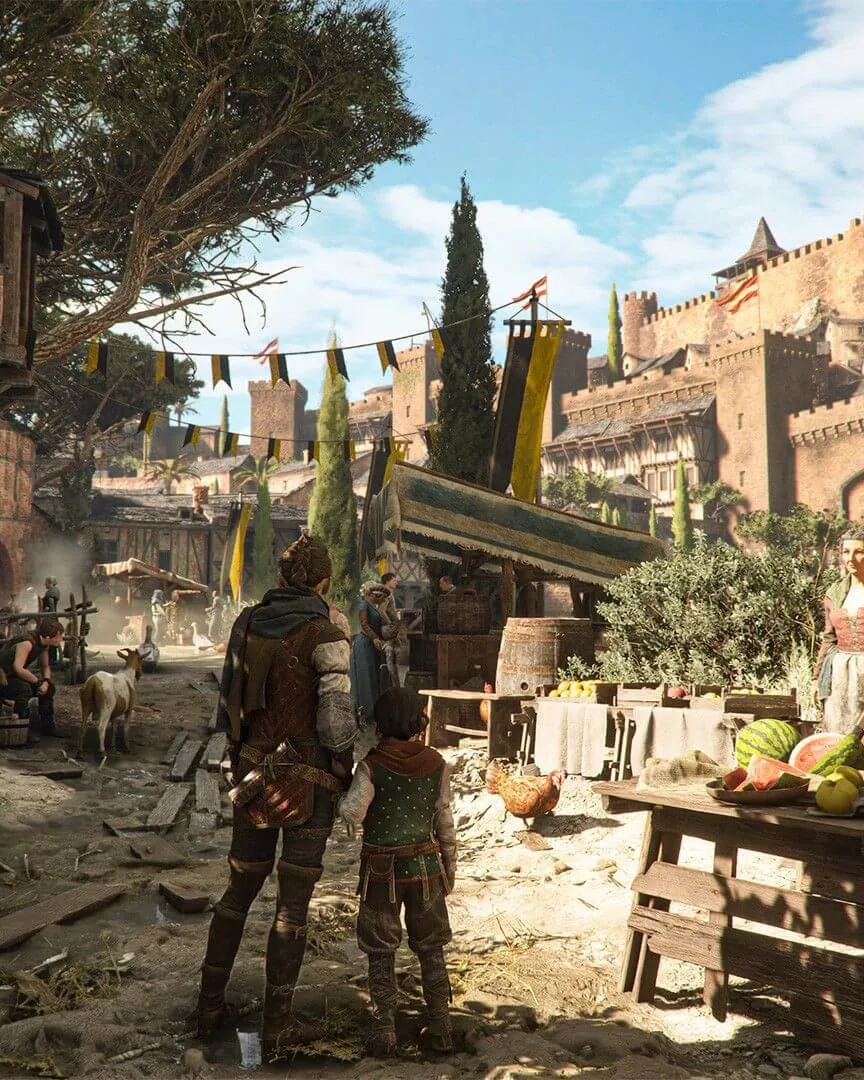
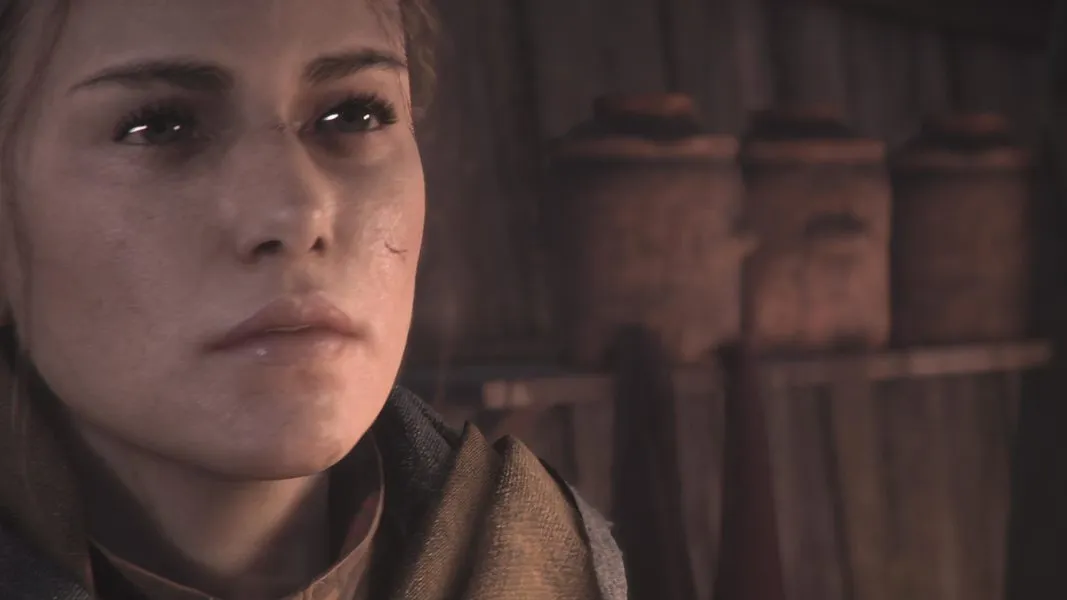
Technically A Plague Tale: Requiem offers super-realistic water and environment elements, pleasant animation and good detail on the main characters in cutscenes. Naturally, the budget nature shows in the environment elements, and invisible walls and the often single correct path can reduce the desire to explore the surroundings. What may push you to look around the corner, turning off the modest path, are the caches and puzzles. The latter are simple but well-implemented components of the game world.
A Plague Tale: Requiem is one of the brightest projects of 2022. An excellent, breathtaking story, many characters and mechanics, and the authors' own discoveries completely immerse you in a world of a local apocalypse, where behind the bloody sunset the dawn cannot be seen.
A Plague Tale: Requiem can be called a perfect game if you follow the rules and hints that the developers have left you. But as soon as you turn aside from this path you may run into outdated solutions, budget elements and AI problems. All this, of course, counts as minuses, especially against the background of flagship games at the level of The Last of Us. However, keep in mind that the French developers work with a budget about 10 times smaller than Naughty Dog's and still manage to delight and captivate, which deserves respect and high scores. If you like single-player story adventures, do not miss it. A flood of emotions is guaranteed.
Based on material from GameMAG. Translated from Russian.