King’s Bounty II Review
A review of King’s Bounty II: a turn-based tactical RPG reimagining of the classic with a Focus system, positional hex battles between small squads and a realistic style; the combat is deep, but the world is wooden, the interface weak and movement slow; the author thinks it can be loved in spite of its flaws.
A decade has passed since the “Russian game industry” was buried. I certainly will not be conducting a post-mortem or identifying the causes of the incident in this article. But it is important to remind, because rising from the ashes is no easy matter.
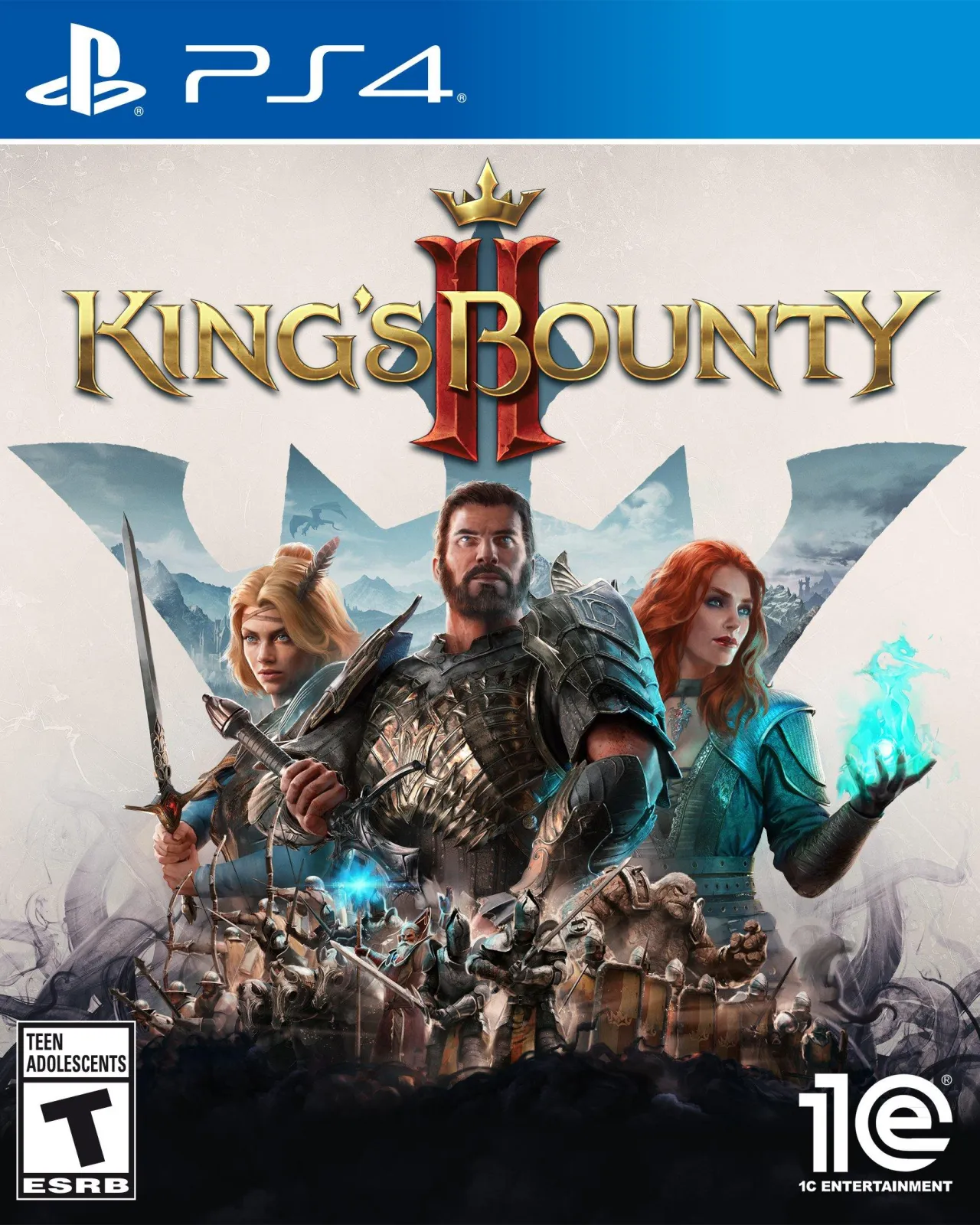
So, King’s Bounty II becomes already the second attempt to reimagine one of the most legendary games of 1990. It is KB that is the father of the “Heroes of Might and Magic” series. Surprisingly, for many this fact still escapes notice, despite our audience's love for the previous iteration of KB (Legend of the Knight (2008), Princess in Armor (2009), Crossroads of Worlds (2010)) from Katauri Interactive.
Perhaps it is worth saying right away that the number in the title does not hint at a sequel — calling the game simply “King’s Bounty” for the third time would be strange… and everyone is confused anyway!
I myself accepted the new look and shift of emphasis with great interest. The fairy-tale atmosphere of the previous games, together with the abundance of humor in the dialogues, was certainly liked. But endless add-ons bringing no new ideas ultimately drove the series into a dead end.
With renewed strength
King’s Bounty II shows the player right away that there will be plenty of changes. The urge to joke is a rare occurrence here. The slightly cartoonish graphic style has been replaced by a fairly realistic one. The camera has come down from the heavens to the ground, settling behind the hero's back.
There are still three protagonists. The Warrior relies first of all on the strength of the army. The Mage, on the contrary, compensates for meager military talents with the power of spells. And the Paladin is essentially something in between these classes. That is why I play the series' games precisely as a Paladin, and did not break tradition this time either.
Heroes now differ not only in their talents but also in character. Each of them actively reacts to events and communicates with those around in their own manner. The Paladin, for example, is distinguished by some degree of naivety and a striving for higher ideals.
Many game mechanics revolve around the idea of so-called focuses. There are 4 in all — order, anarchy, might and artistry. Each focus has a meter whose accumulation unlocks access to stronger talents in the branch. Many quests, in turn, offer several solutions according to one of these focuses. At the mage school one student will ask us to forge grades in the register. We can help him (get anarchy points) or tell the professor about the student's plans (we get order points).
Only the dead go into battle…
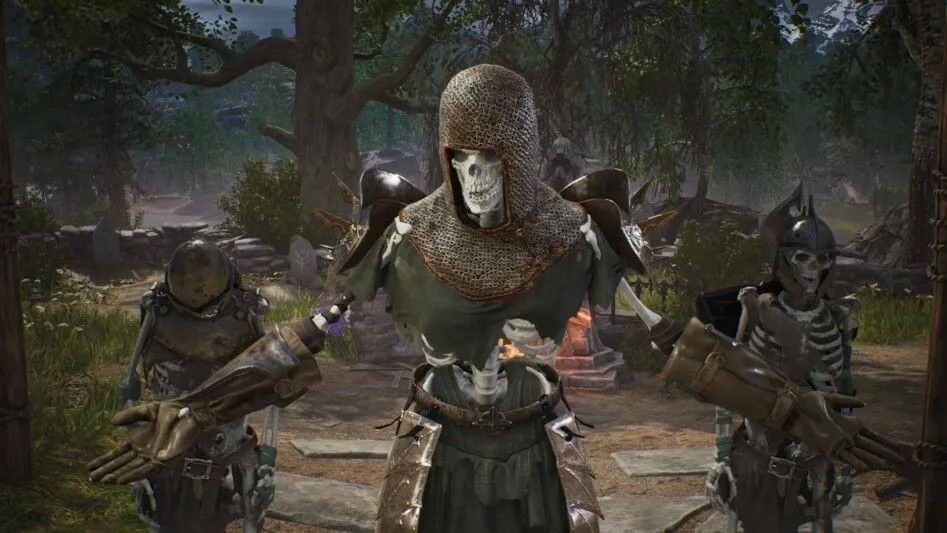
The combat system partly relies on focuses as well. Creatures are divided into 4 conditional factions. Order gets brave knights and mages, under the banner of anarchy there is a motley mix of undead and bandits, might unites animals and dwarves, and artistry consists of various elementals and similar creatures. Creatures of different focuses get along poorly in one army, mutually lowering the units' morale.
The battles themselves take place on the familiar field divided into hexes. We no longer lead armadas of thousands of imps and hundreds of dragons into battle. The average squad in King’s Bounty 2 consists of 5–10 creatures. At first such a prospect brings gloom, but later this feature reveals itself from a very interesting side. The fights in the game have become very positional. If an enemy squad stands in the adjacent cell, we can no longer calmly change position, since almost all creatures have a zone of control. In a situation where our squad stands next to 2 enemy squads, when trying to move to a new position it will first take a hit from EACH neighboring squad and only then move… if there is anyone left by then.
Terrain matters — archers on high ground get an advantage, and obstacles on the field help hide from shooters' line of sight. The battles themselves resemble puzzles in which you must pick the right composition of troops, arrange them advantageously on the battlefield and choose a winning tactic. You cannot just thoughtlessly send squads forward here.
At first such features irritate and seem excessively hardcore — I lost an entire squad more than once, simply forgetting about the zone of control. But after an adaptation period the depth of the combat really starts to delight. Because of the small number of units in a squad, you really do feel the loss of each fighter very strongly. And vice versa, a battered squad can deal fatal damage to a high-level enemy squad by killing one of its two creatures. Such a move can change the outcome of a battle.
Strolling through Nostria
Outside of battles King’s Bounty II wants to seem like a full-fledged modern RPG. There are side quests, exploration of big locations in search of resources with artifacts, and even lore notes generously scattered here and there about the game's world.
The story, though not brilliant, is logical and capable of interesting. The main thing is not to lose the thread of the narrative, because the game designers every now and then pull you out of the story branch and throw you into the open world to farm experience in side quests. After all, the difficulty of story battles often does not let you proceed further without accumulating enough experience for a couple of upgrades.
The artists did a great job — the design of the locations impresses, and you want to believe in this world. But the project's budget nature in places does not allow itself to be fooled. One wants to compare the whole game world to Pinocchio — it very much wants to be alive, feels like it is and has big ambitions. However, outwardly it comes across as very wooden indeed. There is a wagonload of technological flaws and a minimum of interactivity in the world — you will stumble over a basin bolted firmly to the floor, while listening for the hundredth time to the same dialogue, without facial expressions or a hint of mocap, between two NPCs who repeat it in a loop every time you pass by again (even if you moved away literally 200 meters and came back 2 minutes later).
Ever since the first presentations I have wanted to grumble about the interface. It is absolutely devoid of taste, designed in the spirit of a mobile game, and in battle does not even give enough information. You really cannot do this.
You can read about the character's movement speed in ten more reviews from other outlets, so I do not wish to dwell on it. Especially since, personally, this problem surprisingly did not bother me much. After all, you want to immerse yourself in the world, even if that is hampered.
King’s Bounty II is a game you want to love, but you have to do so in spite of it. The game has potential but demands motivation from the player. Still, the effort pays off and KB II has something to offer. Let us hope that the return of the renowned tactical series will not be limited to a single game.
Based on material from ProGamer. Translated from Russian.