In Search of the Flame: Final Fantasy XVI Review
A review of Final Fantasy XVI: the author praises the combat system, the scale of the Eikon battles, the voice acting and Masayoshi Soken's music, criticizes the uneven pacing and the plain side quests, and says the game found its flame and lit it.
If you ask a hundred people what Final Fantasy is, you will get roughly a hundred different answers. Among the versions voiced there will be obvious overlaps — people will agree that the game must surely feature magical crystals, a beautiful logo by Yoshitaka Amano, a cursor in the shape of a gloved hand, and big chickens importantly scratching the ground with their feet to yet another arrangement of the legendary “Prelude”. But everything else beyond the outer facade is strictly a matter of debate. And debates of this kind can develop in an endless number of directions. Nobody has so far managed to formulate a single methodology for defining the ephemeral “essence” of Final Fantasy, let alone any immovable truths.
But perhaps the blurry boundaries and recognizable inconstancy are exactly the constants that ultimately define Final Fantasy. No matter how hard internet revisionists try, they will not manage to rewrite reality: “that very” Final Fantasy never existed, and each new installment of the franchise surely became, for somebody, a game completely cut off from its roots.
The task of Square, and later Square Enix, has always remained the attempt to fill the series again and again with life-giving aether — to bring new worlds, legends, plots and heroes into reality. To reinvent itself without forgetting the gloved cursor, the big yellow birds, the “Prelude” and the magical crystals.
So is it any surprise that the working department Creative Business Unit III did exactly what was expected of it, setting off in search of a new flame that would become the heart of Final Fantasy XVI?
The inhabitants of Valisthea have a complicated relationship with magic. Literally all of life rests on magic — without the right elements there is no daily life, calm, order, peace or war. Born in the shadow of the Mothercrystals, people have grown so accustomed to miracles that they can no longer imagine their existence without their blessing — even a campfire is lit only with the help of fragments of magical stones. Dependence on magic, of course, also leads to conflicts, especially under conditions of a harsh shortage of the main resource — across two continents there are only five living Mothercrystals, gathering in their shadow several sovereign states that wait for rare moments of weakness in their neighbors, which open opportunities for military expansion and reshuffles of spheres of influence.
But not for everyone is dependence on magic merely symbolic. Any person may be born under the sign of a Bearer — come into the world able to channel magical aether through their own flesh, creating miracles even without fragments of the Mothercrystals. In Valisthea the fate of such people is slavery. Will-less things under the control of their masters, serving as living instruments to the detriment of their own health, since the use of magic often leads to sudden and agonizing death. According to the common law, every Bearer must be branded and never raise their head. In some regions Bearers are not considered people at all, but not in western Rosaria, where the branded, even while in servitude, can lead a relatively peaceful life.
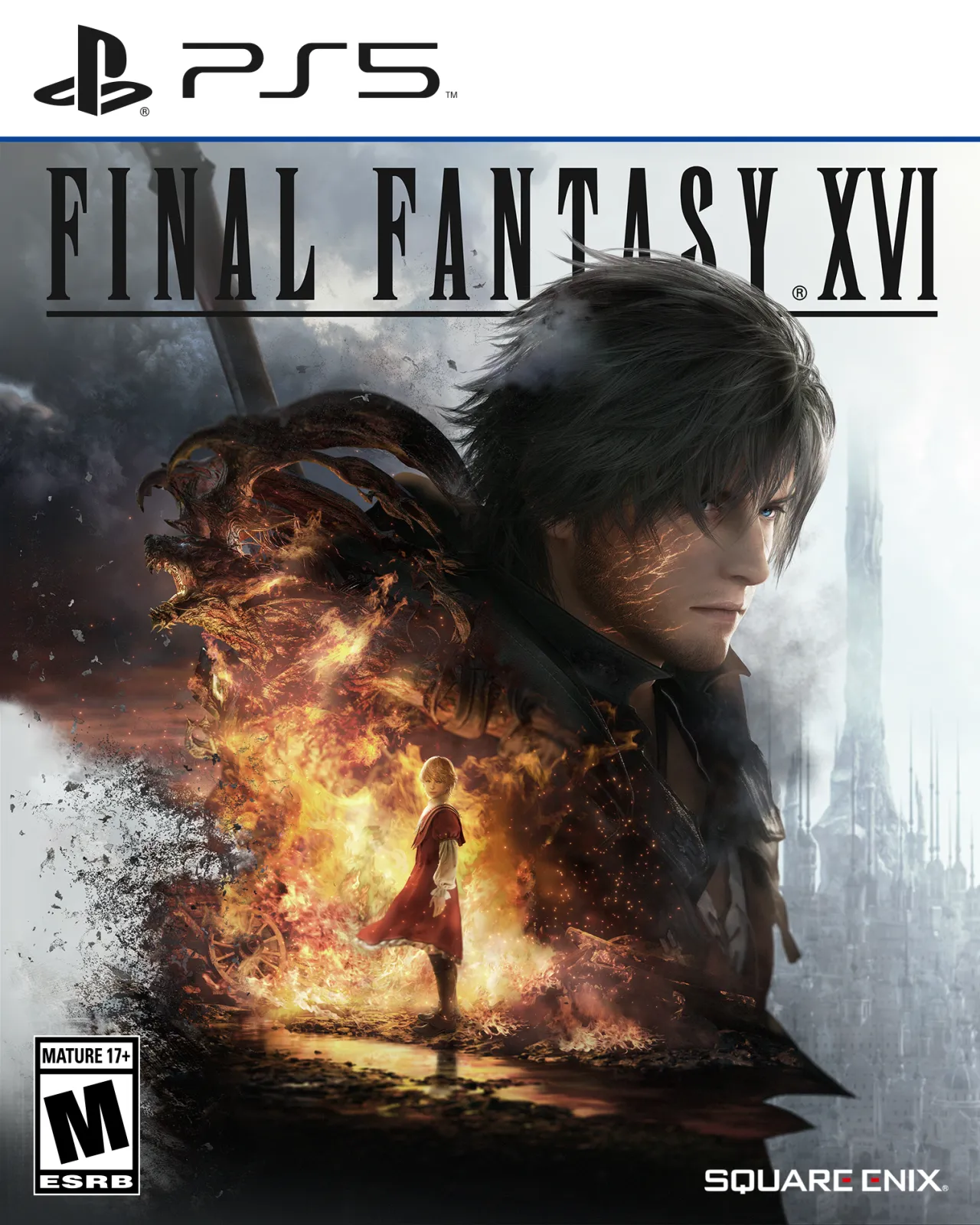
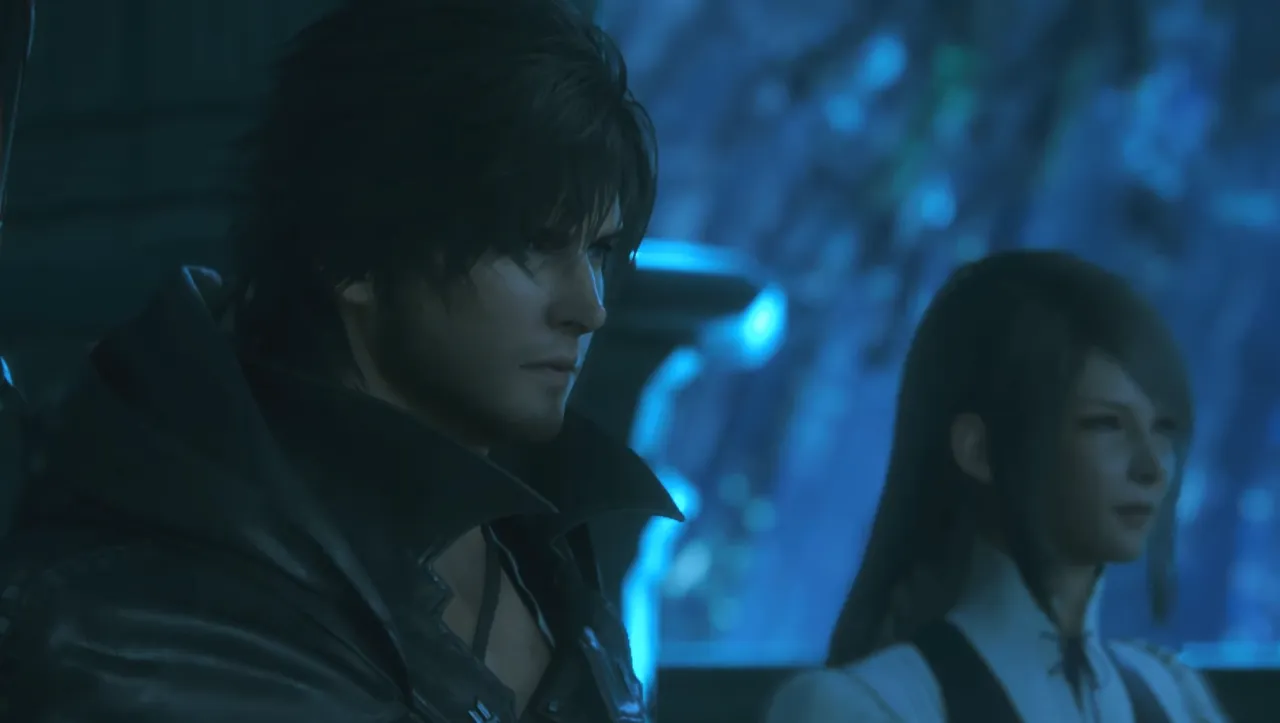
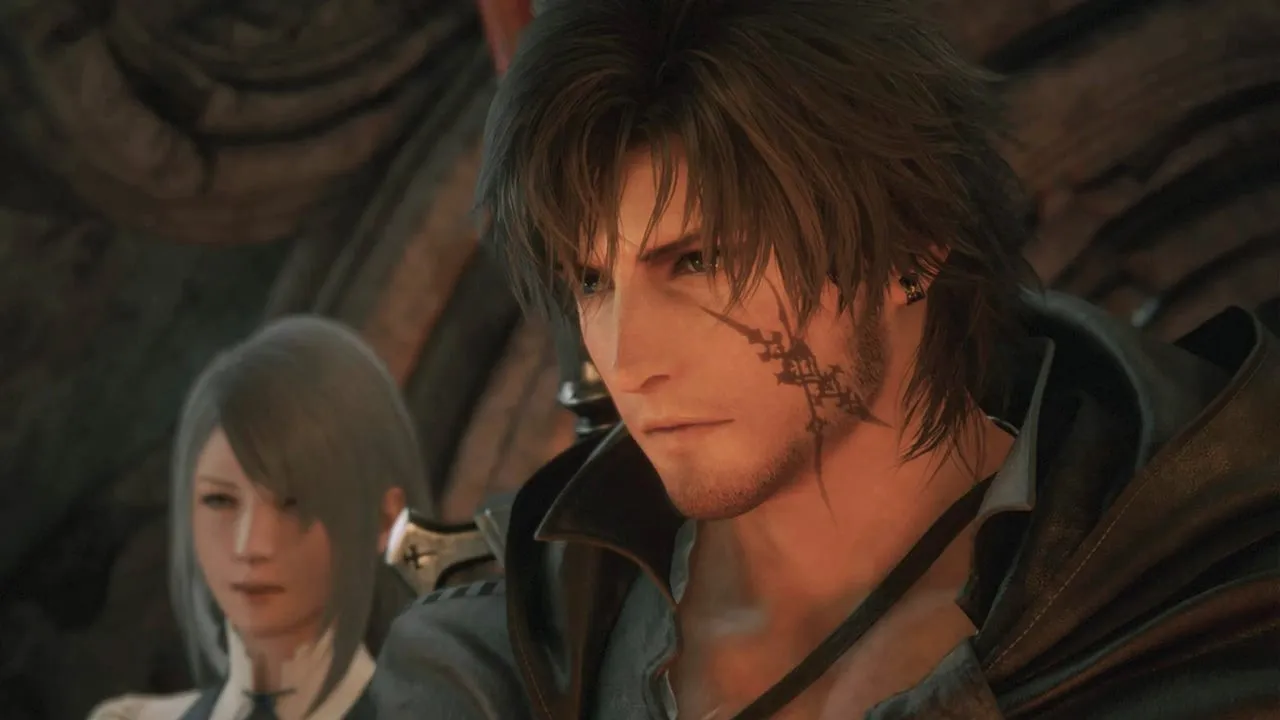
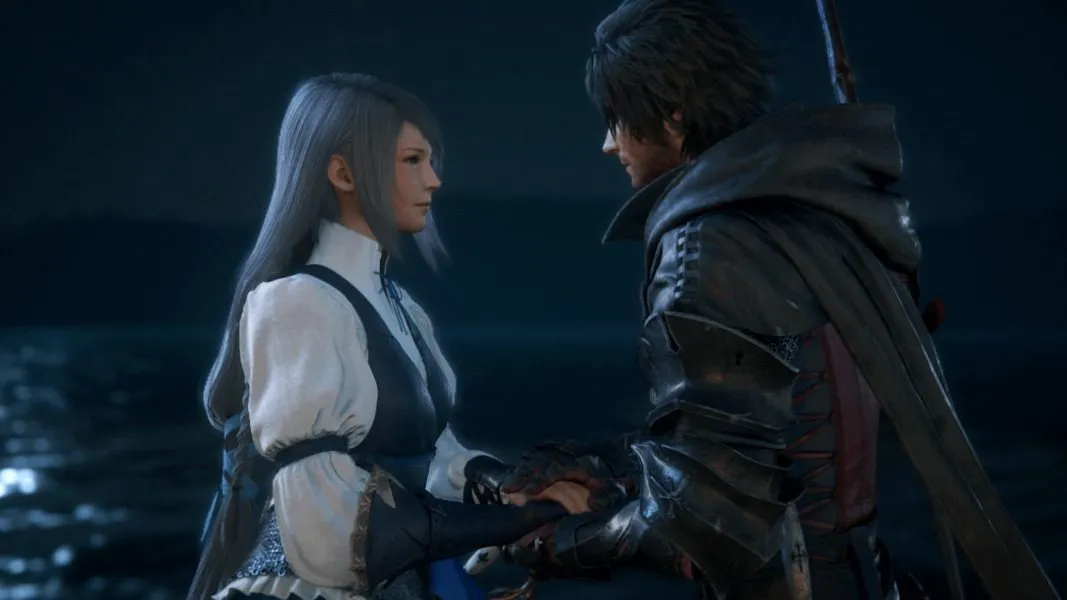
A relatively peaceful life in Rosaria is also led by Clive Rosfield, the protagonist of Final Fantasy XVI and the elder son of Archduke Elwin and Duchess Anabella Rosfield. From birth the boy was prophesied an important destiny — the sovereign's blood holds the power of the Phoenix, a mighty avatar of flame that chooses a human vessel for its continued existence. But Clive was not fated to become the Dominant of the Phoenix — this role was unwittingly fulfilled by his younger brother Joshua, while Clive was left only to become his faithful protector, receiving a high rank in the Rosarian army.
From roughly this moment the main narrative of Final Fantasy XVI begins. The game has a very pronounced and detailed setting, yet the writers spend practically no time on direct exposition, especially in the opening act. Instead of a detailed and consistent description of all the subtleties of the world's structure and the particulars of Valisthean politics, the game, without much grace, unleashes a large-scale interactive cutscene. Two tongues of flame intertwine into a full-fledged elemental disaster while in the background plays a musical composition solemnly announcing the coming end and new birth of the universe — so high, apparently, were the stakes. But before the clash of the two gods manages to reach its climax, the reel of running time makes several reverse turns and returns us to the events preceding the future tragedy. The tone is set, all the pieces are in place.
Now it is time to get acquainted with the mechanical core of the game. Final Fantasy XVI has no party system, and all battles take place in real time. Other characters often travel with the hero — they take an active part in battles, but you do not need to control them or monitor their condition; everything happens automatically.
You will not find hybrid half-measures or optional pause modes, like the mechanics of Final Fantasy VII Remake or Final Fantasy XV, either. Clive is controlled like any other character in a competently made action game, responding quickly to stick movements and easily changing direction even for the sake of the believability and realism of the animations.
At the start of the playthrough there is a limited set of abilities and skills. Armed with a blade, Clive can perform a series of lunges, initiated by pressing the attack button in sequence. The developers allow a similar combo in the air as well — there the number of attacks is reduced to three, the last of which sends the opponent to the ground. Magic spells serve as ranged attacks — having taken over some of Joshua's abilities, Clive can send clumps of flame toward enemies, dealing insignificant damage. Among the defensive options, dodging and parrying are available — the first means a timely maneuver away from enemy attacks, while the second requires fitting your own lunge into a few frames of the opponent's animation, which temporarily makes them vulnerable to further damage.
The last link in the main mechanics of the combat system is the active abilities of the Eikons. They fall into two types.
The first are the Eikon's main abilities, diluting your moveset. For the Phoenix this is a dash forward, letting you instantly close in on your target.
The second are abilities triggered by holding a trigger and two face buttons. At first only two options are available, also tied to the Phoenix's power: a mighty uppercut that lifts the opponent into the air, and an area attack capable of hitting several enemies at once. Active abilities do not depend on any resource like mana, but work on a cooldown — each ability has a recharge time within whose limits it remains unavailable for reuse.
The rhythm of the fights is as follows. Most opponents have a main health bar as well as a stamina bar. Each of the hero's attacks deals damage to both gauges at once. Burn down the health gauge — the enemy falls; burn down the stamina gauge — it enters a stunned state, where for a limited amount of time it takes double damage. In battles with strong enemies you need to find the right balance, not wasting all your active abilities before the opponent is stunned and at the same time not letting up the pressure. As soon as the enemy falls to its knees, you unleash all your might on it, and repeat this until victory.
Now to the most important thing. Final Fantasy XVI has an excellent combat system with a magnificent technical implementation. All the elements conceived by the designers work at an even pace and remain intuitively clear from the first hour to the last. Animations are easy to read, the properties of the actions performed raise no questions, and mistakes only motivate you to play better. The only question that remains is your interest in mastering the tools presented by the developers.
The game is very easy to figure out, and as soon as you feel the basic principles of the combat mechanics you can congratulate yourself on victory — the knowledge you have gained will last until the final credits, you will definitely not have to beat your head against a wall, since the standard difficulty will certainly not cause you any trouble. Moreover, the rare hard episodes can be eased without any penalties through the use of special rings — they automate part of the gameplay systems, allowing even those who are quite far from the genre to complete the game.
The thing is that you have to fight in Final Fantasy XVI a lot, and very often, because of which, standing on a low floor of gameplay skill, you risk tiring of the gameplay or mistakenly hurrying to accuse it of lacking depth — that is not so.
Already within the tutorial, Clive's moveset can be expanded with several important additions. A magical burst can be fitted into each of the four standard strikes — instead of mindlessly mashing the attack button, you need to memorize the rhythm, where each press of one button is followed by a quick switch to another. This system not only lengthens your series but also deals additional damage to the opponent's stamina. The same principle applies in the air.
Aerial pirouettes require separate skill. Having unlocked the ability to perform charged attacks, you can use Clive's burning sword for an effective launcher — leaping to launch enemies into the sky together with yourself, where you quickly continue the series of attacks you started until the enemy falls to the ground. To stay in the air as long as possible, a skill that lets you jump off enemies right in mid-flight comes in handy — simply put, a standard jump cancel, thanks to which an aerial series of two hits has the potential to grow to six.
You can charge not only the blade in combat but also ranged spells, which considerably increases their damage and also grants several frames of invulnerability during the attack animation — you will figure out quite quickly that this is an easy way to avoid even the most powerful enemy area attacks. Notably, the process of charging abilities during fights can be carried out at any time and in any plane, so there is always an opportunity to finish a combo with a powerful finisher, launcher or defensive maneuver.
Another gameplay element is the wolf Torgal, who in combat serves as an additional pressure tool or an extra launcher. In all, the companion can be given three commands — launch a standard attack, activate a maneuver tossing the opponent into the air, and ask for restoration of fragments of lost health.
Some abilities also have modifiable properties depending on the way they are used. The local “Stinger”, which propels the hero toward enemies from long distances, gains increased damage, and the ground attack with a charged sword begins to hit an area. Later you gain access to the limit break, a separate form of Clive in which all his attacks have increased speed and damage, and his health goes into active regeneration.
The details described above are the subtleties of the basic moveset, not touching the Eikon abilities, on which the rest of the mechanics is built for the most part. If at first only the Phoenix is available to you, the arsenal gradually grows with other Eikons — in all, you can have up to three in rotation. Each of them bets on different things — Garuda lets you pull enemies toward you from a distance and quickly stun them, Titan lets you block and parry almost any incoming attacks, Ramuh easily weakens large groups of monsters, and Shiva can immobilize targets. It is easy to see how all this opens new options and possibilities for effective and spectacular combat. It gets better from here, but only within strict story progression.
From here may grow another frequent complaint about the game. Clive receives the full toolkit shortly before the end of the main storyline, so you can experiment with fights using the full set either in “New Game+” mode, which offers increased difficulty and reshuffles of the enemy lineup in arenas, or in a series of arcade challenges — replays of story sections for a rating and a set of separate combat challenges.
The role-playing system is linear. Experience is divided into two separate gauges, the first of which governs Clive's level and the stats tied to it, while the second provides points with which active skills are bought and upgraded. The latter can be reset at any moment and redistributed anew — the only question is choosing skills that are interesting and necessary to you.
The situation with equipment is similar. There are three slots for accessories that modify certain stats and skill properties, as well as three slots for weapons and armor — here you always move in one direction, methodically replacing worse options with better ones. You will not be able to outpace the development vector set by the game — new items enter the inventory at specific points in time, depending on story progress.
All of Final Fantasy XVI lies under the yoke of the dominant narrative. It is in every respect a traditional Japanese old-school “story” game, where there is a clearly formed sequence of events and episodes to which the rest of the project's parts are subordinate. There are a great many cutscenes, and they are interesting to watch — the characters independently and convincingly resolve the narrative conflicts that arise, under the weight of circumstances determine the further course of action, and invite the player to join — often as a spectator rather than a direct participant.
Structurally this means that the storyline sometimes fully determines the gameplay events — if Clive and his allies need to go to a mysterious dungeon, a journey through gloomy interiors and a set of combat arenas awaits you. If the hero decides to take a break and rest, the gameplay part will consist of passively exploring one location or another and chatting with static characters.
Locations are most often presented as closed sections divided into several self-contained zones. The developers lead you by the hand through each of them, gradually opening more and more parts of the map. Technically the world is very static and in the course of the playthrough goes without noticeable external metamorphoses. At the same time certain reactions to the events taking place and details are still present — characters and their lines change, and in the place of a once-living village an empty cemetery grows.
Sometimes the game takes big pauses and lets you breathe a bit more freely — go off on your own to look at hidden nooks of open-to-visit levels, turn to merchants and craftsmen for new equipment, or take up optional content. The latter was often criticized in foreign reviews — and there are reasons for that.
Apart from the tragic story of Clive's struggle for freedom and for the right to live and die on his own terms, you can do two things in Final Fantasy XVI — hunt especially strong monsters (keep Final Fantasy XII in mind) and witness small sketches from the difficult lives of the people of Valisthea.
Hunting is a purely gameplay element. You receive a contract, track the target and engage it in battle. Most often the monster is a strengthened or slightly modified version of previously encountered creatures, dressed up as a mini-boss. Fighting is interesting (for the reasons described above), especially if there is a gap in levels between you and the opponent — then every missed blow feels particularly sharp. As a reward you are given experience points, skill points, money and materials for crafting equipment.
Side quests are small tasks, most often given by secondary characters. Each of them has a specific story context — you learn about the tragedies, victories, defeats, successes and failures of little people, slowly adding to your store of knowledge about the local setting. The central narrative core rarely changes — each time you are shown plainly how inconstant and fragile life is in Valisthea, especially from the perspective of the branded Bearers. The stories themselves are touching, sometimes sweet, more rarely funny and life-affirming, but they cannot boast any expressive presentation.
In form, practically every side quest requires you to make a routine run through already familiar scenery, talk to the right extra and carry out a simple errand — find the right item or defeat a group of enemies. Sometimes both at once. The reward for them is also not what you would call attractive — a little experience and another set of crafting resources. The exception is special side quests marked with a “+” icon — completing them gets you something special, including the ability to travel by chocobo.
But even despite the obvious simplicity of their execution, you should still not ignore the optional missions. The central events of Final Fantasy XVI span a period of 18 long years, during which you meet about a dozen heroes, watching the intertwining of their fates. Some important and well-written lines hide precisely in the side quests, and somewhere a through narrative is even stretched across a series of auxiliary activities — important narrative guns may be hung in the first ten hours of the playthrough only to go off with thunderous volleys closer to the end of the game. You will be able to fully appreciate the idea only by showing the developers enough trust and a small but necessary drop of patience.
Periodically the principle of presenting material from the side quests starts to seep into the main storyline of the game as well. A vivid section with desperate battles, emotional swings and wonders of virtual direction suddenly gives way to the need to work as a waiter, or go to the store for peas and garlic. Why this happens is quite understandable. A game designed for fifty hours of gameplay cannot permanently hold an equally high pace — sooner or later either the player or the budget allotted to the developers will tire. Besides, the interludes create the necessary windows for all the dramatis personae to have the chance to fully embody the roles assigned to them. In the end, the story of Final Fantasy XVI spans a significant period in the lives of an entire ensemble of heroes pursuing their own goals, along the way coping with many difficulties and hardships. A classic situation for drama.
However, in the case of Final Fantasy XVI the swings from minimum to peak values are far more noticeable than in almost any other game. The reason for this is the unthinkable scale that these peak values allow themselves to reach.
Most likely, even before the game's release you heard what role the Eikons play in it — avatars of magical elements that find temporary refuge in exceptional people, the Dominants. Even the logo, which shows an iconographic battle of the Phoenix with Ifrit, shouts that the mighty Eikons are bound to clash. But what the artists and designers of Creative Business Unit III were evidently unable to convey, even through many trailers and interviews, is the completely insane level of execution of every scene in which the Eikons are given the central role.
Today the chibi models and minimalist graphics of Final Fantasy VII evoke a timid smile of tenderness. In 1997 the sword swings of Cloud Strife and the monstrous metamorphoses of Vincent Valentine caused incomparable delight — technological wonders drew completely unthinkable things on pot-bellied TVs. Square also fully realized the monumentality of that transitional period, so the process of summoning the Knights of the Round or Sephiroth's casting of Supernova took two minutes of real time each, every moment of which you wanted to capture and hang on the wall in a frame — so this is how beautiful digital toys can be.
The Eikon fights in Final Fantasy XVI are the closest you can come today to those impressions. They cannot be overpraised or overestimated; each of the scenes involving them is a completely grandiose synthesis of the most beautiful three-dimensional graphics, the imagination of the directors and soul-shaking musical accompaniment by the composer Masayoshi Soken. These are, without exaggeration, among, if not the most, large-scale interactive sections in the history of the industry, leaving far behind all other attempts to surprise you with gigantism or inventiveness of direction.
If you cannot play the game right now — do yourself a favor and never watch these sections in compressed videos on YouTube or Twitch without the necessary narrative context. That way you will only spoil your impression of an attraction of spectacle and style that is rare in its level of execution.
But the quiet moments also have something to offer in Final Fantasy XVI. The script carefully lays out truly modest and sincere scenes with an openly vulnerable soul — there was room for manly bravado about the weight of duty, and for existentialism about the unchanging essence of the human soul, and for an awkward love story that so easily falls into the canons of the romantic storylines of other installments of the franchise.
Ben Starr, whose voice speaks for Clive Rosfield in the English version, performed the character impeccably, endowing the role with all the necessary emotional nuances — sincere anger, complete despair, unbearable longing and tender care. Other voice actors can be praised as well. You will not hear Troy Baker, Nolan North, Laura Bailey or Ashly Burch in the game; almost the entire cast consists of actors unfamiliar to the ear, which together with the vivid script adaptation by Michael-Christopher Koji Fox makes even insignificant dialogues both natural and appropriately theatrical.
Promotional trailers aggressively insisted that Final Fantasy XVI is a game about the hardships of revenge and the scars left on the body of a person who has stepped onto the path of retribution. Some of this is indeed in the game, but there was room for many other ideas as well — the traditional hero's journey, searching for oneself, the continuity of ideals, the mysteries of a perished civilization and big politics with conspiracies, murders and manipulations paid for with thousands of innocent lives. From a certain angle you can even make out in the plot a certain share of meta-narrative in the context of the franchise as a whole, where names and the weight they carry are called into question.
So that you never lose the thread of the narrative during the playthrough, the game also implements one of the most detailed and thoroughly written virtual encyclopedias. During any cutscene you can pause its playback and, with the press of one button, open an auxiliary menu where information about all the heroes and settings involved in the episode is set out in a convenient format. The information is updated dynamically — the game tracks the progress of the plot, making timely adjustments to all the data blocks. And if even that is not enough, in Clive's camp you can open one more menu section, where all events are presented as detailed infographics — heroes, their relationships, events, actions and plans are displayed schematically. Beautiful, and above all very convenient.
By the finale the narrative loops back to Clive and his exceptional destiny, or rather the hero's unwillingness to languish in the shackles of a heavy fate, and arrives at a satisfying climax — naive, sincere and full of bright hope.
As befits a work with the name Final Fantasy on the cover, the player's emotional resonance with the events on screen is complemented through the musical accompaniment. The time has passed when the library of Masayoshi Soken was locked behind a hundred hours of progress in the story quests of Final Fantasy XIV – in Final Fantasy XVI the composer's expressive works sound right from the main menu to the very finale. The musical album turned out extremely heartfelt and of equally stable quality, regardless of what role a track must play — charge your body with adrenaline or dispose you to contemplation of nature untouched by humans.
The trailers featured loud orchestral works with dominant deep male vocals, and if the right motif has already started playing in your head — you can rejoice, because in the game itself it has found many uses in the most varied episodes and in several unique arrangements that even manage to adjust seamlessly and dynamically to gameplay sections.
Some tracks allow themselves open quotation of works by other composers who previously worked on Final Fantasy. For example, the opening wind part of the main battle theme is borrowed from “Don’t Be Afraid”, heard in the battles of Final Fantasy VIII.
The most important thing the Final Fantasy XVI soundtrack manages is to unerringly set the rhythm perfectly suited to the game, even under conditions where the progression of the melody implies a transition from aggressive percussion to noble violins and a fairy-tale waltz.
If you have ever played Final Fantasy XIV, you know perfectly well how Masayoshi Soken experiments with sound, adding to scenes music with a seemingly alien style and instruments — Final Fantasy XVI has such tracks too, but they are better heard directly in the game, context again plays a very large role.
From Azzy**: One of the most important elements of any Final Fantasy is the soundtrack. Over the series' existence the musical accompaniment has become as recognizable a signature as Chocobos or Moogles. After the departure of Nobuo Uematsu, new composers tried to match the high bar, but this did not always work out. This time the music was entrusted to Masayoshi Soken, who has long worked with Naoki Yoshida's team and wrote the soundtrack for the multiplayer Final Fantasy XIV.
From the start screen the composer makes clear that the task is well understood. The epic adventure in the European style begins with a lively march accompanied by an orchestra and beautiful, soothing female vocals. At the same time that very “Prelude” breaks through the dense sound, telling you that this is still Final Fantasy.
During the game the music keeps changing and tries to emphasize the needed mood, winding string and vocal parts around the dense ranks of the orchestra or, on the contrary, relieving the atmosphere with a more spacious and unhurried sound. There are also the soulful piano compositions traditional for the series, yet for the most part Masayoshi Soken concentrated on richer orchestral parts. The composer also flirts not only with motifs familiar to the series but at times refers to well-known fantasy themes, such as “Game of Thrones”, “The Lord of the Rings” or “Skyrim”. The hints are unobtrusive and barely noticeable, but if you listen to the music apart from the game, they are easy to spot. Some compositions will surely settle firmly in your player apart from the game.
Having firmly set yourself the goal of exposing as many flaws of Final Fantasy XVI as possible, you will easily find something to scold this game for. Especially if it did not suit your personal preferences right away. It is easy to understand the frustration that may be caused by the uneven pace of the narrative or the lack of tactical depth in character building and development.
Yet within the concept chosen and formed by the developers, Final Fantasy XVI offers everything that could be expected of it. Everything, and even a bit more. It is a cohesive, consistent and complete game. Artistically calibrated and very even. The world of Valisthea has confidently taken its place on the pages of history, standing in one row with Ivalice, Spira or Eorzea.
The Creative Business Unit III team not only successfully found the coveted spark but also found a fitting use for it. The shining flame flared up. And the heart of Final Fantasy XVI has forever come to rest in the embrace of the brightest fire.
Note from the original outlet: the copy of Final Fantasy XVI for PlayStation 5 on which the original review is based was provided to its author by the company Achivka.
Based on material from GameMAG. Translated from Russian.