Imperfect Sadness: A Review of Decarnation
A review of the narrative horror game Decarnation from Atelier QDB: the story of a fading cabaret star, flawless pixel art and sound with simple linear gameplay; the author calls it a deliberately unpleasant work that demands emotional investment.
The description of Decarnation on digital store pages states outright that the game is inspired by the works of David Lynch and the Silent Hill franchise. Understanding the sources of inspiration the developers chose, only one question remains: did such expressive reference points take away Decarnation's own identity?
No, they did not. Despite the Atelier QDB team's wish to emulate the works of famous authors, Decarnation looks nothing like a journey through misty hills or abstract drives down a highway to nowhere. The influence of the films of director Satoshi Kon shows through far more strongly, and even then with reservations — the parallels exist only in certain narrative ideas and themes on which Decarnation offers its own take.
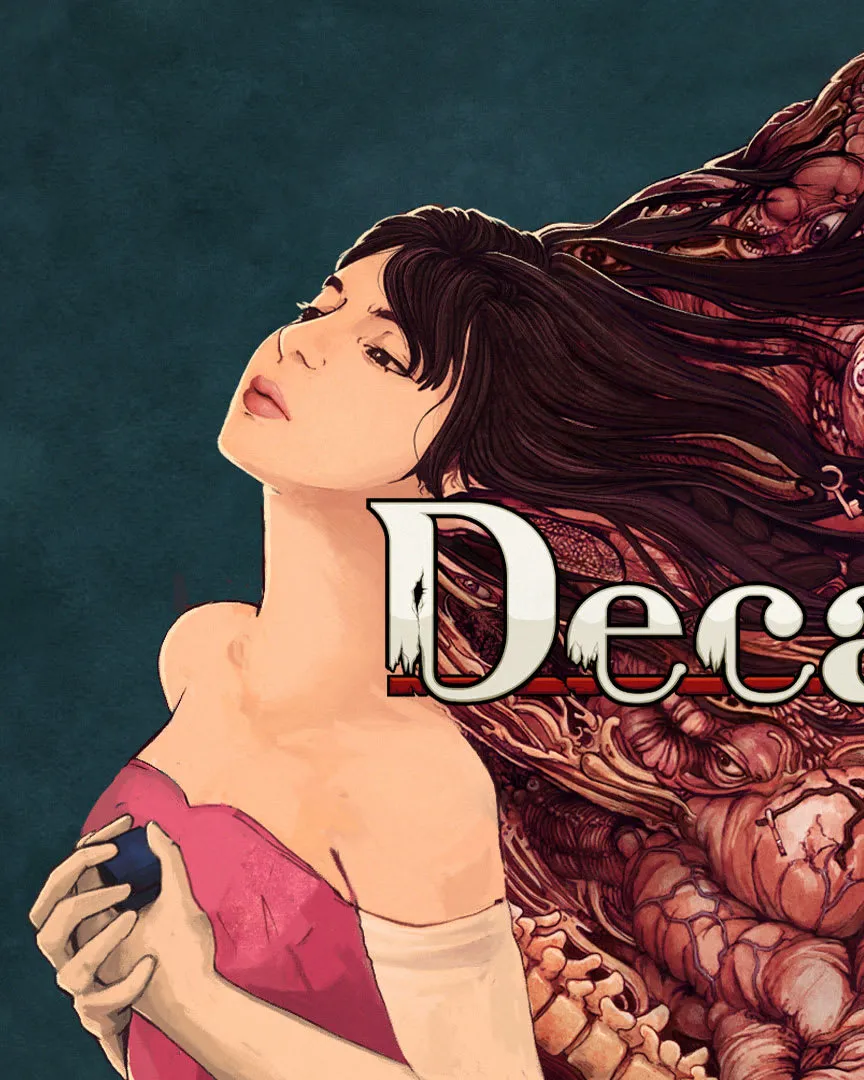
Gloria is a star of a popular Parisian cabaret club. The girl's performances are very popular and draw many spectators. However, a career in the entertainment, beauty and fashion industry is fairly short-lived — new bright little stars are bound to light up in the sky, while talents once adored by fans gradually fade.
The prospect of becoming forgotten and unneeded is Gloria's main fear. Trying to cope with stress, the girl seeks support both among her close circle and within her work environment. However, no one can dispel the performer's anxieties, so every day Gloria gradually sinks deeper and deeper into the quicksand of despair, feeling that at some point in her life she will wake up completely broken, withering and needed by absolutely no one.
An unknown admirer unexpectedly extends a helping hand to Gloria. The mysterious person promises incredible yet so alluring prospects. The girl's bright life may go on, and her career may take another turn to the thunderous applause of sincere admirers.
Of course, the louder the voice of hope sounds, the more painful and sharper the disappointment at its impossibility will be. In Gloria's story hope will be replaced also by despair — cold, viscous and full of nightmares you would not see even in the scariest dreams.
Decarnation's main merit is an even and interesting presentation of themes atypical for games, without vulgar tastelessness or a tilt toward quoting other works of art. The story the authors invented can be taken from very different perspectives — both as a global critique of the entertainment industry and imposed beauty standards, and through the lens of personal human fears of the natural passage of time and the inability to resist the shaky impermanence of the things we are used to.
The project has to be described extremely carefully, because it is best encountered without any preconceived expectations and hopes. The game is sensitive to spoilers, and even a synopsis you have read risks undermining your impressions of particular scenes — that is how it is presented here.
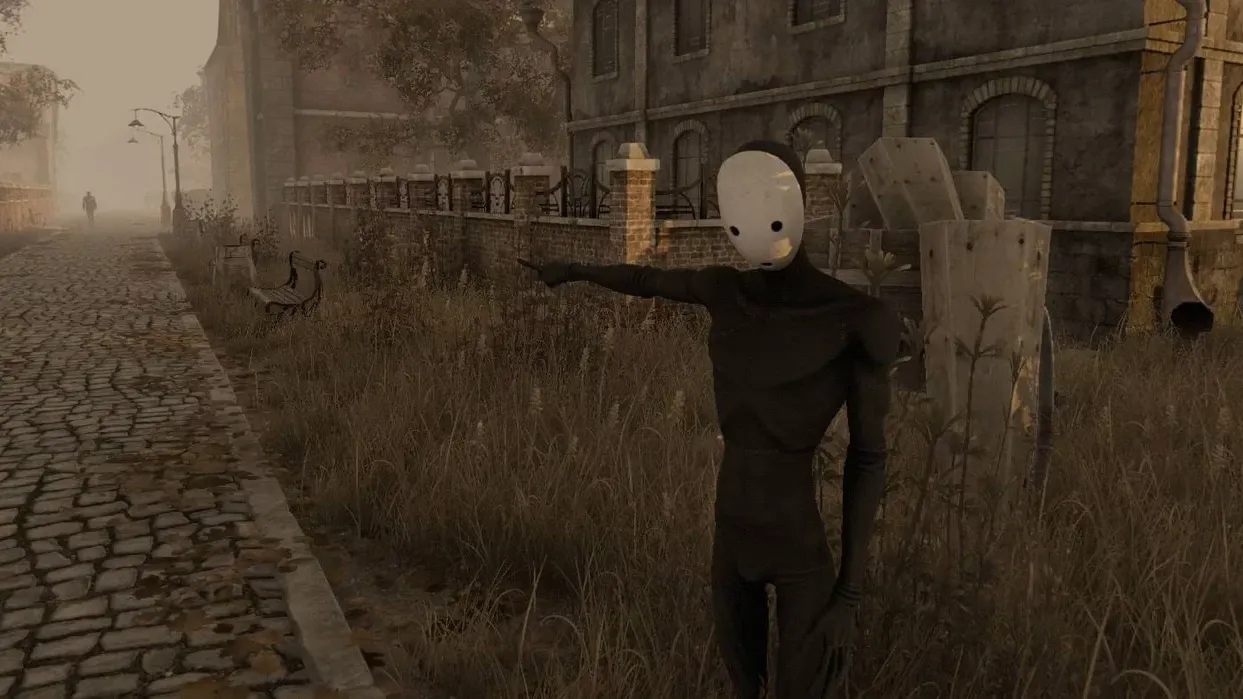
The authors from Atelier QDB did not set out to find especially ingenious ways to make Decarnation's narrative and gameplay get along. So from the standpoint of a “game” the project is very easy to describe — in a linear manner you explore hauntingly beautiful locations, interact with characters and objects, and more rarely solve puzzles or riddles. Sometimes Decarnation introduces a simple mechanic in an original way, such as a small rhythm section that is later reused but in a completely different context — all of it works for the narrative.
At the same time you are unlikely to complain about Decarnation's simplicity, because it very deftly lulls your vigilance and easily shifts attention to the elements the developers need.
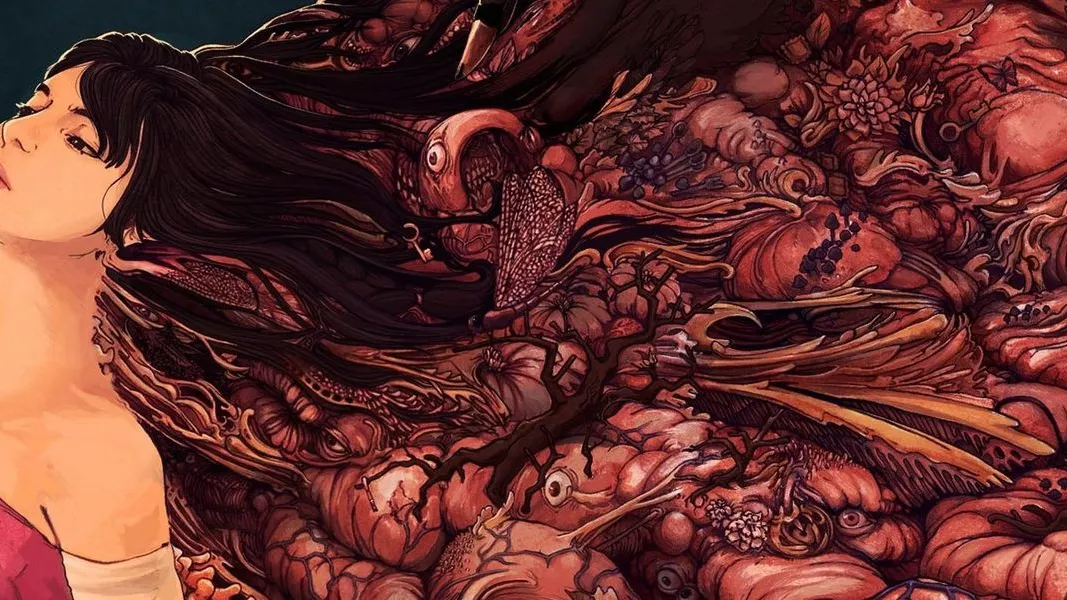
First, the game is flawlessly executed visually. The artists found the perfect balance between abstract minimalism and the utmost grimy expressiveness of individual details. The transition from everyday outward elements to ever more abstract and repellent images is done very successfully. If you love modern pixel art and unclouded macabre, there is plenty of it here.
Second, alongside the graphical shell sits an equally successful audio and musical performance. Considering the story context, music in Decarnation plays a very large role — sound is used both to set specific moods and as a tool in the writers' hands. The overall sound leans closer to dark ambient, but there are also melodic compositions with consistent and vivid progression. Notably, composer Akira Yamaoka had a hand in some of the tracks — they are quite easy to recognize by their interesting sound.
It is hard to formulate any direct recommendation for playing Decarnation. It is a properly “unpleasant” work that demands emotional investment from you — with a promise to give back only feelings of anxiety, bitterness and midnight melancholy. On the other hand, it is obvious that these are exactly the goals the developers set for themselves.
Decarnation is like the reflection of a withering plant. The once majestic bud has already lost its stately form and shade, yet on its way to the ground the flower has acquired a different grace. Not what it was before, but no less attractive. Beauty can be seen even in decline — the main thing is to find a suitable witness. Which, in fact, is what the game is about.
Based on material from GameMAG. Translated from Russian.