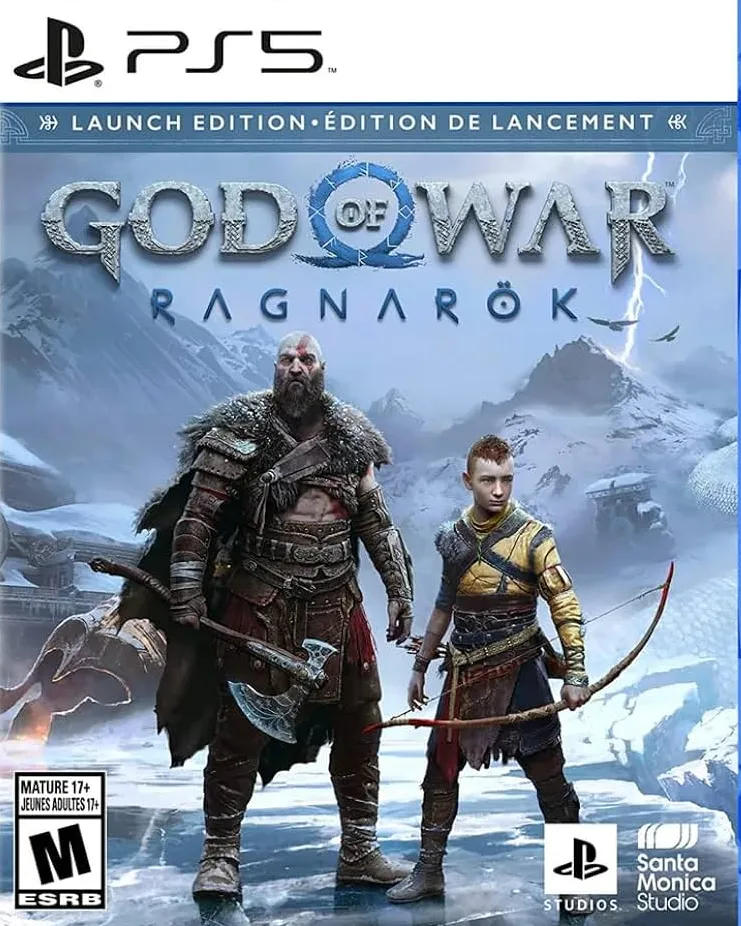
Epic Greek-Norse Saga: God of War Ragnarok Review
A review of God of War Ragnarök: the author praises the story, dialogue, acting, art design and the music of Bear McCreary, and notes that the gameplay has changed only in points compared to the 2018 game.
The God of War series has two key developers. The first is its creator David Jaffe, and the second is Cory Barlog, who also stood at the origin of Kratos's adventures as lead animator and headed development of the sequel when David left the studio, and later was responsible for the narrative in many other installments. Over the years of its existence God of War changed development leads more than once and successfully squeezed everything out of Greek mythology, and after God of War: Ascension took a five-year pause. During that time Barlog managed to move to Crystal Dynamics and come back to Santa Monica Studio. Despite the fact that Barlog wanted to work on a completely new game, Barlog was asked to reboot God of War. Taking the opportunity, Cory moved the events to the Scandinavian expanses, and Kratos became more restrained and was no longer portrayed as a ferocious antihero blinded by rage.
The new story tried to be more balanced, well thought out and human, which both players and critics liked very much. Barlog laid a serious foundation in God of War (2018), but did not take up continuing the Scandinavian story personally. Instead, as had been the wish, Barlog focused on a new project, watching over the sequel only as a producer. At first we worried a little about the development of “Ragnarök”, but after the first trailers it became clear that Eric Williams had treated the project with enough care.
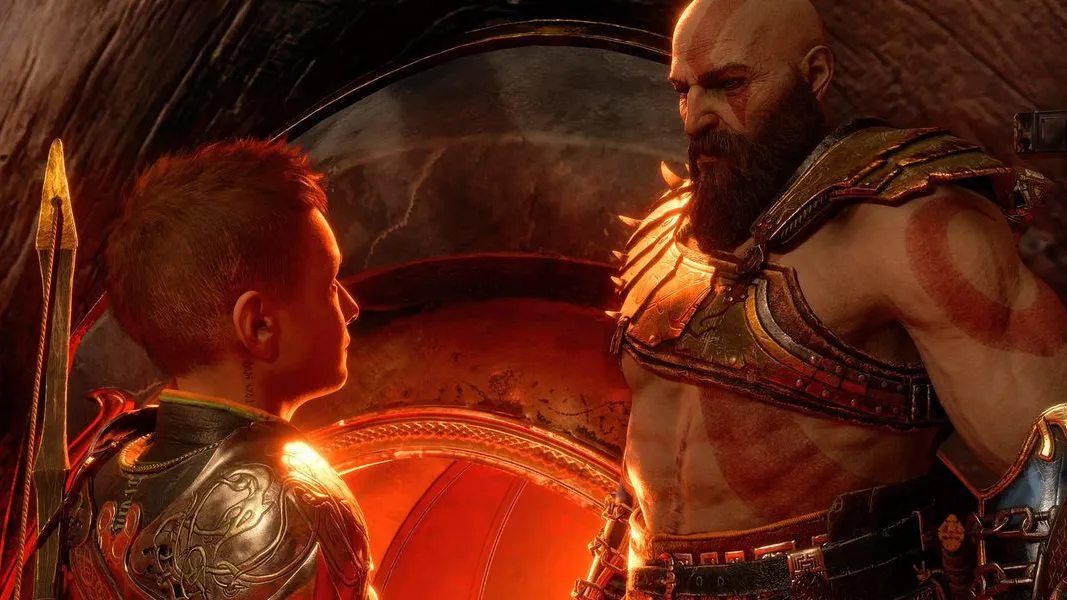
The story begins some time after the events of the previous part. A blizzard rages in Midgard and the so-called Fimbulwinter (“the Great Winter” that precedes the apocalypse) is in full swing. The locations are heavily snowed in, the lake has frozen over, and some of the buildings around Tyr's temple have collapsed. In that time Atreus has noticeably grown up, which some characters also remark upon. After several introductory scenes, to the accompaniment of thunder and lightning, Thor appears. The huge red-haired warrior looks impressive, especially when standing next to Kratos. This scene immediately demonstrates the straightforward and artless character of the Greek, but it is better not to reveal the essence of the setup so as not to spoil the impression.
The story, as last time, is presented as a single continuous shot, and the chosen angles and camera movements between characters often try to keep the perspective at eye level, which creates a sense of presence and direct participation in the events. This game has many spectacular scenes and epic battles for which the series is so loved, yet the story that began in 2018 is more about the characters, their relationships and development. At times Kratos continues to show remarkable stubbornness, but over time stops being such a harsh tyrant toward his son, while the son, of course, sometimes acts dumb like a “juvenile moron”, but grows beyond himself, trying to correct his mistakes. Incidentally, other characters also change over the course of the narrative.
One of the main features of the story of God of War Ragnarök is the dialogue. It can be very pompous or very heartfelt and touching depending on the scene. There is a lot of talk here about fate and free choice, about the motivation of this or that action and its significance for those around. The characters often touch on themes of responsibility and also reflect on the relativity of the notions of good and evil. At times one even recalls that very meme — “Hans, are we the baddies?”. The story also has a tale of revenge and redemption, which I personally liked much more than in another well-known Sony exclusive. It may be a revelation to some, but such an idea can be developed without contrived and exaggerated drama involving the murder of pregnant women.
It is also important to note that the writers brilliantly played the events of Norse mythology off against the actions and character of Atreus. In such moments it is clearly noticeable how the authors studied the legends connected with the Aesir and tried to weave them into the narrative as carefully and logically as possible. On the whole the entire main story and some side quests are perceived very easily and captivate like a good TV series, and most importantly — God of War Ragnarök has an epic and gripping finale. The developers have already said this is not the last part, but the Scandinavian duology has been successfully concluded.
Speaking of the story and characters, one cannot fail to mention the cast, as well as the fact that modern technology allows actors not only to act with their voices but also to set all the finest movements of their characters, including facial micro-expressions. In such big-budget projects you have to play the role almost the same way it happens in film or theater. In Ragnarök the characters often show complex emotions and mood changes through small movements of the lips, eyebrows and other details. For example, in one of the scenes over a short span of time you can see a whole cascade of emotions on Kratos's face — from sadness and anger to hopelessness and acceptance. Christopher Judge and Sunny Suljic were wonderful last time too, and in this part they were joined in tandem by Ryan Hurst (“Sons of Anarchy”), Brett Dalton (“Agents of S.H.I.E.L.D.”) and Richard Schiff (“Players”). Although their characters do not much resemble the actors' real appearances, they are still easily recognized thanks to characteristic facial expressions and movements. It is also worth noting the scenes with Deborah Ann Woll (“Daredevil”), whose presence was a pleasant surprise for me.
Another important feature of the game is its visuals and artistic design. Technologically the graphics look very good, but progress compared to the previous game is noticeable only in some details, such as a more elaborate lighting system or more advanced snow that realistically reacts to the movements of the heroes and the sled. In many ways it is still the same PS4 game with narrow passages between locations and other similar moments that hide loading. However, the outstanding work of the artists and designers creates a sense of monumentality and grandeur thanks to the elaborate architecture and also the flora and fauna inhabiting the locations. There is a huge number of all sorts of details, patterns, ornaments, bright vegetation and varied places that please the eye first of all with their artistic execution.
The detail of the worlds is impressive for its comprehensive approach, where the gigantism typical of God of War is combined with various ethnic ornaments and natural phenomena. For example, in Vanaheim you will often meet half-ruined structures or statues built into buildings and decorated with traditional patterns, and also entwined with shrubs and flowers sticking out of the cracks. And although most of the worlds play on purely Scandinavian style, there are several places where harsh northern motifs sit alongside other ethnic elements, for example Celtic ones. Incidentally, Vanaheim is much brighter than other locations and more reminiscent of the tropics. Here patterns from Scandinavian culture are often combined with motifs similar to Aztec ornaments. In my view it looks very interesting and original. One also cannot fail to note Svartalfheim — the world of the dwarves with classic Scandinavian buildings, paved streets and very picturesque mountain paths. While strolling through the game's expanses and surveying the surroundings, your fingers reach for the Share button on their own. By the end of the game my screenshot folder took up about a gigabyte (over 500 shots).
Before moving on to describing the gameplay, it is worth briefly mentioning Angrboda's design. Many noticed the dark-skinned Angrboda in the trailers and expected an explanation for such a departure from the mythological canon. However, there is no direct explanation on this score, but much more important is that the girl turned out very pleasant and sweet. There are literally a few more dark-skinned characters, but they appear rarely and generally are not key heroes in the story.
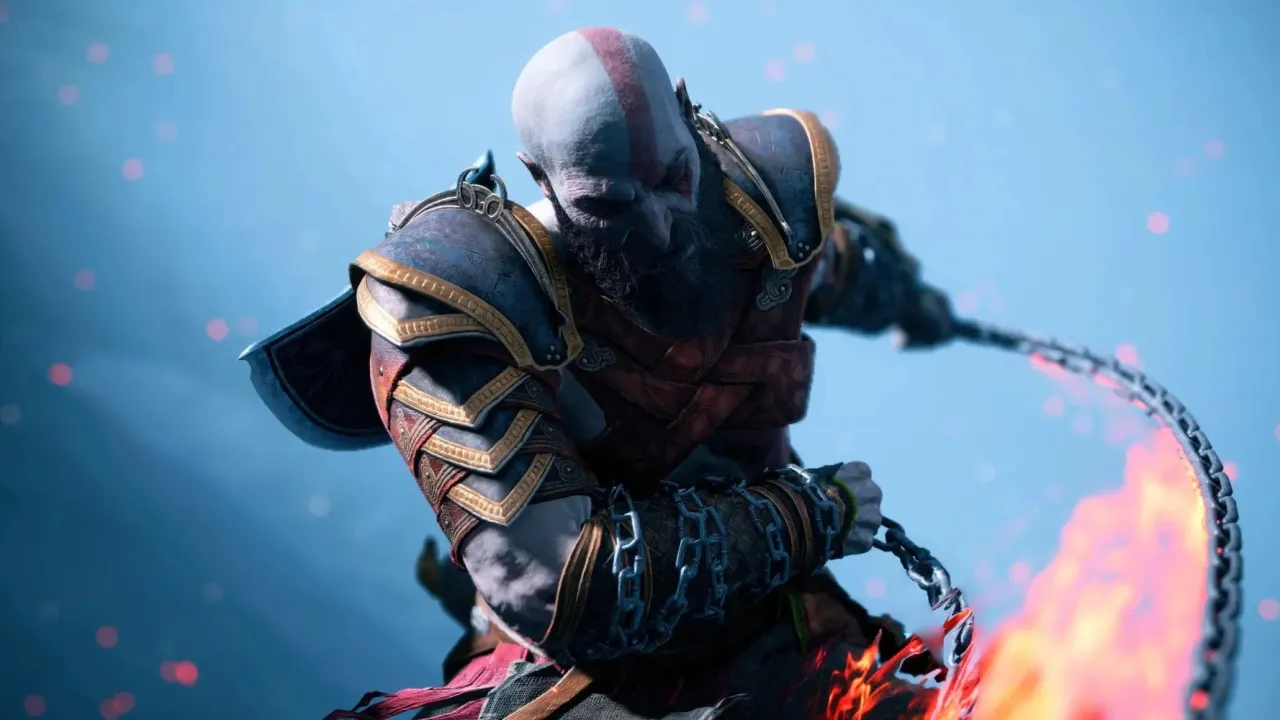
The gameplay at first seems the same as before, and in general it sticks to the formula worked out in the 2018 game, but in Ragnarök much has changed in the details. For example, it became possible to charge the axe with energy manually, and some of the moves were replaced with new ones. Also some movements from the previous game have slightly different properties here. Now you can equip different shields, which strongly affect the strategy of a duel and let you change your defensive style depending on the opponent. The game has more possibilities, and as you progress various new nuances are revealed. The number of progression branches has increased significantly, new gadgets and modes have appeared, but it is hard to tell about all of this, because each such detail reveals some plot moments that are better seen for yourself.
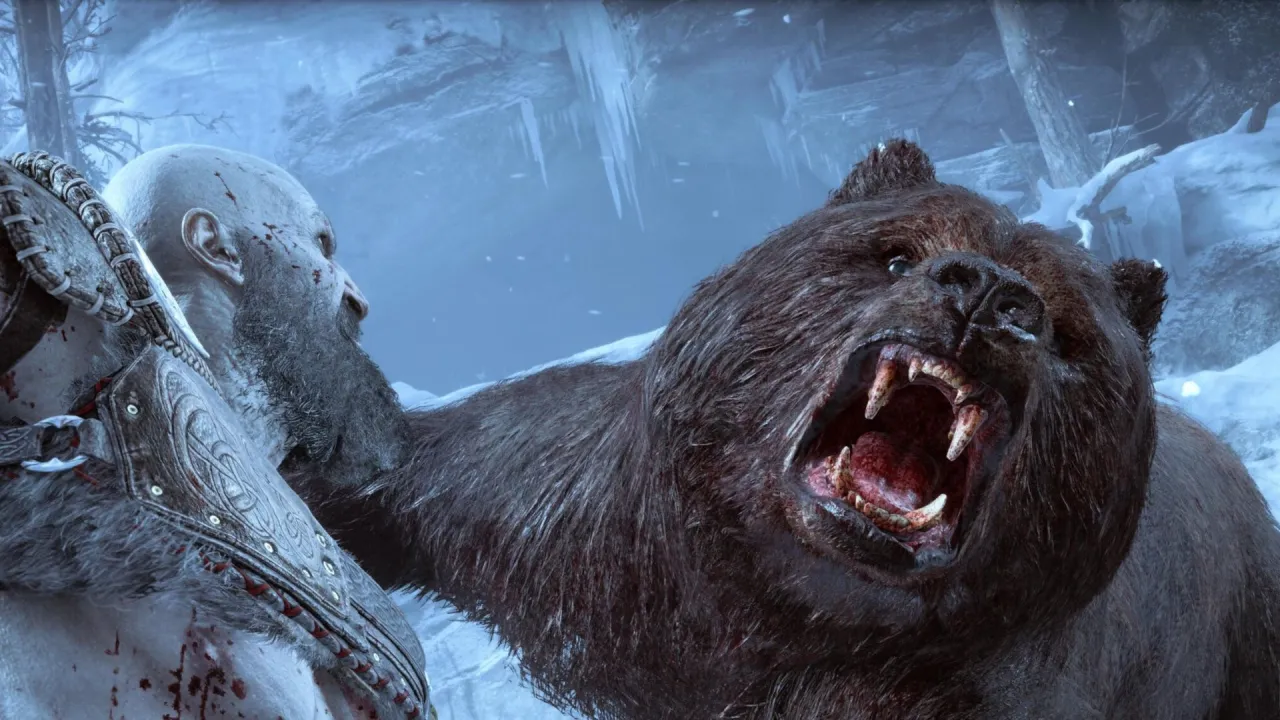
In general terms it can be said that the developers tried to create more varied fights and often change some important conditions. The battles are very dynamic and often require the player to stay in motion and not stand still. Often enemies appear on the arena in waves and attack from different sides. Even on medium difficulty (“Adventure”) you need to be very attentive and not let opponents get behind you. Last time many players complained about the small selection of enemies, so here the developers added a large number of new opponents. Some try to keep their distance, while others on the contrary try to close in as quickly as possible. Opponents often strike with unblockable area attacks or pour various elements on you, and they were also given a new type of attack with a “Bifrost” effect. If you miss such an attack, part of the health bar changes color and will disappear after the next missed hit. It can be avoided only by hitting the opponent with a shield during the wind-up and the appearance of a special indicator. Some perks and super moves of Kratos are built around this effect.
In this game each opponent needs its own approach. Some are better beaten with the frost axe, others fried with the blades. If you play not very attentively and thoughtlessly and aggressively attack, or on the contrary wait for a convenient moment, passively covering yourself with the shield, then even on medium difficulty fights will end not in favor of the main heroes. Calculating actions ahead and quickly orienting yourself in battle is the main path to success. Such an approach, combining dynamic fights and competent positioning on an arena with crowds of enemies, can distantly resemble the recent games of the DOOM series — allowing for the fact that here it is not a “shooter” but a “slasher”. Of course, in terms of demands on the player and the difficulty of fights this is not Sifu or Sekiro, and real hardcore is possible here only on higher difficulty levels, but on the whole the fights are quite interesting and varied.
As you progress, the characters travel through all nine worlds. Besides dynamic and gripping battles they explore locations, solve puzzles and carry out all kinds of errands or quests. As in the 2018 game, much here is built on the “Metroidvania” principle, where closed routes and secrets will be available only after obtaining this or that item. The ability to move between platforms with the help of chains, which was found in the original trilogy, has also been brought back to the game. All this adds variety when moving around locations, and searching for chests and other secrets is sometimes even more entertaining than fighting crowds of monsters. Of course, not all nine worlds are available for full exploration, but the developers tried to make most of the offered locations comprehensive and full-fledged, and studying them hooks you for long hours. Sometimes you have to complete a whole chain of tasks to gain access to a new place, which also has its own secrets and engaging errands. Quests often tell interesting stories that reveal the characters better or explain certain features of this world. As for puzzles, although they remained uncomplicated, they became more complex. For example, the player is asked to throw the axe so it ricochets several times, and then set a shrub on fire with a rune and a blade or freeze several mechanisms.
Separately, the music of Bear McCreary deserves mention. The composer masterfully underscores the mood of what is happening in scenes, changing tempo, melody and solo instruments. For example, when Kratos doubts something and then gains confidence, the music changes from a lyrical violin to a dense male choir, which is essentially the hero's theme from the previous game and distantly recalls compositions from the old parts. The music in story scenes and in gameplay sections can differ not only in mood but also stylistically. Often in different locations the composer plays on Scandinavian and European folk motifs using appropriate instruments, but during cutscenes or epic battles McCreary returns to classical orchestral accompaniment. Some compositions sound great apart from the game too. Several tracks have already taken up residence in my player. Incidentally, in Svartalfheim there is a skald (a musician and poet) played by McCreary himself.
Summing up, I would like to note that Eric Williams did not disappoint and magnificently continued the Scandinavian saga begun by Cory Barlog. The adventures of Kratos and Atreus this time became richer and more epic, and the story revealed the main characters and showed many touching and gripping scenes. The gameplay, though it did not undergo big changes compared to the 2018 God of War, received interesting point changes that made the gameplay more varied, engaging and absorbing. If you like Scandinavian aesthetics, a story about fathers and children is close to you, and you also want to methodically carve up enemies with a variety of moves, then God of War Ragnarök is the ideal choice.
Based on material from GameMAG. Translated from Russian.