Drowning in the Sand and Never Returning: A Review of Atlas Fallen
A review of Deck13 Interactive's Atlas Fallen: sand surfing and the gauntlet's abilities work, but the world, story, repetitive boss fights, bestiary and side activities are weak; the author calls it a run-of-the-mill project with interesting ideas and weak execution.
This spring a detailed preview of the new creation from the studio Deck13 Interactive, remembered in recent years for the The Surge duology and Dark Souls clones such as Lords of Fallen, came out. The piece of story chosen specially for the press suggested that a “sleeper hit” awaited us, but fate decreed otherwise. Despite all efforts, the authors failed to create an interesting world and fill it with enough meaningful characters and content.
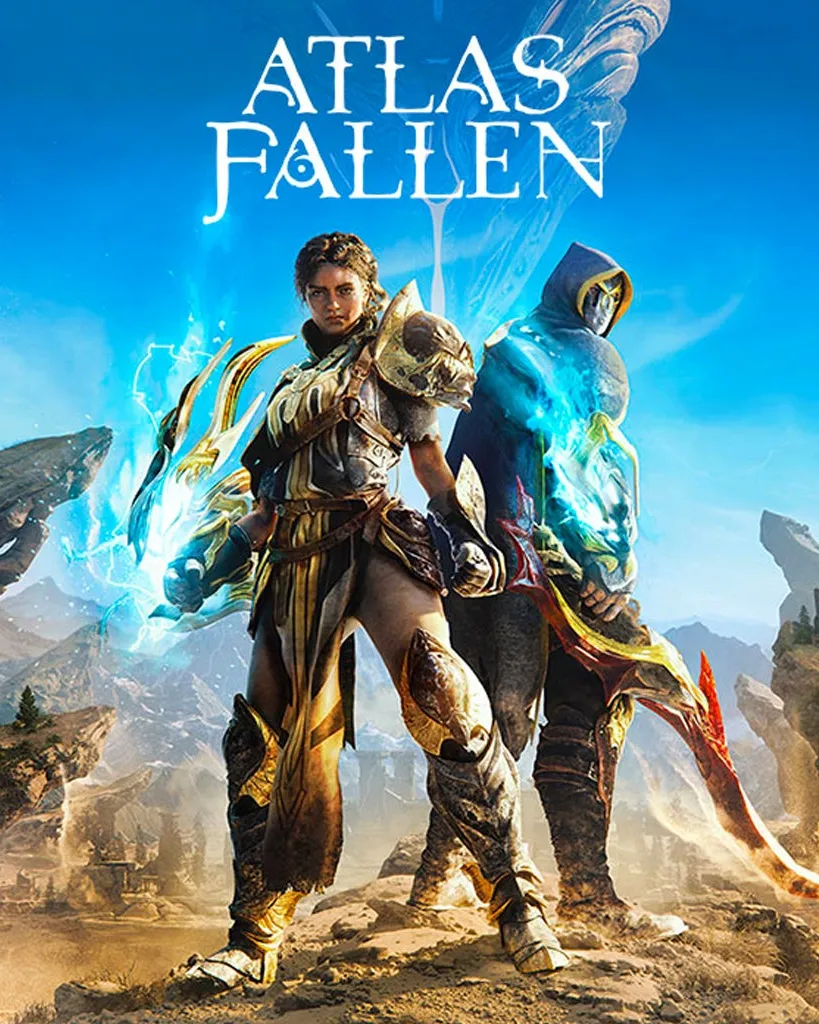
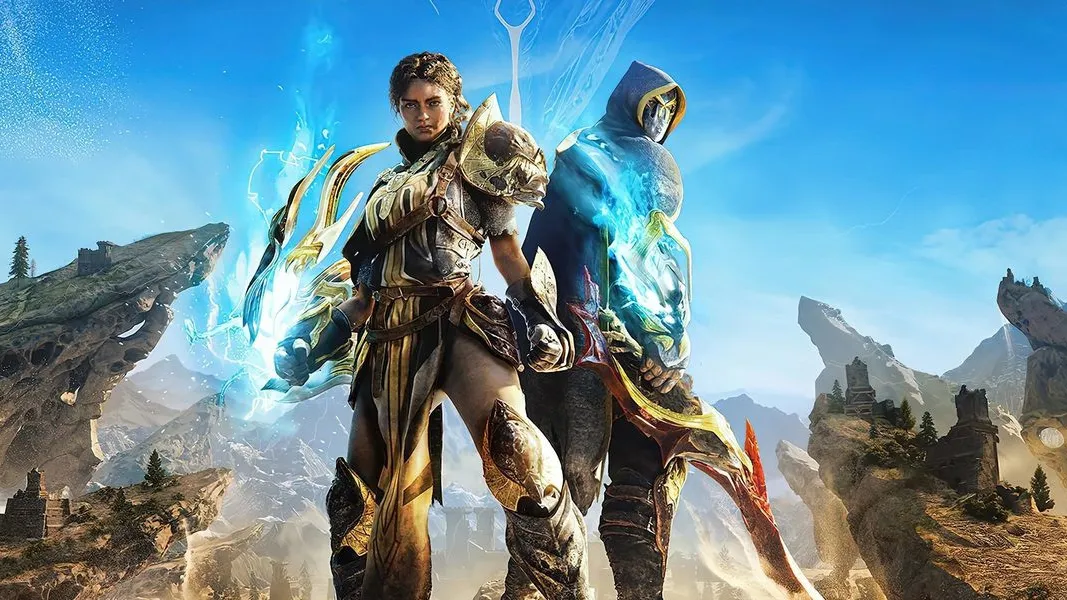
Waking up as a member of the lowest caste of the local world, you suddenly become the owner of a divine gauntlet. A talking companion immediately recalls the recent Forspoken, but dialogues with the hand, to great luck, happen strictly in designated places.
While spinning the theme of humanity's fall, the authors failed to form a meaningful conflict. There is the evil deity Telos, who controls people through a Guardian hanging in the air and a viceroy on the ground — the Thousand-Year Queen. Rare uprisings are suppressed by knights, and monsters that have multiplied in the desert lands drive the remnants of humanity onto islands of civilization. But these are simply symbols of tyranny and evil that are never developed as the story progresses. And the twist with the queen that appears in the second half of the campaign simply evokes no emotion.
The much-advertised sandy world of Atlas Fallen offers, in practice, large locations to explore with secret bosses and treasures, but from the middle of the game uncovering all these secrets simply becomes boring. Far more attractive are the gauntlet's abilities, unlocked as you progress. For example, you can raise platforms and useful items from the depths of the sand — it looks incredibly beautiful and spectacular, recalling the Force from “Star Wars”. And to speed up travel across the desert the hero gains the ability to glide over the sand. And this is the best part of the gameplay — stunning surfing over sand dunes, weaving around obstacles and especially dangerous enemies. Incidentally, in the already forgotten Forspoken mentioned above, Frey also glided, but only over water.
As I already noted in the preview, Atlas Fallen is built on the classic formula of German role-playing games, where the main hero must collect shards of the gauntlet's lost power and gain new abilities to get past an obstacle that looks impossible at first glance or to complete a task that is useless in every sense. The local combat is a peculiar mix of the combat systems of God of War and Darksiders, in which parrying plays an important role. You can deal ordinary and special strikes to enemies, charging a fury level to perform a super move.
All abilities, including healing, require time to recover. Special moves are hidden in chests or drop from bosses and require separate installation in the character upgrade menu. Some abilities in the same section can be combined with one another, unlocking new combinations.
Returning to the parry system, a few details are worth clarifying. As soon as an enemy starts glowing red, the developers let you counterattack and temporarily turn it into a block of ice, and at the same time land a series of deadly blows. This counterattack system works on both ordinary opponents and bosses. The latter consist of separate parts — you can damage the legs, destroy the tail or inflict other damage, but they will not die until you destroy all of these components.
In the preview it was possible to kill a boss simply by dealing it enough damage, ignoring interaction points such as the tail or spiked armor. Why the authors decided to change the approach is not entirely clear. But for all the richness of mechanics, the key fights themselves are monotonous, tiring and boring because of the small bestiary and repeating bosses. In addition, the extremely awkward camera and weak impact of strikes get in the way a lot.
Atlas Fallen also has side activities in its world, such as “activate sand crystals for a time” or “clear certain zones”. In the demo they were part of side quests, and in the final game they became a mandatory part of collecting the hand's shards. The remaining side tasks, apart from fetch quests, include destroying monsters, rescuing characters or building bridges across ravines. But nothing memorable, deep or delightful, alas, remains.
Co-op mode offers to overwrite the local save if you and your partner have progressed further in the story than you managed in single-player mode. Both the character and the whole progress of the game can be transferred.
Graphically Atlas Fallen has not moved far from the spring demo. Characters created in the editor are not distinguished by beauty, scaring with a horrible open mouth, and the world, for all its simplicity of execution, shows no incredible effects, for some reason recalling the by now rather old Divinity II. Before us is a fairly standard project of mid-life-cycle PlayStation 4 level. So it is not entirely clear why Deck13 Interactive decided to release the game only on PC, Xbox Series X|S and PlayStation 5.
The music by Helge Borgartz sounds simply magnificent, but the overall sound and the acting of the key characters, which is done at a very weak level, spoil everything.
Atlas Fallen is an example of a run-of-the-mill project with interesting ideas and weak execution, which suffers from a boring world, a weak story, a budget bestiary and primitive activities. If not for the sand riding and the desire to learn the end of this campaign against the evil deity, there would be nothing to do here at all.
Based on material from GameMAG. Translated from Russian.