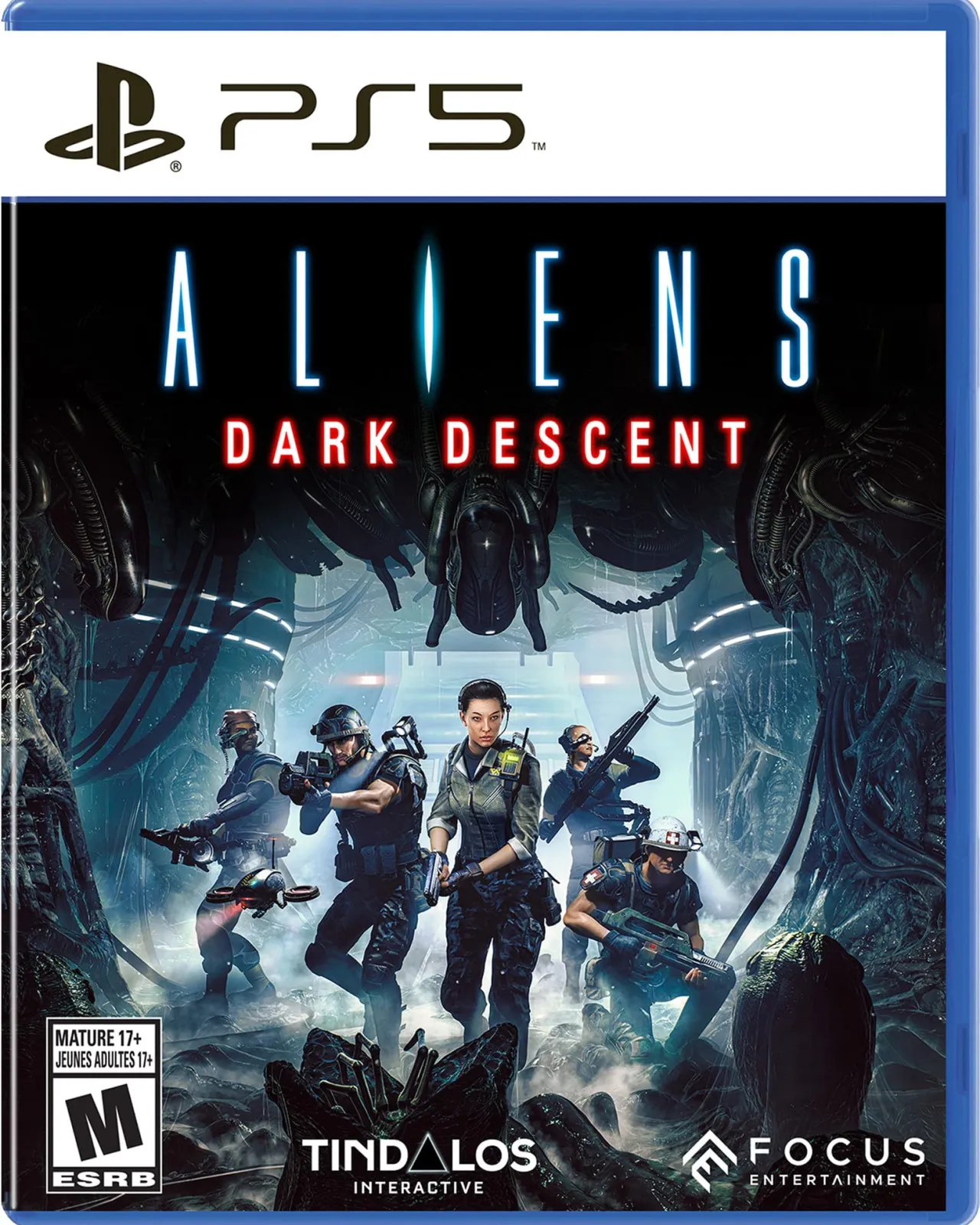
Do Synthetics Dream of Electro-Xenomorphs? Aliens: Dark Descent Review
A review of Aliens: Dark Descent: the author praises the atmosphere of horror and the tactical core, but criticizes the half-baked stealth mechanics, the interface and the bugs of the console version.
The gaming path of the Alien franchise — when it did not go hand in hand with Predator — turned out to be quite thorny. We all remember the cancelled role-playing game from Obsidian and the lies of Randy Pitchford, who regaled us with foul-smelling cabbage rolls in Aliens: Colonial Marines. In the end it fell to the creators of Total War to pick up everyone's slack, and they managed to convey the horror atmosphere of Ridley Scott perfectly in their Alien: Isolation. One can also mention a solid middling entry in the form of the cooperative shooter Aliens: Fireteam Elite.
On the big screen the reputation of the xenomorphs was seriously tarnished by comrade Scott himself. And we are afraid to imagine what its new owners from Disney will do with “Alien”. All the more interesting looks this year's release of Aliens: Dark Descent from the studio Tindalos Interactive (the Battlefleet Gothic: Armada duology).
The French team's work attracts attention thanks to a specific genre that fits the groundwork of James Cameron perfectly. Dark Descent is a tactical game in which you must command a squad of four or five marines on sorties into zones teeming with xenomorphs. On top of that the developers sprinkled in ideas from Darkest Dungeon and XCOM and even extraction shooters.
The story starts on the space station Pioneer, which is in orbit around the planet Lethe. After a sudden xenomorph attack the facility's administrator Maiko Hayes imposes a planetary blockade to keep the threat from spreading to the other colonies. However, because of this nobody can get off Lethe.
So Hayes joins forces with a squad of colonial marines under the command of Sergeant Jonas Harper, in order not merely to survive but to find a way out of the situation and also to get to the bottom of the events on Lethe.
The story did not turn out a masterpiece — it is quite straightforward and predictable, yet following the events is interesting thanks to how packed they are. There was room for corporate conspiracies, alien artifacts and interesting additions of the developers' own invention. They did not even forget about the synthetics! True, the tone of the narrative is chosen to be overly serious.
The marines' base is the crashed spaceship Otago. On board you can manage the team, learn useful technologies, unlock weapons and treat the soldiers. The catch is that resource stocks are limited, so to replenish them you have to go on sorties.
The key feature of Dark Descent is its large and incredibly detailed locations, which the player is free to explore at their own pace. The whole planet is teeming with xenomorphs, and with each day the infection level rises. This is expressed in the fact that it is impossible to kill all the enemies on a single map — they constantly respawn, and after every skirmish the Hive's aggression indicator grows. They start combing the area more actively, and at some point the marines may be attacked by a large horde of monsters or an especially large specimen.
The player's task is to avoid skirmishes for as long as possible and to properly take into account the features of the environment and the skills of the soldiers. The marines are awarded experience for missions, which lets you unlock additional perks and skills and also obtain a specialization. For example, having a sergeant on the team increases the number of action points available to the team, a sniper can make silent kills, a medic can revive the wounded on the battlefield, and a rifleman deftly wields the legendary smartgun with a stabilizer.
Much attention is paid to survival elements. The team may be evacuated at any moment on an armored personnel carrier. This is especially important if a sortie goes off plan and someone is wounded.
In combat the marines' stress level rises, which negatively affects their condition — they begin to panic, miss often and so on. In the end this leads to the development of permanent phobias and PTSD. And because of fatigue the maximum available number of action points, which are used for active skills, drops.
To minimize the negative effects, between skirmishes you can hand out sedatives to subordinates — or find a safe room whose doors you weld shut, turning it into a temporary shelter for rest. The rest stop also becomes an extra save point. And aboard the Otago the injured are not only treated but also given psychological help.
The soldiers cannot carry absolutely all the resources on their backs, and whatever they manage can be used on other sorties. In addition, on the map you can find survivors who will replenish the Otago's crew — that is how in Dark Descent the roster of soldiers, medics, engineers and so on is replenished.
Between sorties the player encounters random events that affect the situation positively or negatively. For example, you can get extra supplies but will have to skip one expedition. Or because of an incident someone dies. Or all doctors suddenly become unavailable. However, there is a flaw — when engineers are unavailable before a sortie, you cannot craft additional gear (logical), and for some reason you cannot take it from the stockpile either (illogical).
Obviously the main object of entertainment in a game based on Aliens is the aliens themselves. In this respect the French did not disappoint, doing excellent work on the atmosphere of horror. I have been afraid of xenomorphs since childhood (thanks to food poisoning and the “Teenage Mutant Ninja Turtles” episode about the Pizza Killers), so the first hours of Dark Descent were very tense. The squad moves slowly and cautiously through dark locations while the player tensely watches the motion tracker, which suddenly starts to beep.
True, as time goes on sorties start to look more like a massacre, when marines turn aliens into soup bones with machine guns. The main thing is proper team positioning — you need to take a room for defense, pick priority targets to eliminate, set the field of fire, fire from the underbarrel launcher if needed and so on.
The aliens are extremely dangerous up close — they hit hard with their tails and spray the soldiers with acid when they die. If one of the marines loses consciousness, the xenomorphs will try to drag the victim to the lair. And here a dilemma arises — risk everything and run to save a comrade, or sacrifice the comrade for the success of the whole mission.
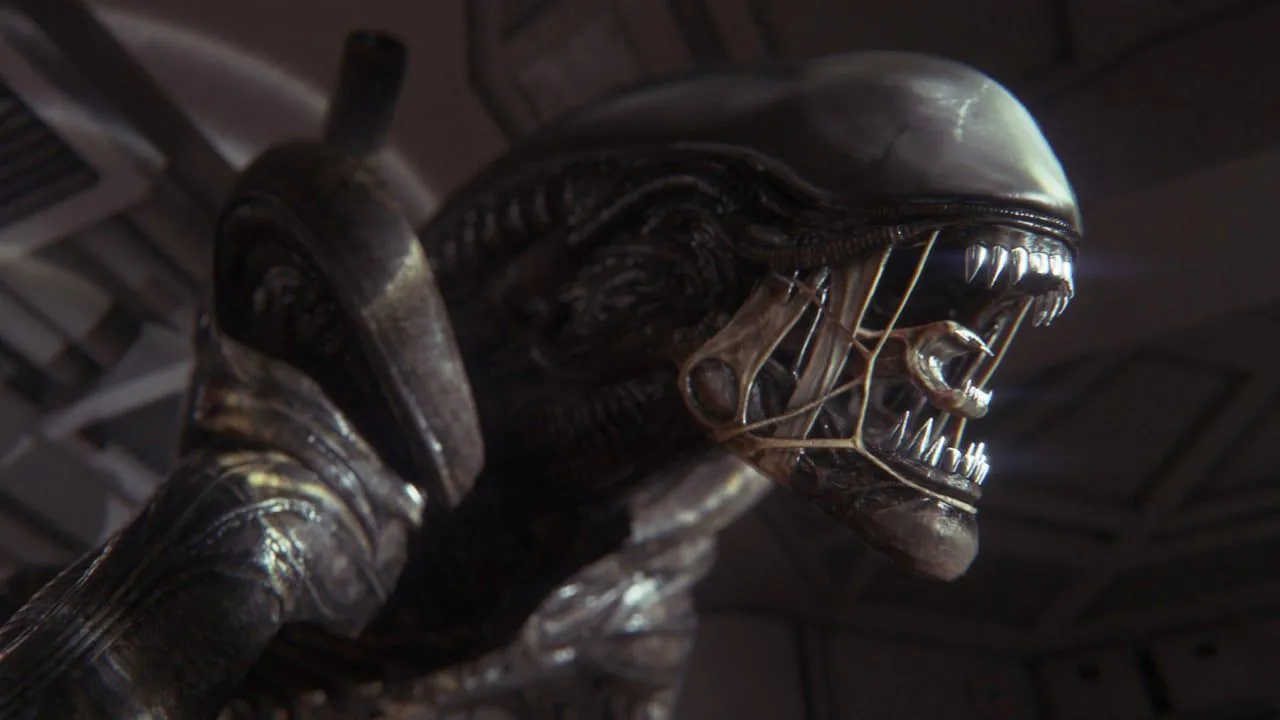
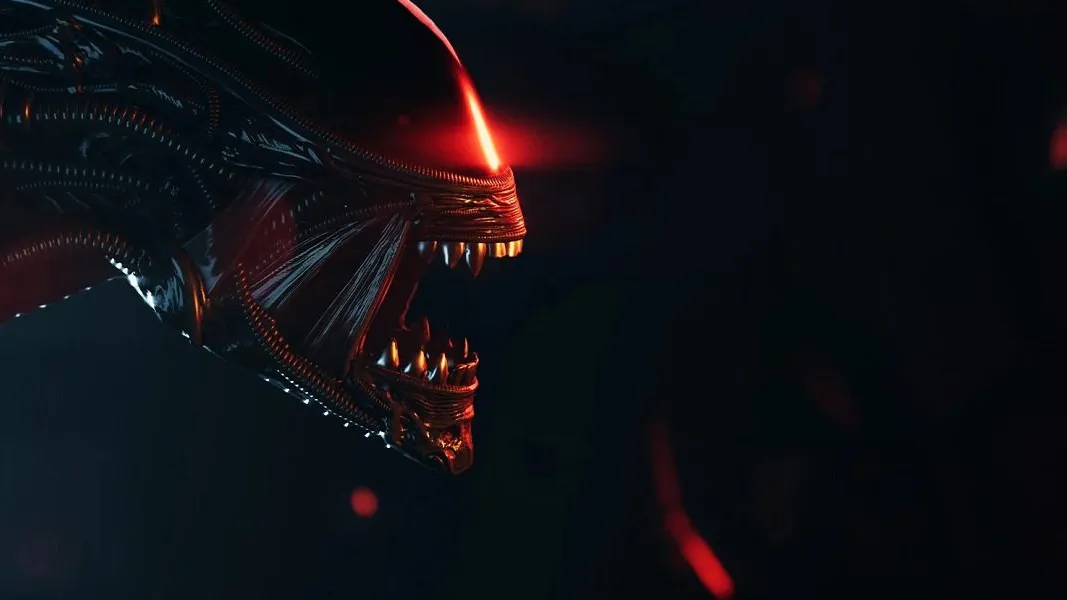
The number of alien variations does not particularly stir the imagination. Still, all the main creatures are present, including the Queen and the facehuggers, and a couple of additional specimens were thrown in. For example, the Crusher from Colonial Marines dropped by for a visit. When such characters appear it is recommended to keep moving, not stand still, and also not to forget about the possibility of setting up stationary machine guns.
To increase variety the creators also added humanoid enemies. Getting in the marines' way will be members of the “Darwin Era” cult, synthetics and the special forces of the Weyland-Yutani corporation.
The missions themselves turned out quite varied. True, the developers play out the standard program — you will have to visit a settlement, mines, an atmosphere processor, a space station and so on. But they still expand the lore a bit, while offering different biomes and weather conditions that affect visibility. Of greatest interest to me was the Weyland-Yutani corporate city, which looked like a genuine anomaly against the background of general ruin.
There are also plenty of gameplay variations. There are missions escorting a P-5000 loader, and clearing an office building of enemies by hacking cameras and control panels. And in one of the fights with the Queen you have to dodge electric waves in a reactor room while trying to lure the Queen into the kill zone.
The key shortcoming of Aliens: Dark Descent is that Tindalos Interactive clearly lacked the budget to implement all its ideas properly. And it hit the stealth mechanics hardest.
As mentioned, the player is required to put off the moment of a clash with the aliens for as long as possible. The problem is that the tools provided do not work as they should.
First, the developers cheat a little with the sandbox rules. Xenomorphs constantly roam the levels, but they may well teleport on the game's whim, as is plainly visible on the motion tracker.
Second, the sound propagation system is senseless. Yes, aliens should hear the marines running or shooting. So after a firefight it is best to leave the combat zone.
But in practice it turns out that it is far more effective to run at the first cruising speed, because that way the enemies' alarm meter does not have time to fill. It looks especially silly when the player is required to carefully maneuver between cover so as not to disturb sleeping enemies.
The whole inadequacy of the local stealth is especially evident in the pointless episodes where you have to play hide-and-seek with a xenomorph as Hayes. It was especially “fun” when, because of a bug in the detection system, the level became impassable — the monster instantly noticed Hayes, then immediately closed in and killed Hayes. And dying on such levels is oh so unpleasant, because the checkpoints are placed before long dialogues that cannot be skipped in any way.
The fact that the marines in principle do not know how to move stealthily adds to the trouble. To hide they need to find cover and then receive an order to lie low. Why they cannot walk with their flashlights off on their own is unclear. Besides, a room may be full of hiding spots, but the developers made far from all of them interactive.
The not-so-convenient interface does not improve the experience either. On the whole the controls are carefully adapted to consoles, but the separate order panels for each of the marines look too cumbersome, getting in the way of quickly ordering the right soldier to reload a weapon or take pills.
Miscalculations with the tactical pause are layered on top. To make things easier for players, the developers provided for stopping or slowing time when the command panel opens. On consoles it is best to choose precisely the tactical pause, but the function does not work when the map is opened. And that is extremely irritating in particularly tense moments.
The main gameplay, although it has a solid core, still suffers from small rough edges. Soldiers periodically cannot lay out an optimal route, choosing the longest one or even splitting into two groups, each going its own way. In addition, after a command to search a crate or a corpse, one of the subordinates runs to the right place but walks back, which causes a gap in the formation.
This brings up the problem with skills. Visualize the situation — a xenomorph that can raise the alarm approaches the squad. You decide to eliminate it quickly by launching a grenade-launcher round. But here is the catch — the soldier equipped with it trudges at the back of the formation, so a box or a wall blocks the view. Because of this the player's plans collapse on the fly.
Besides, Tindalos Interactive managed to implement some ideas only partially. For example, only on the Pioneer station will the marines' motion tracker go crazy because of rats. In another location you have to find survivors. But here is the catch — among them is an “impostor”, an agent of the cultists. To identify the impostor you need to collect datapads scattered across the level. If you take the traitor into the team, you will pay for it later in the next between-days event.
The mechanic is quite interesting, but it is not repeated anywhere else. Moreover, right after you make the decision it shows who exactly turned out to be the traitor. And there are only three “suspects” in all — a cultist, an innocent and... a corpse.
The apotheosis of strange ideas must be said to be the final mission, in which the developers forget about both tactics and stealth, reducing everything to shooting down xenomorphs in god mode and a maze-running simulator.
Visually Aliens: Dark Descent looks quite decent thanks to Unreal Engine 4. And thanks to the play of light and shadow the locations look creepy. True, in such darkness it can be hard to find interactive zones, crates and corpses in a location.
The budget limitations are visible in the cutscenes, which are rendered on the game's engine. To save money, when creating the hero models Tindalos Interactive resorted to stylization, which immediately brings to mind the work of Arkane (also French). Out of curiosity we conducted a small investigation and found that the guess was almost right — the lead character designer had previously worked on projects of the studios Spiders and Cyanide.
Optimization turned out decent on the whole, although in places drops can be seen in performance mode. But what absolutely cannot be forgiven is the bugs. Our review was delayed because Focus Entertainment gave most journalists and bloggers the PC version, and the code for Xbox Series X|S arrived only a couple of hours before release.
At the same time the game suffered from a decent number of extremely unpleasant bugs. But worse, the console version gets patches with a delay of a couple of weeks. Moreover, the updates solve far from all problems, among which are soft locks and impassable side missions.
Aliens: Dark Descent is a rather tense tactical game with a thick atmosphere of horror and fierce battles that at its best moments gives unforgettable sensations. However, Tindalos Interactive still lacked the budget and time to bring all its ideas to completion. We hope the developers will not abandon the project and will use it as a foundation for development.
Based on material from GameMAG. Translated from Russian.