Diablo II-2 Online: Diablo IV Review
A review of Diablo IV: the author, who spent about 40 hours with the game, praises the varied class builds, the open world, the gloomy Diablo II-style look and the music, but notes a predictable, rushed story and the online-only requirement.
Since the first rumors about the creation of Diablo IV, it seemed to many fans of the series that nothing good would come of it. Development restarted from scratch several times, but the team simply did not understand what it needed to do. One of the concepts, as insiders wrote, even resembled Dark Souls, which baffled fans. It seemed the project had fallen into development hell and would not be able to climb out of it.
After yet another change of concept, Rod Fergusson, a veteran of Gears of War, took the helm of the franchise. By then the authority of Blizzard had been undermined so much that even such a respected specialist did not inspire trust. Fergusson faced a difficult task: to release not just a good game but precisely one that both old fans and new players would love. When the developers announced the release date, everyone joked that the real release would follow a year or two later, when everything broken was fixed, as happened with Diablo III. Personally, my skepticism began to wane after the beta test, but it still remained.
Even when I got the disc, I kept waiting for some catch. For example, long queues on the start screen, since the game is fully online with no way to play offline. But in the end loading took no more than 10 seconds. There were almost no lags or connection drops during the playthrough either — over 40 hours, noticeable slowdowns and disconnects happened only a few times. It seems the most negative expectations did not come true, and Diablo IV can be played comfortably even now.
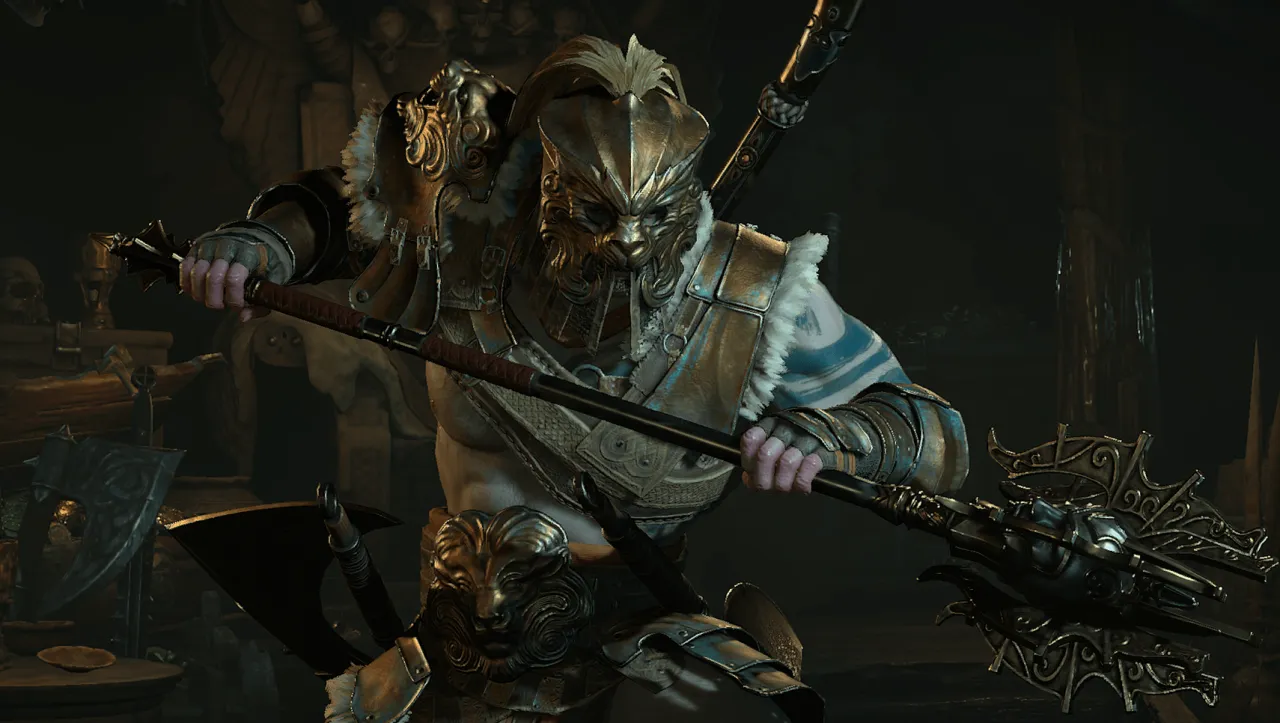
At the very beginning you are offered to choose a class and customize the character's appearance. The editor is not as rich as in some other role-playing projects, but you can choose gender, skin color, and also several options for faces, hairstyles and other details. On the whole the heroes turn out decent, but not unique. However, the choice of class matters far more. There are only five of them: barbarian, necromancer, rogue, sorcerer and druid. Each with its own unique abilities and combat strategy.
In essence Diablo IV is still a cyclical loot game where you have to beat enemies to get new gear, and then go after stronger opponents to get even better armor and weapons from them. However, it is important to note that the gameplay itself has become much more varied and offers many different mechanics, progression options and ways of putting builds together. Moreover, the developers encourage experimentation and, for a quite nominal fee of in-game currency, let you reassign skill points however you like. You need not fear investing in this or that skill and figuring them out as you go, developing the character in whatever way is convenient.
At the same time the classes themselves feel truly different and have many unique mechanics and options of their own. Fighters can choose a certain specialization and gain various additional abilities or skills. For example, the rogue can boost attacks with a combo counter displayed as special icons, or receive unlimited energy for four seconds when other conditions are met. The skills themselves do not always use additional energy and can have their own separate mechanic built on cooldowns or activations. Each class has very many different nuances — describing them all would take a separate big article, so I will list only a few. For example, the necromancer can customize minions, which affects their stats, while the sorceress is able to unlock additional bonuses from enchantments and collect special energy charges that are displayed on a separate gauge.
The skill trees themselves are quite sprawling and offer many active and passive skills that need to be studied thoroughly, experimenting with their combinations. And after level fifty a separate improvement tab opens, with its own system of points, glyphs and progression. It is worth noting that a character can have only six active skills at a time, so only those active skills that will be used in combat regularly need to be leveled up at once. You cannot expand the six-slot bars or switch between them.
Another important element of the game is “aspects”, special modifiers that can change the properties of certain abilities, add new useful properties to skills and in every way supplement the main skill branch of this or that class. These “aspects” are unlocked after clearing special dungeons visible on the map or extracted from found legendary items. These modifiers are used when crafting armor and weapons.
The developers tried to fill the game with many interesting features and possibilities that directly affect the gameplay and the abilities of the protagonist. This kind of character micromanagement deepens gameplay and makes it possible to build your own build thoughtfully. Within a single character you can create completely different fighters, and because of this clearing Sanctuary of endless hordes of demons and bandits does not seem as monotonous as it used to. Diablo gameplay was always addictive, but now it is simply impossible to tear yourself away from the game. Rod Fergusson's team understood well how to make the combat system modern while preserving the original foundation.
Playing a rogue with a build based on blades and traps, you must move all the time, calculate timings and position the character correctly in space. All this is hard, but as a reward the player gets enormous pleasure from how quickly the character deals with crowds of enemies. When a serious boss appeared on the horizon that I could not beat, I rebuilt the rogue for rapid fire with poisoned arrows. That was already completely different gameplay. And many such stories can be listed, and there are still other classes. All this shows how well the new team managed to figure out what the series' fans need and filled the game with it, “seasoning” it with new ideas.
The open-world concept also gives the game variety. Now Diablo has no separate generated levels, but a quite spacious map of a continent that includes several biomes and seamless transitions between them. Most locations are filled with various mobs, random events and fights with elite opponents. At the same time Diablo IV is no longer just a cooperative game but almost an MMO, in which other players complete quests and destroy demons next to you. Personally I like this approach, especially considering there are enough strong mobs for everyone and each person's loot is their own. At the same time I completed the story quests practically alone and nobody got in my way. Random users are met only in the open world, while exploring dungeons, clearing strongholds and other similar activities the player will do alone or in the company of specially invited friends. This system will be familiar to fans of Destiny.
There is a lot of content in the game, and exploring locations is itself a rather entertaining process, as addictive as building your build. While completing some quest you can come across a special activity nearby, or that very dungeon with a useful “aspect”.
Besides mobs, in towns and their surroundings it is easy to run into characters with problems of their own who will ask for help. Sometimes quite interesting and atmospheric quests turn up, such as the errands of a nun who secretly exorcises demons from the possessed, or the story of a couple of local drunks who managed to carouse insanely even in such difficult times for the world. Some tasks go in several phases, letting you get distracted by other things and then return to them.
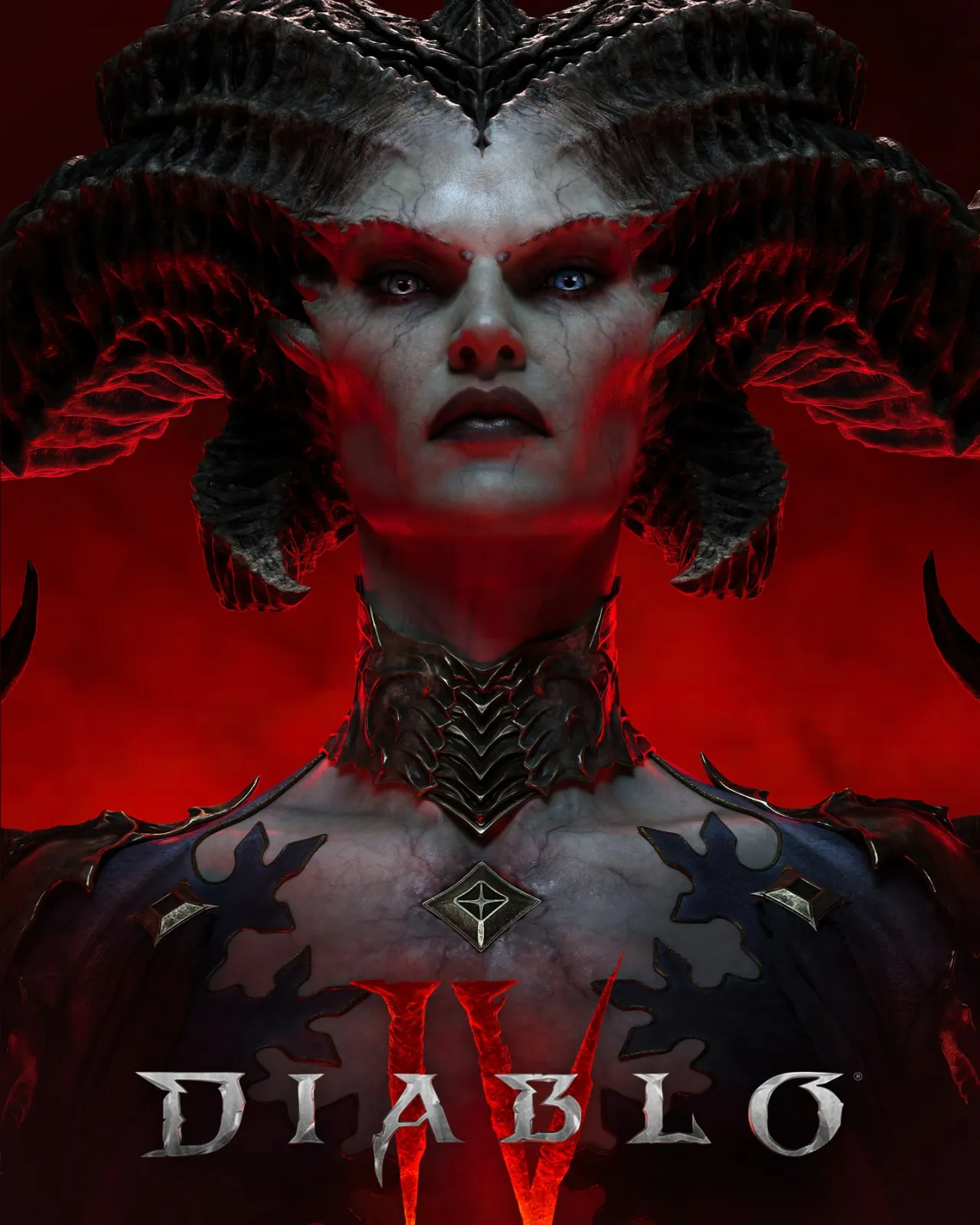
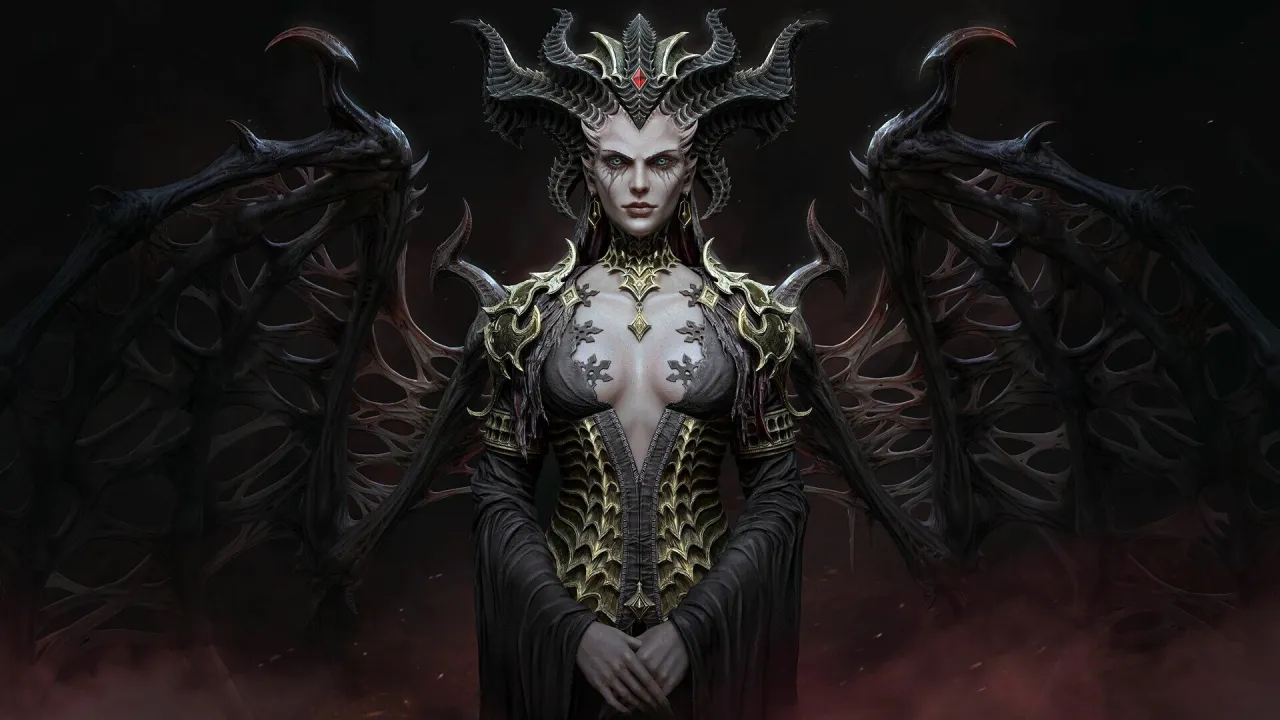
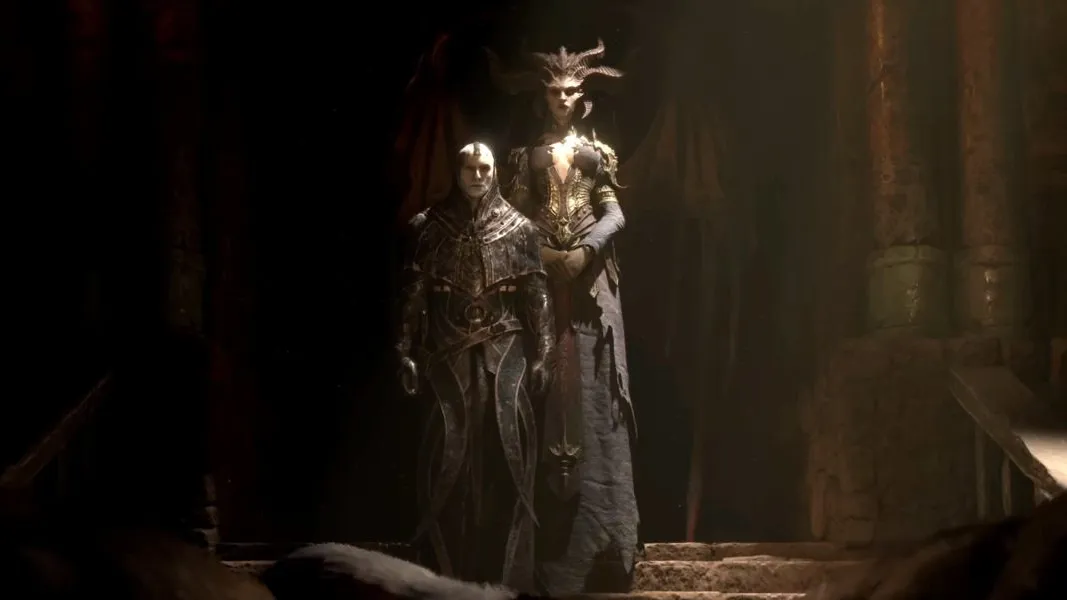
Diablo was never famous for its story. Of course, this universe always had a well-written world, but the motivation of villains and heroes sufficed only for a basic justification of the gameplay. However, in the fourth part the developers tried to pay more attention to the development of the story. The narrative is largely built on the struggle of opposites and the balance of good and evil. This was built into the very essence of Sanctuary — the world of the Diablo universe, because it was created by the renegade archangel Inarius and the demoness Lilith. Traditionally, large-scale battles with powerful demons led by Diablo, who repeatedly tried to seize this world, constantly unfold here. But this time things turned out more complicated. Lilith herself has arrived — the daughter of Mephisto, the embodiment of deceit and hatred. She manipulates and clouds minds, making people do what she needs. The demoness herself believes she came to free the world and put an end to the endless demon raids forever, but her methods of achieving this goal are quite cruel — so much so that it is that very cure which is worse than the disease.
As you progress through the story the developers show directed cutscenes from time to time, some of which are made on the game engine and others full CGI videos showing a quite epic spectacle. The cutscene before the final battle is one of the brightest scenes in a long time. Watching it again I could not help recalling “Game of Thrones” and thinking that this was exactly the finale I would have liked to see there, but never did! Everything here came out at the highest level — both the monumental pathos and drama, and the staging of the battle itself.
At the same time, of course, it should be noted that the story itself, though it has become significantly better than before, still remains predictable and in places rushed. The first half of the plot seems quite adequate and logical: the heroes follow Lilith's trail and try to figure out what to do, many ideas develop not according to plan, but they try, and do not commit any outright stupidities. The second half seems to have been created in a hurry — various plot conventions and clichés appear, and the heroes start acting dumb. For example, at a certain point Taissa's behavior abruptly changes, and she talks with the protagonist as if they barely know each other, although literally a couple of quests ago the protagonist saved her life. Nevertheless, it is important to stress that even in this form the storyline turned out much less trivial against the background of the previous games.
Having studied players' wishes, Rod Fergusson's team concluded it needed to make a spiritual sequel to Diablo II, and this is very noticeable in the style of the interface, the character design and the more brutal and gloomy setting. The artists tried to make everything so that the player feels inside that very world which existed before the third part. The dungeon design is saturated with various details, such as numerous piles of bones, demonic biomass and harsh visual elements in the spirit of the works of Giger. The authors also worked on equipment variety, whose appearance can be freely changed in town at the wardrobe standing next to the chest.
Here it should be said that the game has a virtual shop selling skins that cannot be unlocked in any other way. However, there is no shortage of interesting and beautiful gear even without it. The main thing is that over time other items giving some in-game advantage do not start appearing in that shop.
Speaking of the audiovisual side, one should note both the excellent work on the special effects of various spells and abilities and the very “juicy” sounds. For example, a powerful “penetrating shot” is accompanied by a metallic grinding and a beautiful special effect that delights not only the eye but also the ear.
As for the music, in places it is very good and atmospheric. Beautiful melodies steer the player's mood and emphasize the needed emotions. Sometimes sparse, soothing melodies on the violin, flute or other instruments give way to tense duets or turn into full orchestral accompaniment in especially epic moments. The music in Diablo 4 together with the design of the locations firmly forms a bond between the player and the game's world.
The composition in Kyovashad stuck with me very much. A very beautiful fairy-tale melody played on the violin may recall Fable, but at the same time it is strongly shaded by an anxious and epic accompaniment that plays slightly in dissonance. The sounds of the instruments seem to go with a small gap from each other, but at certain moments converge in unison, giving the player a brief sense of catharsis. At some point this music began to exert a kind of hypnotic effect on me. I could teleport to the town, hear the first notes of the melody, simply stop and listen to it, and since it does not end, this could go on for 10-15 minutes.
Summing up, I would like to note once again that the classic Blizzard lineup is long gone, which is why many players had no hopes for a good Diablo IV. However, Rod Fergusson and his team managed to figure out what players really need and delivered a true sequel to Diablo II that the series' fans had waited for so long. The gloomy setting and beautiful cutscenes have returned, and the gameplay has become more detailed and varied. If you are not bothered by the online requirement and you want a good role-playing action game with an emphasis on gear hunting and killing demons, this game can hook you for tens or even hundreds of hours.
Note from the original outlet: the copy of Diablo 4 for PlayStation 5 on which the original review is based was provided to its author by the company Achivka.
Based on material from GameMAG. Translated from Russian.