Degree of Doneness: Rare. Mortal Kombat 1 Review
A review of Mortal Kombat 1: the author finds the game uneven and rushed — praising the first half of the story, the visuals and the music, but criticizing the clunky combat animations, the Invasions mode, the broken balance and defense, the online shortcomings and the server block for Russia and Belarus.
Mortal Kombat is the most popular fighting game series; its creators Ed Boon, John Vogel and Dan Forden have traveled a huge road with it, and their games have repeatedly had a serious impact on the industry. The success of the very first part influenced the creation of age ratings, and the story mode with cinematic presentation that appeared later in “Mortal Kombat” became a kind of standard for the genre. There are other, less fundamental achievements, but the main thing is that the specialists at NetherRealm Studios set a certain quality bar and a certain pace of development for the whole fighting-game segment. However, Mortal Kombat 1 specifically seems to have been born in torment, which in places noticeably affected the end result.
Judging by various developer interviews, it becomes clear that the usual alternation between Injustice and Mortal Kombat was interrupted because of technical difficulties. In the process of creating the new superhero fighting game the team switched to Unreal Engine 4, and adapting to this toolset took several years. So it was decided to postpone Injustice and take on the reboot of Mortal Kombat, since in game format this series is more popular than the comic adaptations.
Development took place in a rush, and it seems that some elements of the game this time were made more carelessly than before. Besides, studying various aspects of the game, one can come to the conclusion that entire fragments, including some new mechanics, were intended for Injustice. This is not known for certain, but there are many coincidences.
Between the Mortal Kombat and Injustice series there are a number of differences that the developers had deliberately observed up to this moment, such as the accentuated uppercut animation and some features in the construction of the combat system. A powerful movement of the hand or weapon from bottom to top is a Mortal Kombat trademark, but here some characters lack such a movement. In properties this blow (“⬇︎ + strong hand”) exists for everyone, but the action itself for the same Sub-Zero does not resemble an uppercut. Another, more flagrant example — General Shao has taken over almost entirely the combat animations from Ares. Of course, developers regularly carry over their groundwork from project to project, but usually this happens more gracefully. Certain movements are “sliced” into small fragments and mixed with other or entirely new animations. However, in Mortal Kombat 1 it all came out cruder, which is explained by lack of time.
Animations are generally a separate topic for NetherRealm Studios games. Already in Mortal Kombat 11 the graphics were so well worked out that they seemed realistic, but this impression was spoiled by some doll-like, rubbery movements during combat. The cartoonish bounces when juggling an opponent and moves like the two-footed kick of Black and the Terminator looked especially strange. Even then it was clear that a new system of better-worked-out movements was needed. In Mortal Kombat 1 this contrast has come to be felt more strongly, because the graphics here are more detailed and vivid. Arenas rich in varied scenery and highly detailed characters look great until they start to move. This causes powerful cognitive dissonance.
Let us stress that these remarks concern exclusively movements in combat. Everything concerning story scenes, as well as facial animations, is, as always, done here at the highest level. In this aspect the specialists at NetherRealm Studios are still among the best in the industry. The dialogues between fights, as well as the staging of the story itself, are much more interesting and of higher quality than in the recent screen adaptation.
Turning to the story itself, I want to say that it is uneven too. The intriguing start tells us about that very universe re-created by Liu Kang. His world is quite harmonious and interesting, the characters received new backstories and reimagining in an artistic sense. It looks very interesting and intriguing. For example, Scorpion here is Kuai Liang, not Hanzo Hasashi. The stories of Mileena, Baraka, Kenshi and Johnny Cage have also been reworked and well shown. They are gradually revealed and receive more conscious motives than before. The story traditionally has many interesting dialogues and, of course, jokes. At the same time, in many moments the writers lean on plots from the period of Deadly Alliance, Deception and Armageddon, and not on the original first part. Of course, the story did not do without conventions and naive moments, but the first half of the plot delighted me incredibly. The emphasis is on Eastern style and martial arts with magic, but without special forces and technology. In essence this is a return to the roots of the first two parts, which some fans of the series so wanted to see.
In the second half the narrative makes several sharp twists, which are not bad in themselves but feel hastily stitched onto an unfinished story about Liu Kang's universe. So as not to spoil the impression for you, we will do without unnecessary details, but the second half of the plot is more suited to a superhero theme and on the whole seems borrowed from the Injustice groundwork. Although the final episode itself again returns the story to the tropes of the MK universe and delights with a fan service most powerful in its epic scale.
Here, however, it should be noted that this story has no ending. Many plot branches received no development, and the Sub-Zero storyline broke off, essentially without starting. Perhaps this is groundwork for DLC, but in fact the story is not finished and is unlikely to be adequately concluded in one or even two small expansions.
Cinematic storytelling is an important part of the series, but still most people buy Mortal Kombat to play with friends or online, as well as for various single-player modes where all sorts of content can be unlocked. But there is a nuance. Officially the WB Games servers block Russian and Belarusian IP addresses, so to play you will have to use a VPN or a special DNS. Without settings only the story, duel and classic tower modes work in the game. Besides, Havik cannot be unlocked, nor can the nine cameo characters. In this form there is no progression of any kind in the game, and the various costumes and other appearance elements of the heroes are not unlocked. So if you are not ready to deal with extra settings, the game will be a heavily cut-down version, similar in content to fighting games of the 90s.
However, if you coped with this quite simple “quest”, you can launch the newly baked “Invasions” mode, which replaced the “Krypt” and combined it with the towers of trials. The gameplay here is a kind of board game, where the chosen character moves on rails and in special zones fights for the chance to go further. Chests are scattered around the locations, as well as whole towers with modifiers. An important part of the mode is leveling up and collecting amulets. In theory going through the various trials and exploring locations should be really interesting, but in practice it is quite an inconvenient and boring pastime. There is no way to rotate the camera freely and no map is provided, which complicates navigation. Say a player has found a key and perhaps even remembers where the right door is, but cannot see roughly which way to go. Moreover, the process of running back is quite long and uninteresting.
The trials in this mode are very simple: sometimes you can meet the classic “Test Your Might” — that is where you have to wildly press buttons and break an object, and the second variant is “Survival”, and it practically does not work. The point of the latter is that projectiles fly at the hero which must be dodged, but after a small amount of leveling the trial loses all meaning, since the fighter's number of lives becomes greater than the fighter can lose over the trial. As a result the whole “survival” boils down to dull waiting for all the projectiles to fly past. Why there is no adequate difficulty progression here is a mystery.
As for the main trials with fights against other fighters, they too cannot please with their engagement. The artificial intelligence of the opponents is very dumb and does not allow even roughly practicing the scenarios that would come in handy online. Moreover, these duels are hard to use as simple training, since modifiers that add various projectiles to the screen, turn off the lights in the arena or from time to time change the layout simply do not let you practice combos properly. As a result most fights are won with two or three blows or uppercuts. As you progress the player collects various items, but in general all these amulets and other junk that influence the character lose their meaning and constantly clog the inventory. Such goods have to be constantly thrown out in order to go further. All this drags out the already boring process.
Perhaps in future seasons the authors will fix these shortcomings, and then the mode can be played with greater pleasure. The developers would do well to pay attention to the implementation of such trials in Granblue Fantasy Versus — there opponents often act out certain scenarios so that the player practices this or that element. It would be great if in “Invasions” the opponents did something similar. For example, in one fight the opponent often jumps in, and this lets you practice anti-air moves, and in another it attacks, alternating high and low attacks, which improves blocking skills. A mass of such trials can be thought up — it would make a good combination of the pleasant with the useful.
At the moment it seems that the “Krypt” was a more interesting leisure option. And on the whole, again, it seems that such invasions are better suited to Injustice, which had no analogue of the “Krypt”, and where content was unlocked precisely in the “Multiverse” mode, where the very same invasions from other worlds took place.
An important part of any fighting game is the combat system and the variety of characters. Even if many aspects of the game do not please with the quality of their elaboration, an interesting and engaging combat system with well-thought-out competitive modes online or on a single console can fix everything.
At launch Mortal Kombat 1 has twenty-two main characters. One of them — Havik — is locked, but is unlocked by completing the story, if the game is connected to the WB Games servers. The game also has Shang Tsung, but only those who pre-ordered the game or bought a disc from the first batch can get him for free. The roster itself is slightly smaller than is usual in NetherRealm Studios games. Some key characters are missing, but Reptile has returned, whom players asked for very much last time. The Zaurian lizard received an important role in the story and an excellent rework that finally combined his human form and the look of a reptile into a single fighting style. Besides the classic heroes, the roster also includes fighters who first debuted in Deadly Alliance and Deception.
One of the key innovations of Mortal Kombat 1 is the list of additional fighters, “Kameo”. This mechanic works like assists in some other fighting games. On pressing a special button the character jumps onto the arena and performs the specified move, which expends a special gauge forming a ring around the fighter's avatar. The list of possible actions can be seen in the same menu where the main character's moves are listed. The most interesting thing is that the number of health points depends on the choice of assist. If you choose Jax or Sareena, you get more lives, and if you take, say, Kano or Goro as a partner, the life gauge on the contrary decreases. Considering the build of these brutes, such a convention seems strange. In all there are 15 assistants in the game, but over time there will be more thanks to paid DLC.
In my view “Kameo” is one more element better suited to Injustice. Such a system seems more logical precisely in a superhero fighting game, where the main heroes have sidekicks and entirely non-combat opponents, such as Scarecrow or the Riddler.
Notably, the long-suffering Motaro has also sneaked in among the “Kameo”. This mighty centaur has finally returned to the game, if only as an assistant. Thanks to him any fighter gets a quick teleport behind the opponent's back, as well as a shield reflecting projectiles back at the enemy. However the simplest and most effective assistant is Sareena. Fans of Mortal Kombat Mythologies have waited for her for long, and there is a curious nuance here for lovers of that very game about Sub-Zero. In combat she appears in human form, but can perform some moves as a demon, and this is her first appearance in her true form. But far more important is her set of moves, which makes Sareena very effective.
Thanks to the sickle throw, any fighter can not only keep the opponent at a distance but also combine several of their simple moves into a relatively powerful series. It is enough to do a couple of hits, throw the sickles and repeat the same combination, and then add a few basic attacks, and roughly a third of the opponent's life gauge is gone. Of course, there are far more sophisticated options for interacting with various Kameos, which can take half or more of the health gauge, but that is a separate topic for another article.
Moving to the analysis of the combat system, in which air combos from Mortal Kombat Armageddon have returned, let us remind you that we usually try not to touch the topic of game balance, since it is a “moving” construction and many things become clear only with time, and it is always noticeable how the developers try to keep everything in some competitive shape. After the reboot of 2011 the studio did not manage to bring the balance of power between fighters to any sane state, so in Mortal Kombat X it paid much more attention to balance and arrived at a more or less adequate competitive discipline. It, of course, lagged behind some Japanese competitors in this aspect, but on the whole even the game's ardent opponents noted that NetherRealm Studios was going in the right direction. Injustice 2 and Mortal Kombat 11 also had their own development in this element, but in the latter the situation worsened in the last seasons. Then it seemed that the developers had deliberately let go of the “reins” after finishing full support, in order to concentrate on balancing the new game. Here, though, the situation became even worse than it was at the end of the life cycle of Mortal Kombat 11. Many characters seem far more effective compared to other fighters.
However, as for details and changes, besides air combos some members of the roster received unique mechanics of their own. For example, General Shao with the axe has one set of moves and without it another. Shang Tsung has a similar system — his moves change depending on whether he is young or old. Johnny Cage was given an additional mechanic in the form of a “hype meter”, which fills through special “showboating” actions and ultimately activates a powerful buff. We will not list all the innovations, but not all of them are written into the character lists and some seem undeclared hidden mechanics, like Raiden's glowing eyes that strengthen defense. At the same time banal bugs cannot be ruled out, which may also seem like features of the gameplay.
The ability to cancel a dash (dash) with the block button has also been brought back to the game, which contributes to faster and safer movement around the arena. The initial phase of Fatal Blow has undergone changes. As in Mortal Kombat 11, it opens at 30% of the health indicator, but this time the mechanic has a startup animation that can be reacted to with a block — roughly the way it works in Injustice. In the initial phase of Fatal Blow, as well as for some special moves, there is “hyper armor”, which allows an attack not to be interrupted while taking damage. These moves are especially effective if used for getting up after a knockdown.
The super meter indicator has again become simple and without division into attack or defense. The gauge has three divisions, and they are spent on empowering moves, which now have to be pressed immediately, not as in Mortal Kombat 11 after successfully hitting the target. The “combo breaker” has returned as well — many players asked for it, and now you can interrupt the opponent's attacks, moving to a “neutral” position. In theory this is, of course, an important return, but activating the “breaker” requires three divisions of the super meter and half of the “Kameo” gauge, which on the whole complicates use in a fight where you have lost the initiative.
However hard the developers try, defense mechanics again turned out not very well. In Mortal Kombat 1 there is quite strong damage even in cases when the opponent blocks (chip damage). In essence you can pressure an opponent with long attacks into the block and greatly sink their health. In theory this can be countered with the “perfect block” mechanic — when the button is pressed right before the enemy attack lands. In that case damage does not go through. The developers even provided special “holes” in the combo series, but the window for hitting a “perfect block” is very small, which makes the mechanic unjustifiably risky.
A special high block has appeared for repelling air attacks and “overheads”. As with the “perfect block”, the mechanic gives a frame advantage for a counterattack. At the same time there is a recovery animation, which, if this defensive technique is used untimely, lets the opponent punish the unlucky one.
Some characters, for example Raiden or Baraka, are able to grind an opponent in block for quite a long time, combining this with Kameo moves. At times you can drive an enemy into a situation where they are guaranteed to take damage even if they block successfully. At the same time the attacker gets far more super meter points, and a situation may often arise where they have already accumulated three divisions while the defender has not. This leads to a situation where the player standing in block nevertheless seizes the initiative, but the opponent easily interrupts it with a “breaker”. All this shifts the emphasis of the fight toward aggressive and monotonous pressure, which makes defending players nervously wait for those few milliseconds when they can answer. Long waiting for “your turn” can break concentration and force haste, which leads to mistakes and yet another prolonged onslaught from the opponent.
On the whole the game is built in such a way that it encourages long, monotonous and not always even difficult combo strings. This makes it less interesting from the standpoint of competition. Let us imagine a typical situation from online battles. One player starts pressure, gets into a combo and takes off 50% of the opponent's health. Then the opponent gets up, but falls into a trap and again takes a powerful combo. Now they have only a few percent of health left, and the character dies from any poke. Can you tell how well the second player plays? No, since they were simply not allowed to show their skills, and the whole round they waited for a moment but were punished and lost only because of one or two mistakes. Moreover, the player can do nothing but agonizingly wait for the super meter to accumulate in hope of those half seconds they may have after the opponent's pressure ends. Of course, at the end of the round the gauge for the “breaker” accumulates, but let us be honest, most players have a negligible chance of winning in such a scenario, even if they know how to play well. Naturally, on the expanses of YouTube you can find videos where skilled players with a pinch of life managed to beat a nearly unharmed opponent, but this is more the exception than the rule. Even in the fights of hardcore players the scenarios described above occur regularly. Mortal Kombat 1 offers no deeper understanding of mechanics or creative approach to strategies.
The conclusion from all this is simple. The combat system is broken from the start and the developers knew it, so they tried to make the imbalance cover the characters evenly thanks to the “Kameo”. Although even this did not fully work out for them, so this aspect will surely be attempted to be fixed.
Other gameplay shortcomings are worth mentioning too, such as crooked “hitboxes”, floating timings, moves not firing after exact input and other purely technical problems which will surely be fixed, but at the time of writing remain in the game. Perhaps such glitches would not irritate so much if they were the only problems in the game. How viable this combat system is within competitive play and online only time will show, but for now it seems that even at casual get-togethers over pizza and soda such a spectacle will bore very quickly.
The structure of the online modes also has its unpleasant nuances. The game lacks a lobby system, as there used to be — there are only random matches or closed invitations for friends. There is no cross-platform play, and in the ranking table there is no way to sort the list by friends. All this is promised to be fixed, but these shortcomings once again show the developers' haste in creating the game.
Among the positive moments — I personally was pleased that in ranked battles the fight goes to three wins. This is very convenient, especially considering all the specifics of the combat system. The “three wins” rule lets you study the opponent's moves better and win even if you badly lost the initiative in the first and even the second match. I have had several situations when I lost two matches but then won 3-2.
Playing online or wandering around the Invasions mode, the player levels up their profile and mastery rank for specific characters. By this means costumes are unlocked. Interesting clothing can also be obtained by opening chests in “Invasions” and raising ranks online.
Ed Boon said that this game has the largest amount of content in the history of the series. Confirming or refuting this thesis is hard, since there is no general list of available prizes. One thing can be said for certain — customization itself has become much simpler. Now the player can change a costume with color variants and only one specific element. For example, for ninjas these are masks, and for Raiden and Kung Lao — hats.
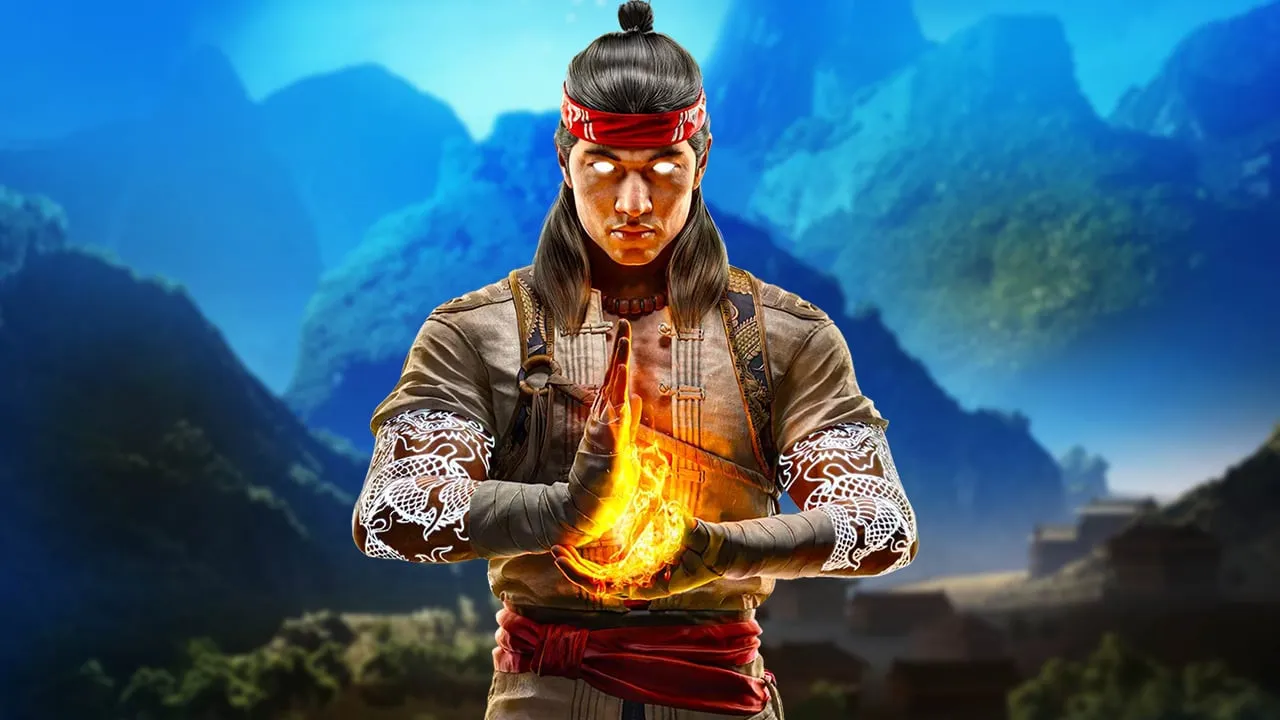
Some looks of the fighters pleased me very much. There are both classic variants referring to past parts of the series and entirely new costumes based on ethnic motifs or some other styles. I very much liked the set of “skins” with tattoos for Raiden and Liu Kang. Raiden's look recalls the style of rock stars of the early two-thousands, and the God of Fire resembles a triad boss. It seems everyone can find a look to their taste here.
A fun fact. The Mortal Kombat series has a recognizable and very popular musical theme that has nothing to do with the game itself. After the third part the music in the series rarely pleased with truly memorable motifs. However, in the last part this aspect of the game began to change for the better. This time the developers also tried hard and invited Casey Edwards, known for the soundtrack of Devil May Cry 5. The musical theme from Cage's mansion quite successfully mixes styles from previous Mortal Kombat games and clothes them in the composer's recognizable form.
Since I could not find the official soundtrack, listening to everything apart from the game did not work out. However, the game has at least a few very memorable compositions whose names I never learned. For example, at the end of a fight and on the initial menu screen on PlayStation 5 an incredibly enchanting and mesmerizing melody in the style of Vangelis plays. On the one hand, the theme itself seems not from MK, but on the other, when it plays in the intervals between fights, it seems to carry the player off to some otherworldly realms where they, like a higher power, observe what is happening from the sidelines. This composition quite successfully complements the soundtrack and nicely dilutes the other tracks. On the whole the composers experiment successfully with Eastern motifs, electronic beats and in places even with hard guitar riffs.
Of course, Mortal Kombat 1 cannot be called a bad game, but in almost all parameters it lags behind the studio's previous releases. If we make a culinary analogy, this is a big dish with uneven roasting. A blush is already visible, but it is still a raw product. A story that is interesting at moments, interesting decisions in the combat system in places, the game works in Russia and Belarus, but only with extra settings, partly good visuals. Undoubtedly the existing problems will be fixed, but, again, not all and not at once. Everything will be fine with Mortal Kombat 1, but, it seems, also in fragments.
In the article on Street Fighter 6 we wrote “The King Has Returned”, and some readers considered this statement premature, since Mortal Kombat 1 loomed on the horizon. I will repeat once more here: if you want an engaging and deep fighting game that has a decent single-player mode, a low barrier to entry and a well-thought-out network architecture, then Street Fighter 6 is your choice. Mortal Kombat 1 makes sense to buy only for fans of the series who are ready to put up with the need to configure DNS or a VPN and who want to see with their own eyes how the developers will try to fix and balance all this stuff.
Based on material from GameMAG. Translated from Russian.