Between Poisonous Swamps and the Afterlife: A Review of Lords of the Fallen
A review of Lords of the Fallen (2023): a grim Dark Souls clone with a two-world mechanic — the living Axiom and the world of the dead, Umbral; the author praises the idea and the art design but criticizes the repetitive enemies and bosses, the hitboxes, the parry system, the map and the many bugs, advising readers to wait for fixes.
The phrase “a game with a troubled fate” has turned from a rare lead-in to a material into an epitaph for most big projects. After changing several concepts and developers, Lords of the Fallen captivated its audience with juicy trailers showing movement between two worlds and mighty bosses beckoning with forbidden delight. But the end result — even without counting the cartload of poisonous bugs — turned out far less pleasant.
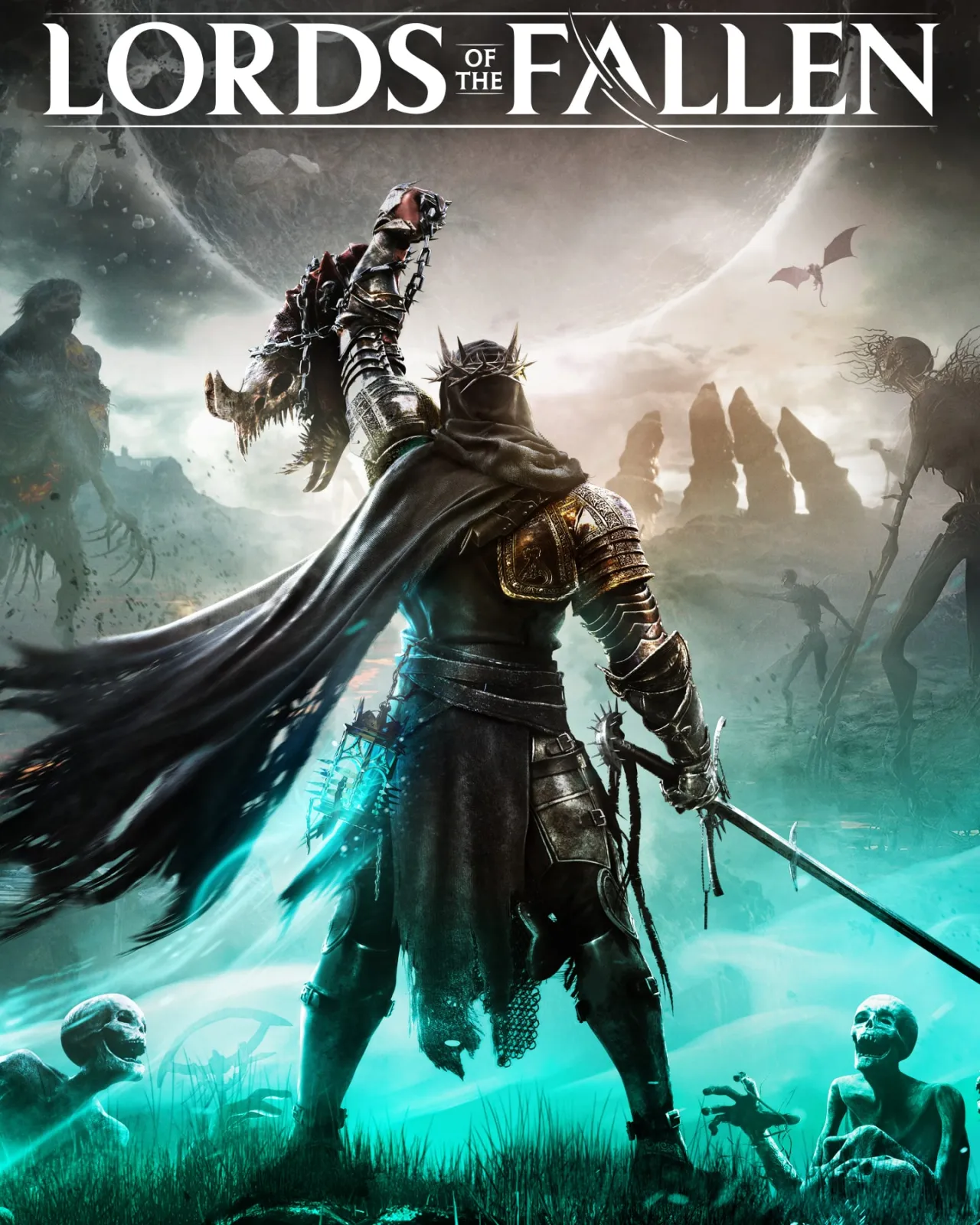
As in any Dark Souls clone, the story introduction here is not far removed from the blurb on an air freshener. A millennium after the victory over the evil deity Adyr, humanity still suffers from the consequences of a bloody war. Against the backdrop of new threats and nightmares, one of the last dark crusaders must burn out heresy and stop the return of an ancient evil. After choosing any of the brave heroes of different classes and customizing their appearance in a gender-neutral editor, you find yourself in the expanses of the gloomy world of Axiom.
Besides the journey through the living lands, the developers offer a look into the dead world of Umbral, armed with a sharp blade and a sturdy shield with a magic lamp. The alternative reality is accessible in whole or in part, by illuminating the surroundings with the lamp. In the first case you lose part of your life and wander as a ghost through the altered locations in search of interaction points to advance the story or a place to return to the realm of the living. You can also end up in the afterlife reality in case of your own death — and then you have a second chance to defeat the enemy and the coveted salvation through the return altar.
Besides the enemies present in both worlds, in Umbral you are awaited by ghosts invisible in the ordinary world and other infernal creatures. And the longer you stay in the world of death, the higher the difficulty coefficient grows and the more enemies appear. Experienced players can, thanks to the opponents appearing out of thin air, collect enough souls for leveling up or targeted purchases in shops. Umbral also offers bridges and items invisible in Axiom that can lift the curse on a magic door in the realm of the living or help reach treasures. By pulling ghosts embedded in the walls out with the lamp's glow, the hero obtains valuable items and opens the way for further story progress, and by fighting demonic entities and draining energy from pulsating growths on the walls he can restore part of the spent health.
In the main world you are awaited by opponents and locations familiar from games of the genre. Poisonous swamps, dirty mines, cursed knights, horsemen and giants — here the developers have come up with nothing original except guardian ghosts. These small and vile creatures can give their host invulnerability, health regeneration and other bonuses. To destroy them you need to use the glow of the lantern or move into the world of the dead. Such a mechanic, especially in the early stages, causes persistent irritation. Later the authors forget about it for a long stretch — as well as about the world of the dead itself, which serves only for the easy extermination of especially mighty enemies. The latter have to be lured onto a ghostly staircase lit by the lantern, after which you move the lamp aside so that the enemy falls down. For this the main hero receives souls and item bonuses. However, this works only in a couple of places and, of course, does not help in boss fights. The other enemies get far thicker closer to the coveted finale — fiery skeletons and witches can ruin the life of even a well-prepared warrior. And it is better to keep silent about the moths and giant kiwis from the otherworldly dimension.
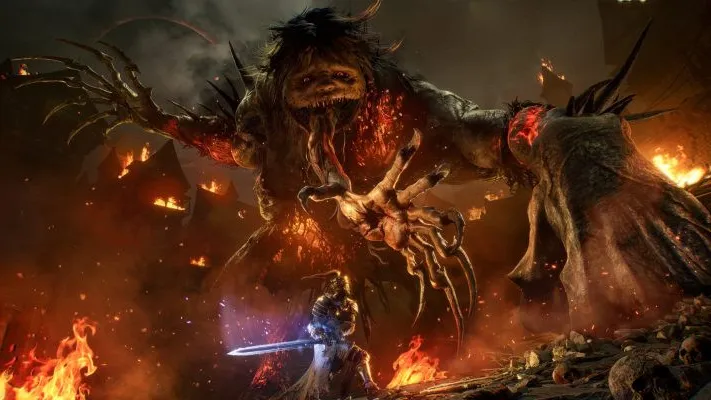
Returning to the bosses, it is worth noting that they are not distinguished by any cunning, apart from the horseman on the horse and the pre-final opponent, although the latter can with proper parrying and dodging be quite taken down in proud solitude. If it becomes hard, then before the fight with the demiurge you are often allowed to summon one of the heroes met while exploring the world. They, of course, behave foolishly most of the time, but they perfectly draw attention away, allowing you to finish off a strong enemy from behind. Not counting a couple of interesting creatures, for the most part the bosses look like pale copies of their prototypes from an endless number of other game universes. As for the helpers, one or several special tasks can be completed for each of them.
Lords of the Fallen also has holy and dark magic, but there is not as much use in it as it may seem — the orbs summoned from the abyss and the holy protection are not very effective. Cursed spears and righteous swords work fairly well but actively consume mana.
Upgrading weapons and installing special runes is handled quite well by the blacksmith rescued from captivity. But you must understand that a well-leveled hero and even a well-upgraded weapon will not be a panacea against strong enemies, because fiery skeletons and ghostly assassins with daggers can easily mow down even a level 160 hero. And the local analog of carnivorous chests — the invisible moth — gobbles up almost the whole health bar of a careless explorer greedy for treasure.
Although Lords of the Fallen is cut to the patterns of the games of Hidetaka Miyazaki, it has many problems. It has simply monstrous hitboxes, a strange parry system that works poorly in most cases, and an incomprehensible map in the form of graphic drawings and diagrams. It is also noticeable that the game was literally stitched together from several disparate pieces. The first stages offer active movement between the two worlds, but the further you go, the more boring the mechanics become and the less interesting the environment looks. You will hardly meet again later in the game the giant skulls, hands and giants of the first locations in the world of Umbral — only grayness and gloom with the same repeating opponents. And if at first the density of bosses per location seems reasonable, later you are awaited by locations with strong enemies without interesting special opponents. From a bright adventure the game turns into a gray routine with an unclear result. One that, moreover, hangs by a thread from failure because of numerous bugs — getting stuck in textures and enemies striking through walls are present. And this does not add to the general optimism.
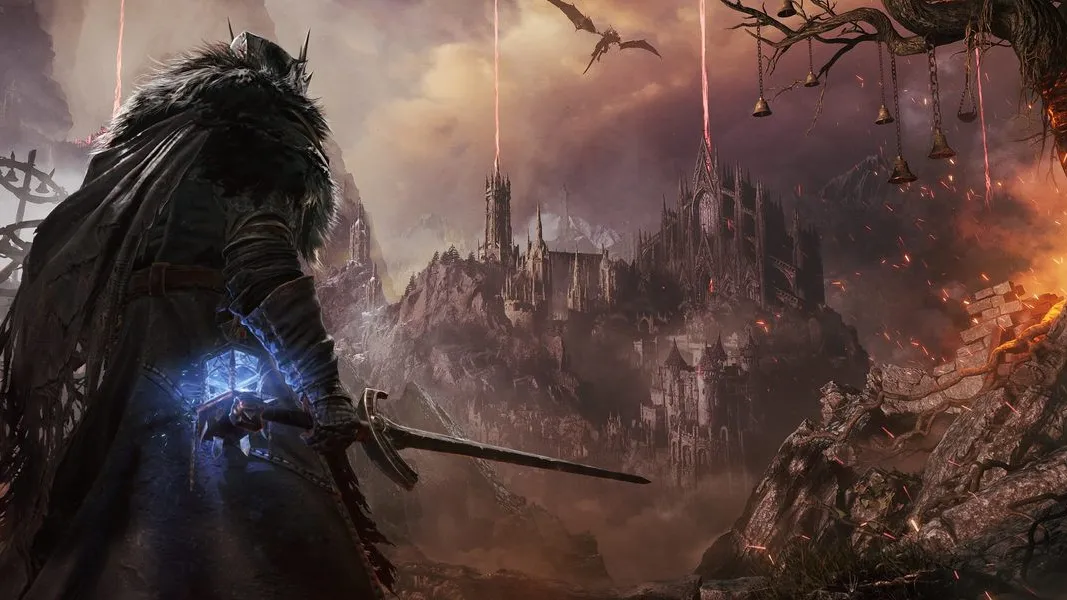
Visually Lords of the Fallen turned out uneven — the vaunted Unreal Engine 5 is not a panacea. In places the average graphics are pulled up by excellent art design, but in most cases the game looks noticeably worse than the domestic Mortal Shell from five years ago, not to mention Elden Ring. The release has no Russian translation, but if desired a tolerable localization made by neural networks can be found online.
Lords of the Fallen is not a very successful attempt to revive an old universe, offering interesting ideas with poor execution, where the white threads of the story are bursting at the seams, showing unsightly views of a body ravaged by bugs. If you want a fresh Dark Souls clone, wait until the Poles patch most of the problems. And in the meantime temporarily pay attention to the much more polished Lies of P.
Based on material from GameMAG. Translated from Russian.