Assassin’s Creed Odyssey Review
A review of Assassin’s Creed Odyssey: the author praises the scale of the world, choices and consequences, the Exploration mode, the mercenary system and the territory battles, notes the weaker story and the dim-witted AI, but calls the game the best in the series.
Assassin’s Creed Odyssey Review
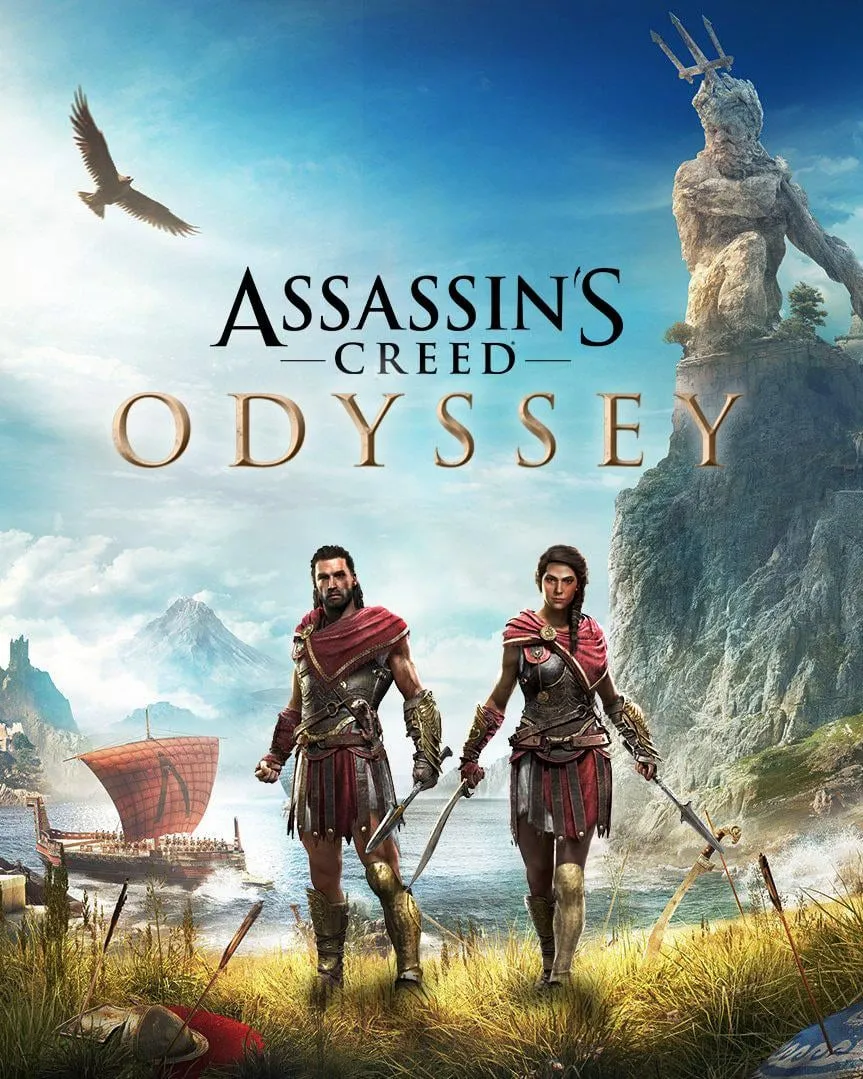
Of all the Assassin’s Creed games, Odyssey is the most aptly named. It is an RPG of mythic scale, a world so vast and tangled that I feel lost in it. This is not just Ubisoft's ordinary open-world style in the locations of the Aegean Sea. The familiar arrangement of icons covering each of its 30 zones is still here, but the various activities in Odyssey interweave into a web of interconnected systems.
Previous Assassin’s Creed games were full of simple actions that existed just to be done, but almost every pursuit in Odyssey somehow turns into its own large-scale quest. Many of Odyssey's zones may contain a little RPG of their own, but together they form an incomparably large world full of undone tasks.
An action RPG set in ancient Greece.
Odyssey sheds much of what makes Assassin’s Creed what it is in order to fully embrace core RPG concepts — and it is even better for it. Even though the story doesn't live up to its initial premise, the extra layer of choice, breathtaking landscapes and colorful side quests make Odyssey not only the best Assassin’s Creed to date but also one of the best RPGs since The Witcher 3.
Choices and Consequences
Unlike previous Assassin’s Creed games, dialogue options now let me influence main and side quests, sometimes with terrible consequences. I refused to intervene when a priest wanted to kill a family infected with a deadly disease, caused more than one uprising and even saved a disgraced general from coldly served revenge. And yes, I even managed to sleep with quite a large number of characters who were willing.
These wonderful side quests are scattered across the world, which is unimaginably large for a single-player RPG. Usually size doesn't matter, but the vast scale of ancient Greece works in Odyssey's favor, especially since each region feels distinct and detailed. It's a huge world I want to explore, and each zone has a subtle aesthetic that makes it unique, from the arid barren lands of Crete to the green plains of Arcadia. It's not only Ubisoft's biggest game but also its most beautiful.
The new “Exploration” mode makes exploring this world much more engrossing. Enabled by default, it removes most quest markers and instead gives me vague pointers to objectives, for example saying that it is located north of the agora in Athens, and I have to determine the exact location myself. Sometimes you can find the needed object simply by using my eagle Ikaros to survey the location from above, but sometimes you have to talk to characters or take additional quests to get more information.
When I failed to complete several sub-steps to locate an assassination target, I had no choice but to ride around Boeotia using my own abilities to find his camp. If you have the patience for it, this is a system that makes exploration more engrossing and interesting.
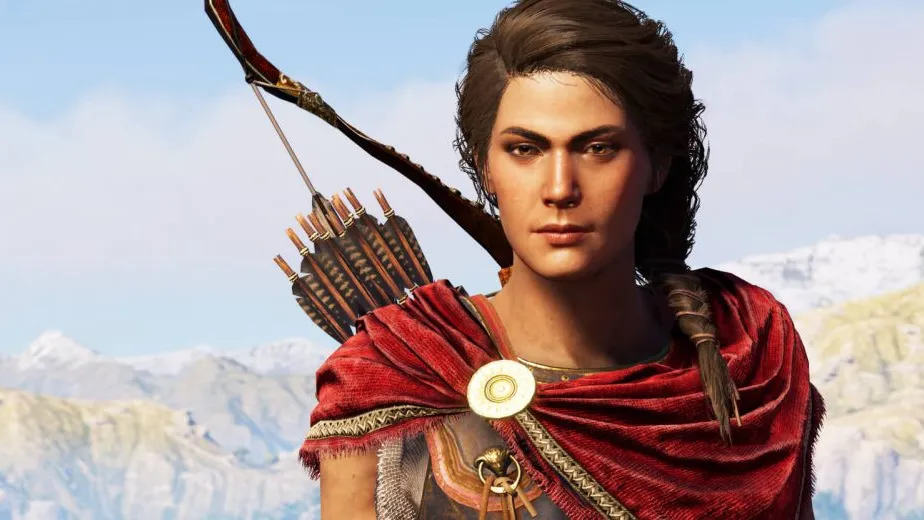
If Odyssey sacrificed anything for the huge world, it is the main story. Regardless of whom you choose, Kassandra or Alexios, there is a lot of force in their journey to reunite their family. In keeping with Assassin’s Creed tradition, Odyssey tries to tell a story in which Kassandra mentions all the most famous names in ancient Greece, but the end result is a story that has charm but often feels disjointed and confusing. It simply tries to do too much, tossing you from the backwater island of Kephallonia to the heights of Athenian society and then to an audience with the Spartan kings.
This frantic pace leaves little time to truly get to know or appreciate these characters, and the reasons I was pulled from one region to another sometimes seemed very contrived. It is still an enjoyable story, but not like in The Witcher. It's fairly standard for Assassin’s Creed, but the involvement in the story only by a miracle made me attached to Kassandra's journey. Even if some events left me bewildered or made me roll my eyes yet again, I felt involved in what was happening.
It is worth noting that Odyssey's story has quite harsh level spikes that you have to overcome by being distracted with side quests and other tasks. I didn't mind this, since the whole experience is fun, but it will annoy anyone who just wants to focus on the main quest.
I don't mind the story not always coming first, because Odyssey is an RPG that lives thanks to its excellent variety. The ship combat from Black Flag has returned as a main feature, though it is slightly simplified to be less tiring. I like feeling myself rise aboard the Adrestia and sail the open sea, splitting pirate triremes in half or boarding them to fight in melee.
There is also the new Mercenary system, inspired by the Phylakes from Origins, but, again, here it is bigger and better. Instead of just 10 super-tough enemies wandering the world trying to destroy me, there are 39 random mercenaries roaming around who, if I cause too much trouble, will try to collect the bounty on my head. These mercenaries remind me of the Nemesis system from Shadow of Mordor, though without the personalities that develop with each of my encounters with them.
But they really can appear at moments when I'm already vulnerable, as Skiron “the Mad Lover” did, who with his intuition sabotaged my forays and kept killing me until I loosed an arrow into his groin. Now he is simply Skiron the Mad.
Odyssey keeps the same MMO-style leveling system, which implies that enemies even a few levels above me will be practically invincible no matter how well I fight. This is still annoying — especially when I want to take a new story quest but find its level higher than mine — but in the case of mercenaries I like such an imitation of a food chain. When I saw Exekias the Legend, a level 50 mercenary, wandering around Delphi with his favorite bear, I felt I had run into a celebrity.
The mercenary order is just one of half a dozen secondary progression systems in Odyssey. It may sound like feature bloat, as if Ubisoft's open-world games need even more stuff, but each of these systems intersects with and influences the others in a way that makes Odyssey a living and dynamic world.
Tides of War
For example, in most zones the Spartan and Athenian armies fight for control of territory. When one faction controls a zone, I can destabilize its hold on the region by killing soldiers or burning and stealing supplies found in their well-guarded camps. When a faction's control of a region is nearly lost, a battle for the territory opens up, and I can sign up to fight on either side, receiving powerful gear as a reward.
In these multi-part battles hundreds of soldiers fight on the battlefield at the same time. It's a serious challenge that becomes even harder if the opposing faction recruits a mercenary to ambush me. It is in these moments that Odyssey's combat system shows itself in all its glory. Functionally it is the same system as in Origins, meaning it can sometimes feel a little boring, but the new abilities on the action bar give me so many cool tools to use in combat that it doesn't annoy me in the least.
Normal attacks give a large amount of adrenaline, which can then be spent using any of these four abilities, such as the Spartan Kick. It's even cooler than Fus-Ro-Dah from Skyrim when Kassandra kicks her enemies. There are also several cunning combinations, such as using Rain of Destruction with explosive arrows to launch an ancient Greek carpet bombing. Even if the combat system is imperfect, I like that Odyssey favors combat over stealth more than any other Assassin’s Creed, because these new abilities make me feel like a god of war.
My favorite punching bags are the Cult of Kosmos, the conspirators who split my family. Tracking down all forty-four cultists across Odyssey's huge map is a lot of work, but it's a testament to how well Odyssey's systems interact with each other, and it's one of the best parts of the game. Many cultists are exposed as you progress through the main story, but to find the rest and learn their identities you have to comb the world thoroughly.
Sometimes you may need to complete a side quest, while to find others you need to read stolen letters to determine their whereabouts.
One cultist was hiding in a bear's den in Malis, which required setting out to explore the countryside using my eagle Ikaros to try to determine possible places where he might be. Finding another required weakening Athenian control over a couple of islands to involve them in a naval battle. Others were easier to find, but then required infiltrating a labyrinth fort full of guards.
Fans of the old Assassin’s Creed games can rest easy knowing stealth is still very important in Odyssey. I spent a good half of my time sneaking into heavily guarded forts and estates, but the system has practically not changed compared to previous games. I still use my eagle to mark enemies and various targets and still feel the familiar tension when I try to slip through an enemy camp unnoticed.
My only problem with stealth is that it too often shows how stupid and inconsistent the AI in Odyssey is. More than once I saw guards getting stuck on objects while patrolling, and I also had to sit and watch them run around in panic, seemingly at nothing.
And nothing ruins immersion in a leisurely horseback ride through Athens like civilians desperately leaping from the roadside as though they had just dodged a passing train. So while Odyssey is certainly the best game in the Assassin’s Creed series I have ever played, and a hell of a good RPG, there are still some fundamental parts that could be improved.
When I look back on all the fun I had, these complaints seem insignificant. Assassin’s Creed Odyssey is huge and beautiful, and it easily combines action, stealth, sailing, faction management systems, mercenaries and cultist hunting into one game that I want to keep playing even after fifty hours. Odyssey is more than just another Assassin’s Creed, it is an RPG of unprecedented scale, supplemented by multi-layered and deep progression systems, each of which plays its part in bringing ancient Greece to life.
Based on material from Genapilot. Translated from Russian.