A Guide to Burning Heretics: Warhammer 40,000: Inquisitor — Ultimate Edition Review
A review of Warhammer 40,000: Inquisitor — Martyr, Ultimate Edition: the author criticizes the monotonous level design, the raw loot system and the weak console version and praises the variety of classes, but calls the game an interesting experiment that lacks polish.
According to fans, greed is one of the main traits of the company Games Workshop. That is exactly why licenses to use the Warhammer 40,000 world are handed out to just anyone, and the quality of many games does not stand up to criticism. Permissions are often obtained by very talented but very small studios that have no budgets to realize their ideas.
Warhammer 40,000: Inquisitor — Martyr stands somewhat apart. The Hungarian studio NeocoreGames has been trying to jump above its head since its founding — one need only recall the strategy King Arthur: The Role-playing Wargame, which competed with Total War.
Inquisitor is a somewhat different beast. The thing is that the game is not so much a Diablo killer as... a live-service game. A very crooked live-service game in which the emphases are put in the wrong places.
The plot is clearly inspired by Dan Abnett's “Inquisitor Eisenhorn” cycle, which is unsurprising, since the writer's works are considered one of the most convenient entry points for newcomers to the Warhammer 40,000 universe.
Players take control of an agent of the Inquisition who is trying to solve the mystery of the abandoned monastery-ship “Martyr” that belonged to Lord Inquisitor Uther Tiberius.
Despite a promising setup, the story is hard to call interesting. It is delivered as a series of investigations with evidence gathering, only there are no intrigues or shocking plot twists to expect — events are delivered head-on, and the local notes and dialogues put you to sleep. The presence of moral choice doesn't help either.
At certain moments the inquisitor will have to make decisions, following the path of the Radical or the Puritan. But decisions often affect nothing at all or affect it minimally. It gets absurd when one option states “This person betrayed me, but he can be understood and forgiven”, and the other — “We should execute the traitor, but now is not the time”. In the end the moral choice boils down to getting one of two additional skill branches.
So the main entertainment is not the plot but the gameplay. And here problems begin right from the choice of character class, since your further experience will depend on it.
Four classes are available in the Ultimate Edition, and many newcomers will most likely hurry to choose the Crusader. This representative of the Inquisition wears power armor like a space marine and also uses heavy weapons.
The nuance is that the Crusader is an incredibly dull character. He has the most unexpressive voice acting, and his progression is heavily trimmed. In fact the developers offer to strengthen the hero by learning passive skills, since in Martyr active skills are tied to weapons and equipment.
The Crusader's plus is the use of heavy weapons. He can be equipped with a flamethrower, grenade launcher or heavy plasma gun, after which the character starts turning crowds of heretics into bloody broth.
A far more interesting class is the Psyker, who uses staves to concentrate energy. The character starts with an extensive set of various active skills divided into four groups, and leveling opens additional modifications as well as new slots to insert them.
Besides, the player has to monitor the Psyker's condition. When using a skill the character can spend or accumulate Warp energy. Because of this various anomalies begin to appear around him — electric tornadoes, explosive areas and so on. If the process gets out of control, a small demon invasion can be provoked.
A decent option is also the Inquisitor from the Adeptus Mechanicus, half of whose active skills are reserved for summoning various constructs, servitors and robots. They too can be swapped and tuned for specific tasks.
A big bet is placed on exploring the world. The inquisitor is given the Caligari sector, which is divided into several subsectors counting several dozen planets each. By completing missions you bring order to a specific district, for which you can get rewards in the form of local currency and equipment.
The central hub for the inquisitor's team is a rogue trader's ship. Here you can craft, buy or sell equipment, choose missions, chat with comrades and so on. The list of enemies is quite diverse and includes renegades, tyranids, spawn of Nurgle and Khorne, Drukhari maniacs, Aeldari warriors and even fallen space marines, including the Alpha Legion and the Word Bearers. The problem is that the amount of content outweighs its quality. This principle harms NeocoreGames's work.
Despite the variety of worlds and enemies, Inquisitor has dull level design. This is due to maps being generated from large square tiles, which makes exploring the world predictable. Thus, the local starship corridors are single-level and turns happen strictly at 90 degrees. When it comes to a planet's surface, it is a gray or brown wasteland, and on the minimap you can see that tiles are joined to each other very roughly. At the right angle you can see pieces of locations breaking off or hanging in the air.
The dullness of the environment is compounded by weak music as well as the monotony of gameplay, aggravated by difficulty spikes. It feels as if the developers themselves never figured out how to correctly play Inquisitor — solo or co-op. As a result in places the game becomes unbelievably stuffy, and the apotheosis of brokenness was the final boss, an ultimate damage sponge.
In response you may tell us that all Diablo clones are rather monotonous. However, in most cases developers understand that the player must be rewarded with doses of endorphins in the form of loot and leveling.
In Inquisitor, however, leveling goes extremely slowly. The reward is often barely obvious things because of the emphasis on developing passives.
As for loot... it is broken too. First, treasure chests are scattered across maps extremely sparingly. Second, the developers chose a very strange gradation in which blue loot is worse than green. Because of this newcomers will constantly fall into a stupor.
Besides, someone clearly botched the random number generator in the game. More than once or twice players will encounter new equipment that is worse in stats than similar items 10 levels lower.
The problem can be partly solved through crafting. Only the spread of stats doesn't go anywhere. Besides, creating equipment is an expensive pleasure, and to gain access to upgrading and extracting the local analogs of runes (Psalms) you will have to pour significant amounts of two kinds of currency into leveling an additional skill tree.
At the same time the deeper the player dives into “Inquisitor”, the more new content it piles on. There are analogs of Diablo III's Rifts, a PvP mode, co-op, leveling of three factions, deep armor customization, weekly trials, collecting and leveling mutator cards, creating random campaigns with text-quest elements and so on and so forth.
The problem is that each of the above components is poorly thought out. Say, the combat system has an element such as the suppression gauge. Under heavy fire the indicator gradually drops, as a result of which the effectiveness of the character's weapon falls and incoming damage to him increases.
According to NeocoreGames's concept, the player should not run into a crowd of enemies but... hide behind cover in the style of Gears of War (we remind you, we are talking about a Diablo clone). The idea simply doesn't work, since in 99% of cases enemies prefer to run right up to the inquisitor. Only Aeldari snipers use the mechanic correctly. However, even the hero himself can't properly use cover, regularly shooting at the wall in front of him.
The developers may forget about some ideas altogether during the campaign. For instance, at the beginning and end of the game you can find switches for activating turrets, stationary machine guns and various traps.
The original Warhammer 40,000: Inquisitor — Martyr was released in 2018, and the release turned into a downright catastrophe. Many players lost characters, and in the Russian segment of PSN NeocoreGames's project fell victim to the squabbles between Roskomnadzor and Telegram.
Over the past few years the situation has not stabilized much, since the game requires a constant connection to servers that periodically fail to cope with the load.
The console version, which was heavily cut down, deserves separate discussion — the local destructibility system suffered especially. On Xbox One Inquisitor was altogether problematic to play because of very low resolution, no anti-aliasing and unstable performance of 20-25 frames per second.
In October 2022 a version for next-generation consoles was released. Thanks to this the destructibility system returned to the game, and resolution and framerate increased. However, you shouldn't expect a stable 60 frames per second, since during large-scale battles and explosions performance starts to jump.
The main problem of the console versions is the nightmarish controls, which are poorly adapted to the gamepad. The local auto-aim system in places simply goes mad. That is why it is easier to use the flamethrower with a grenade launcher — that way you will definitely hit someone at least.
But the real nightmare begins when the developers decide to “entertain” you by offering to take control of a Leman Russ tank or an Imperial Knight. The latter constantly shoots anywhere but at the right group of enemies, and turning it 90 or 180 degrees is a whole ordeal for the stout of spirit.
The Ultimate Edition itself turned out on closer inspection to be not so “ultimate”. Compared with the PC version it turns out that part of the content is missing.
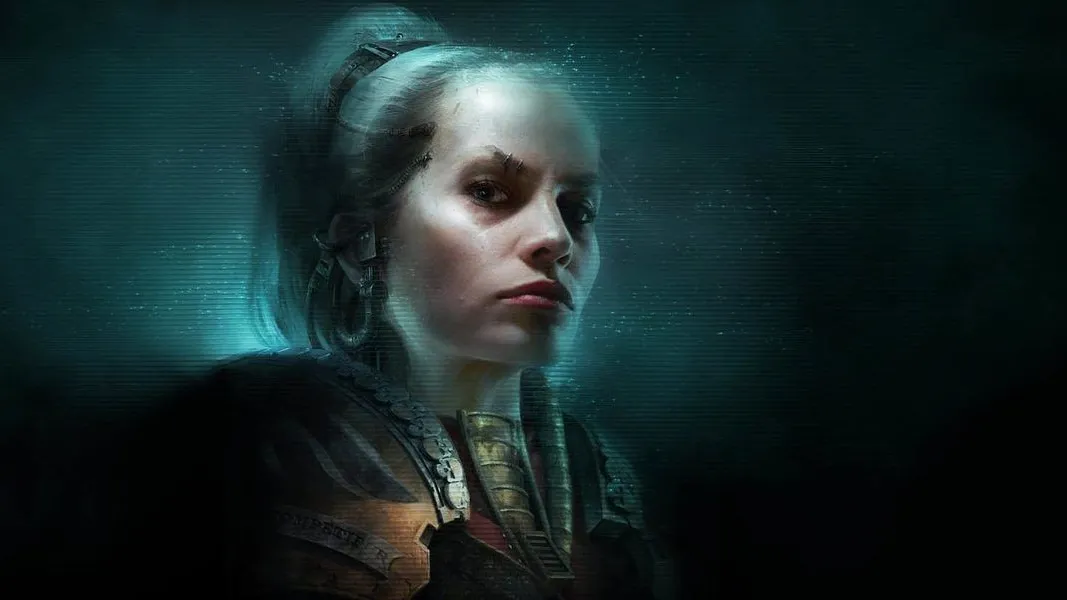
However, the Hungarians do not yet intend to abandon their brainchild. Already at the end of November they plan to release a new class, the “Sister of Battle”.
It's a pity the developers don't want to fix fundamental problems. The studio's carelessness in working with the environment, various glitches with animations and textures, is very often conspicuous.
Warhammer 40,000: Inquisitor — Martyr is an interesting experiment. With a limited budget the Hungarians tried to create a live-service game capable of competing with the works of Bungie and Blizzard. At the same time nobody smothers players with microtransactions — instead you can buy the story expansion Prophecy, several mission packs and a limited set of cosmetic items.
The nuance is that Inquisitor desperately lacks polish. Players have a huge amount of content that suffers from monotony and roughness. At the same time the developers couldn't tune the difficulty, because of which their creation periodically turns into torture. A very ambitious one, but torture. Still, Warhammer and Warhammer 40,000 fans have nothing to choose from — the only alternative is the mediocre Warhammer: Chaosbane.
Based on material from GameMAG. Translated from Russian.