A Grand Correction of Errors and the Return of the King: Street Fighter 6 Review
A review of Street Fighter 6: the author praises the World Tour mode, the two control schemes, the Drive Gauge system, the animation and presentation, and calls the game a true return of the genre's crown.
Street Fighter V is hard to call a bad game, but big financial problems at Capcom forced it to be released stripped down. The public did not appreciate this move, and although the fifth part later acquired content and fighters, the revenue from its sales still did not match the success of the previous part. The Japanese specialists managed to draw the right conclusions from this and set about a completely new Street Fighter on their own engine, RE Engine.
The sixth part literally interprets the title “Street Fighter” and offers a completely new urban backdrop for the series with an abundance of beautiful graffiti on walls and neon glow from various signs. The characters are still easily recognizable and have the series' signature hypertrophied shapes, but they have stopped feeling drawn and seem more alive than before. The updated logo, playing on the Roman and Arabic numeral “6”, also stresses that the series has taken a course toward a new style and flirts with attributes from MMA. Overall the changes can be summed up with the ironic slogan “stylish, fashionable, youthful”, yet Capcom really managed to modernize the game beautifully while preserving the franchise's individuality.
The most interesting thing is how the developers handled single-player content. The Japanese did not copy the solutions of NetherRealm Studios, and in places even tried to do the opposite. There is no expensively staged cinematic story here, but there is the World Tour mode. It tells a simple story of a completely unknown “street fighter” who is heading toward success and who is regularly pestered with questions in the style of “What is strength?”. Most of the dialogue is delivered as text, and there are practically no beautifully directed scenes, but there is an open city. It can be explored, quests received, and you can fight various thugs or simply spar with martial arts lovers. The very concept strongly resembles Conquest from Mortal Kombat of the PlayStation 2 era.
It is worth noting that from the very first minutes to the very end the feeling never leaves that World Tour was initially a prototype of a new Final Fight. Fans of Capcom games always knew both games belong to one universe, but here practically all important events take place around Metro City and Final Fight characters, while Street Fighter fighters play almost no role in the local story. Incidentally, World Tour can even be downloaded as DLC and has its own separate trophies.
The main point of World Tour is to track down Street Fighter characters and learn martial arts from them. Moves are not given right away but only as the avatar levels up. Conversations with this or that teacher will contain plenty of references to the company's games, jokes and various small details about relationships among the fighters. Incidentally, unlocking extra costumes for heroes happens after raising friendship with them to 100%.
The gameplay here is built so that a newcomer poorly familiar with fighting games gradually gets used to basic skills and step by step understands the logic of the combat system. In addition, in the city you can run into various mini-games, which also aim to teach the player the basics of Street Fighter 6. For example, making pizza works through commands like a quarter circle on the d-pad: down-back and “kick” or a full circle and “punch”. Another mini-game involves honing the skill of charge moves. For example, such a move is Chun-Li's “Kikoken” fireball, done by holding back, then forward and punch. Personally I always did such moves badly. It's great that you can practice that skill here.
Exploring the nooks of Metro City, the avatar receives quests and various errands, the completion of which is rewarded not only with useful items but also opens access to other locations where teachers are found. Some are right on their themed arenas: Cammy stands in a London square, Dee Jay hangs out on the beaches of Jamaica, and Zangief works at the “Barmaley” factory. All this adds variety and lets you enjoy not only the beauties of the city but also the scenery of the fighting arenas.
It is worth noting that every location has its own clothing stores where you can dress up the avatar. The items in each store are different and the assortment is updated from time to time. There are really many ways to give your character individuality, and such possibilities are very pleasing. This is noticeable when you move your character from World Tour to the online Battle Hub mode, where you can meet other players with their motley avatars. I once even met the sailor Popeye, whom the cover art of the game references.
Now we turn to the main thing — the combat system. Many developers are now preoccupied with the barrier to entry into the genre, which has been repeatedly discussed at various conferences and in interviews. However, in my opinion, before the release of Street Fighter 6 only one game had managed to combine the genre's classic foundations with simpler command-input options — Granblue Fantasy Versus, but the Capcom specialists did it a bit more gracefully.
In essence, Street Fighter 6 has two combat systems at once: one “modern”, using a four-button layout where attacks are divided by strength and special moves are assigned to the shoulder buttons, and the second the classic six-button one, which divides attacks not only by strength but by the limbs the character hits with. It is worth noting that in the “modern variant” not all “specials” can be done through the special-move button, and for Zangief the “Tundra Storm” grab is done in about the same way as in the classic variant, “down, down, heavy kick”. At the same time in the modern layout nobody limits players to simple controls — you can input and combine commands almost the same as in the classic one. There is a separate button that lets you do several prepared combo strings, at the end of which there may be one special move or another, but this too does not limit the player, who can invent their own strings, hitting individual attacks at the right timings exactly and even continuing them with an automatic combo. On the other hand the new system still doesn't give the flexibility and variety that a player with the classic layout can demonstrate. So sooner or later you will want to switch to the old variant.
The simplified system attracts newcomers well and lets you easily get into the game, smoothly figuring out the possibilities of the combat system, making you think more about strategy and tactics than about complex combinations on the gamepad. Of course the modern layout won't help you beat a well-trained player, but that isn't required of it. This system is a good base for starting to learn a character new to you with a subsequent move to full controls.
The combat system itself has also changed seriously. Instead of the traditional super meter, a different one appeared — the Drive Gauge. It is located right under the health bar and is spent on empowering moves as well as special movements — Drive Impact and Drive Parry. The first resembles the focus attack from Street Fighter IV beloved by many, and the second is a greatly simplified parry from Street Fighter III.
Drive Impact interrupts enemy attacks and can absorb several hits; you can use Drive Parry against it or interrupt it with another Drive Impact, which leads to a small slowdown of time and adds epicness to the episode. These moves have many small nuances and peculiarities that deepen the already well-thought-out combat system. For example, if you use Drive Impact right after a block, there will be a different attack with slightly different properties, and a successful input of Drive Parry in a small timing window before the hit triggers a perfect parry, opening opportunities for a counterattack.
Both Drive mechanics use that same gauge under the health bar, which fills through successful actions in combat and also after a successful parry. Depleting the gauge causes a burnout state, and until the gauge returns you can easily get stunned, which immobilizes you for a couple of seconds.
The characters have also undergone changes and acquired new moves. Some fighters have more scripted strings of strikes, consisting mostly of two or three movements, which can also be canceled with a dash or continued with other attacks.
Zangief deserves separate mention. I played a lot as him in previous games, and in general, being an Ossetian, it is simply impossible not to note a legendary countryman. The “Red Cyclone” received a huge number of new throws that please the eye with their juicy animations. It seems Zangief has become a bit harder to master, but his powerful damage can disconcert any opponent. By applying the “parry cancel” mechanic into a “dash”, the character can be more mobile than before and capable of striking terror into any opponent. However, to unlock this potential you need to know your opponent's movements well and understand when it is appropriate to do the run-through trick so as not to run into a counterattack.
It is important to say that some characters have acquired unique mechanics, such as Manon's throw counter or Jamie's drinking of a brew. All this opens new possibilities and lets you plan a fight taking these features into account. If for the French ballerina-judoka the animation and strength of throws change, then Jamie enters a different fighting mode. Similar mechanics exist for many fighters, including old ones such as Juri or Honda. These little things make the characters more unique and varied, and the combat system of Street Fighter 6 more interesting and deeper.
The third layer of the game is Fighting Grounds. All of Street Fighter's traditional modes are here, such as arcade with comics, various training modes and trials, as well as online and offline duels.
Among the play options there is a rather funny mode called “Extreme Battles” with different rules and modifiers. For example, you can stage a fight to five knockdowns with the condition that electric discharges strike across the arena, or get into a points contest with bulls running around the arena. Despite the mode's playful and unserious attitude, it actually helps beginners hone basic skills and train reaction in an easier and more relaxed way.
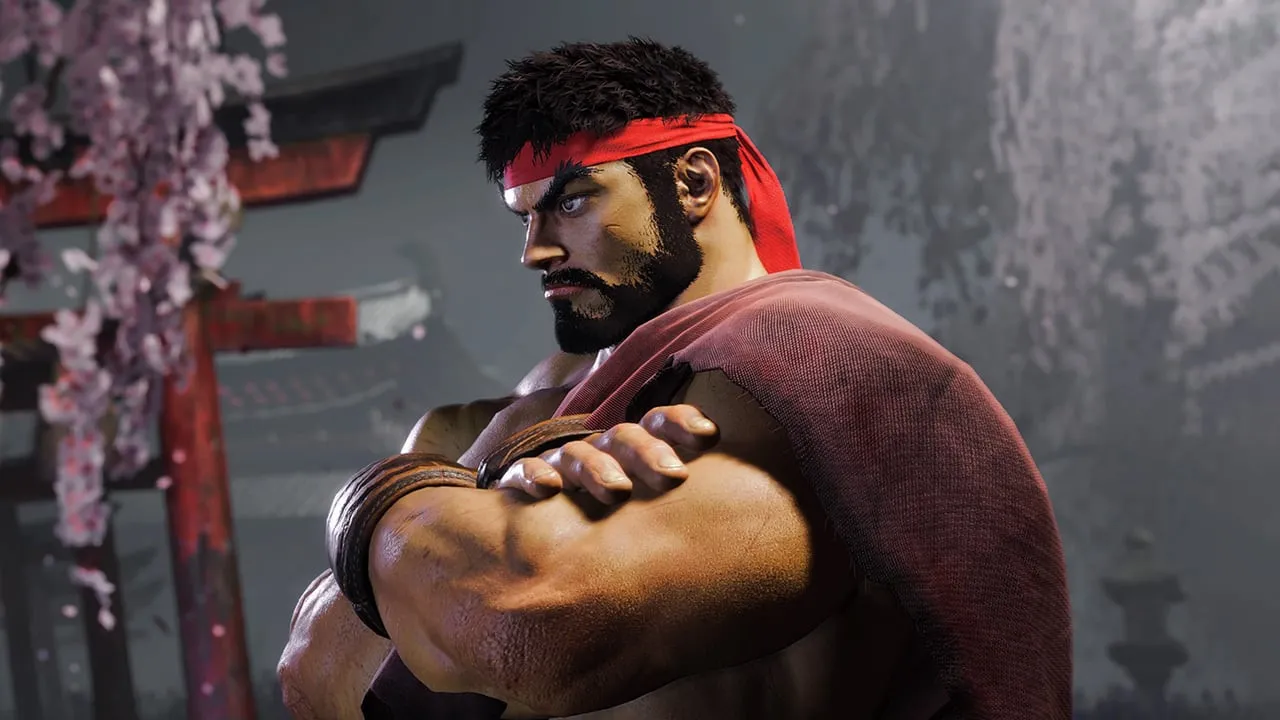
In Fighting Grounds the developers implemented a quite interesting way for heroes to enter the arena. Unlike the same Mortal Kombat 11, where characters exchange individual lines and sometimes even plot-important phrases, here the fighters walk out to the ring parallel to each other. The whole thing resembles a TV broadcast of MMA, where commentators tell about the fighters and data such as height, weight and preferences appear on screen. All this emphasizes the competitive mood of the mode. At the same time during such a walk-out the characters show their character. For example, Ryu walks calmly, looking ahead, while Juri clowns around, looking at the opponent and as if trying to throw them off balance before the fight. It all looks truly fresh, interesting and in places even funny.
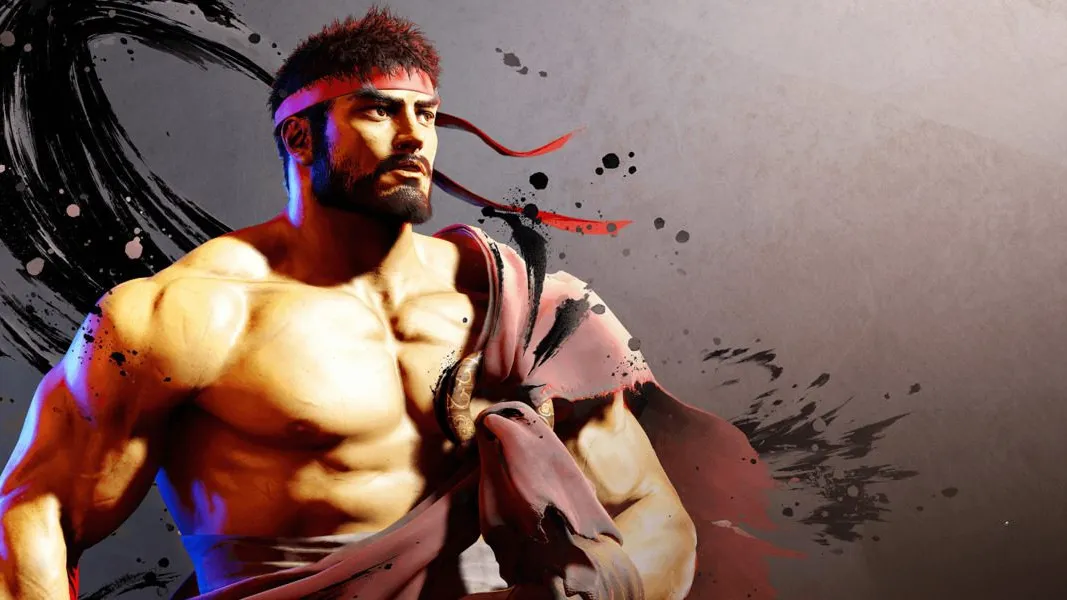
Technologically the game feels modern, but it has small flaws. For example, small pixelation in the hair that is visible on screen before a fight, as well as a short draw distance in World Tour mode. However all this ceases to matter, since the developers put all their strength and time into polishing the game during the battles themselves. This is the right decision, because it is this part that will be on screen practically all the time. So despite small blemishes the visual side of Street Fighter 6 is incredibly pleasing with its new approach to design and especially delights with its carefully worked-out animation, to which the authors paid enormous attention. Almost every movement involves the whole body of the character, and it seems it works not from recorded scripts but from muscles that in places very realistically contract and move. There are so many nuances that you can notice how Ryu spreads his toes during a block, trying to hold his ground, or how Marisa puts her whole torso into every punch. Because of all this the action looks very alive and beautiful, while keeping the necessary balance between cartoonishness and realism. In my opinion it is now the most spectacular fighting game, one that can hook not only fans of the genre but also those who simply want to watch a beautiful fight.
Street Fighter 6 is a success. After the first showing many fans of the series worried the developers were moving away from important canons, but now it can be said with confidence that they made a huge step forward for the series. The Japanese specialists tried to simplify the barrier to entry into this fighting game as much as possible, added a simplified layout, and also introduced an engaging single-player mode. At the same time they managed to preserve the depth and thoughtfulness of the combat system and to introduce many changes that develop the familiar concept and take it to a new level. Street Fighter 6 takes back its crown — and it seems it won't give it up so easily now.
Based on material from GameMAG. Translated from Russian.