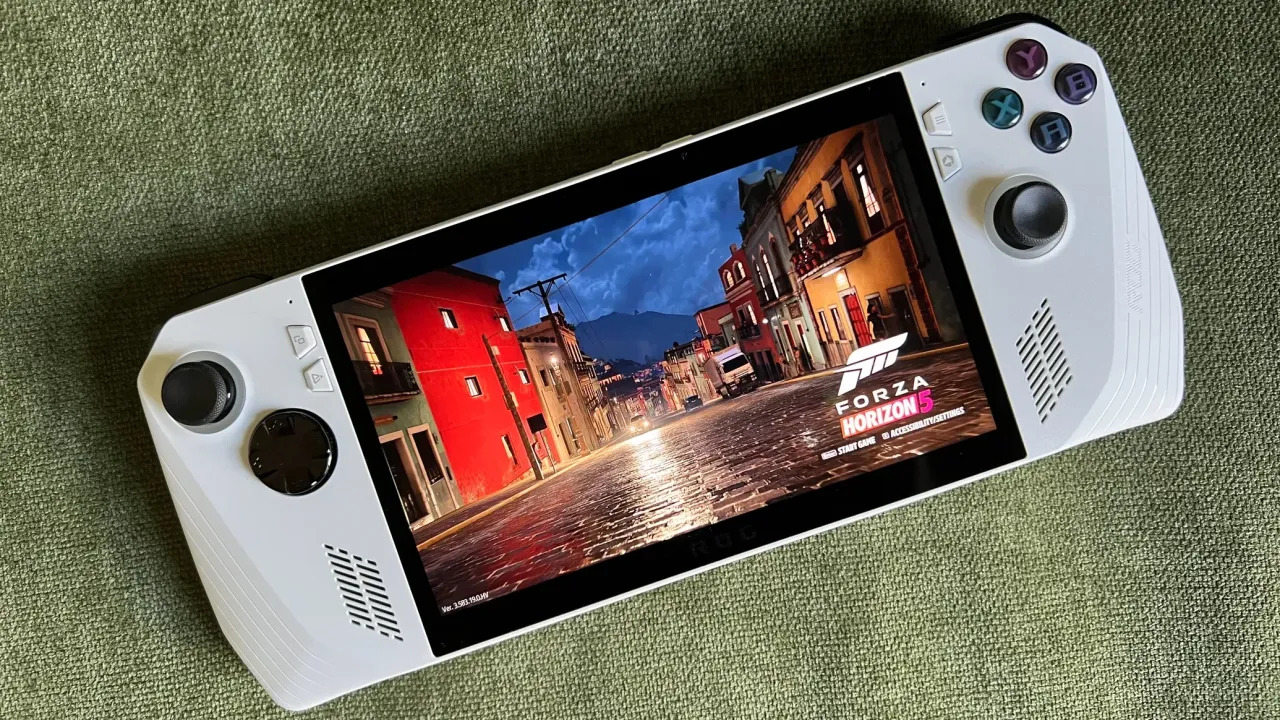
Fast to Run and Even Faster to Drain — Reviews of the ASUS ROG Ally
Preorders for the ASUS ROG Ally handheld PC opened on the day of this report at $699; reviews praise the performance and screen but criticize the battery life and the Windows interface: IGN 8/10, The Verge 5/10, Polygon no score.
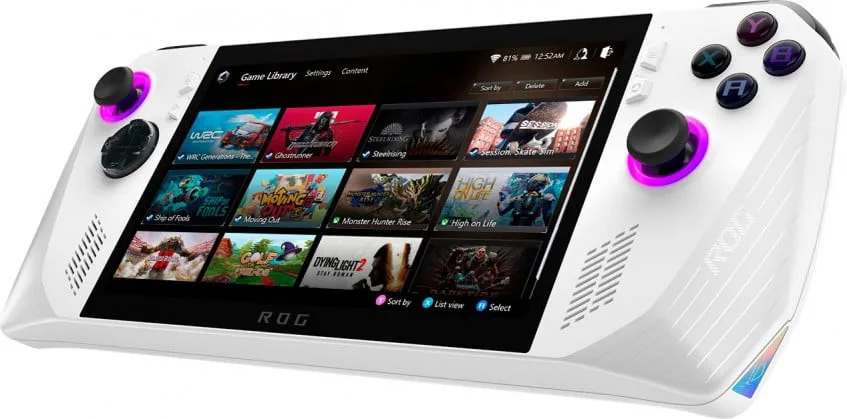
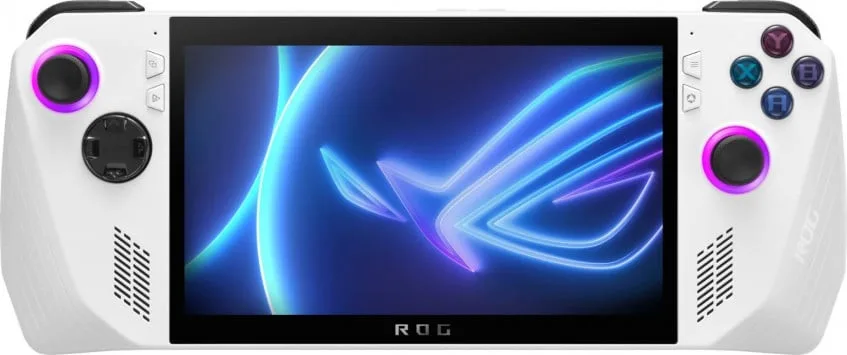
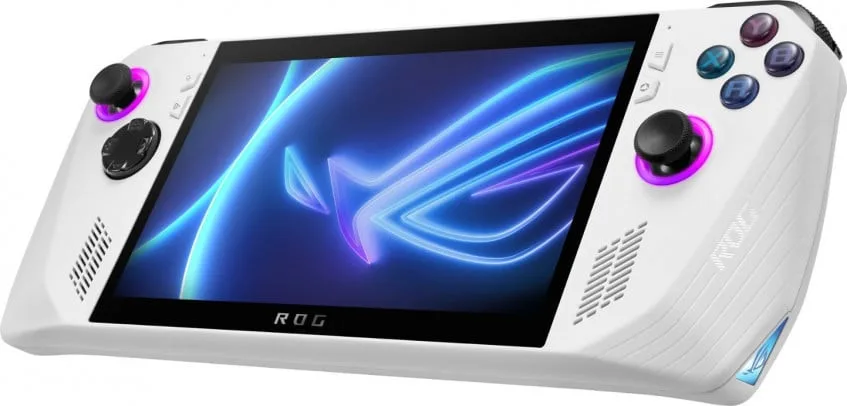
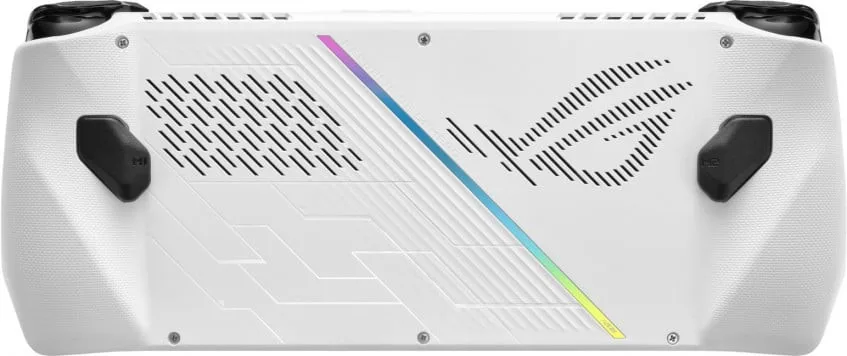
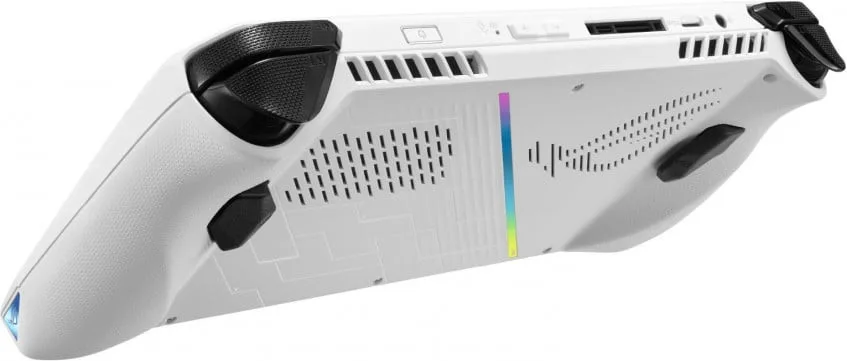
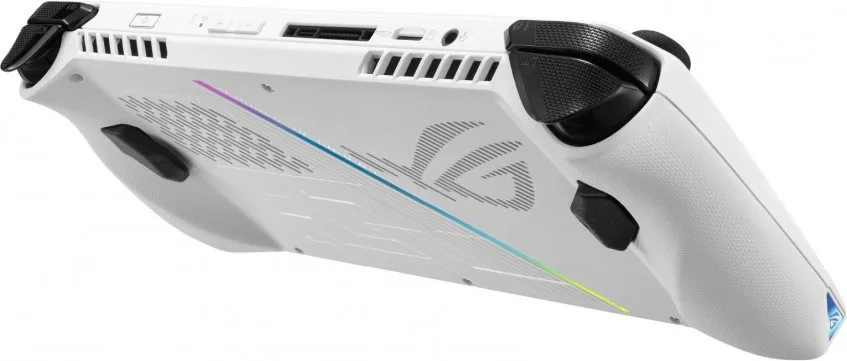


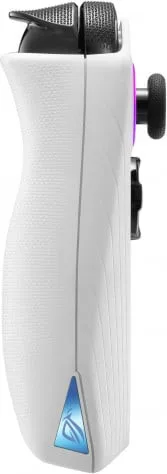

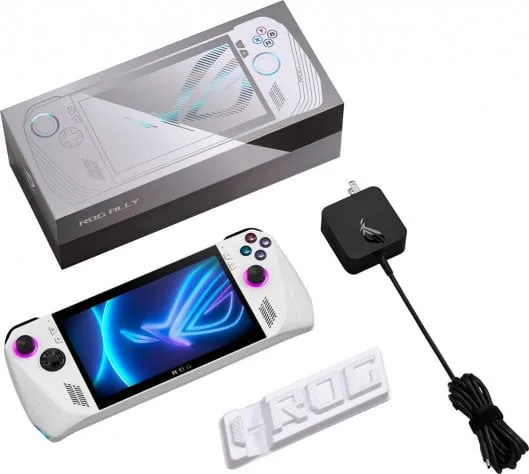



Western journalists have already tried the ROG Ally — a handheld PC from ASUS — and tried to answer the question: can it compete with the Steam Deck?
But first, a reminder of the device's specifications:
- Operating system: Windows 11 Home.
- Processor: AMD Ryzen Z1 Extreme with the Zen 4 architecture — 8 cores, 16 threads, up to 5.1 GHz.
- Graphics accelerator with RDNA 3 — 12 compute units, 8.6 teraflops, 4 GB of video memory, up to 2.7 GHz.
- RAM: 16 GB (dual-channel, LPDDR5).
- 7-inch IPS touchscreen with 500 nits brightness and Corning Gorilla Glass with an anti-glare coating.
- Resolution 1080p and a 120 Hz refresh rate (AMD FreeSync Premium).
- SSD: 512 GB NVMe M.2 (there is a MicroSD slot).
- Dimensions: 280 mm x 113 mm x 39 mm.
- Battery: 40 Wh.
- Weight: 608 g.
- Noise under load: 20 dB.
At the time of the reviews the device cost $699 and went on sale on June 13, and in the third quarter the ROG Ally with the AMD Ryzen Z1 processor (6 cores and 12 threads) was to come out at a price of $599.
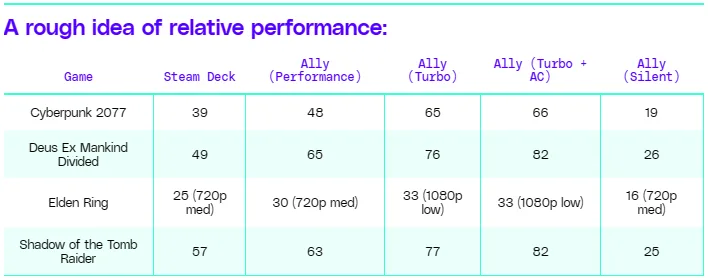
Performance of the Steam Deck and ROG Ally in different modes.
If we sum up the critics' impressions, the picture is as follows:
Pros
- High performance.
- Quality screen.
- Quiet fan.
- Fast charging.
Cons
- Short battery life: 2–4 hours in games.
- Inconvenient interface — Windows is poorly suited to handheld PCs.
- Buttons sometimes stick. ASUS promises to fix this by release.
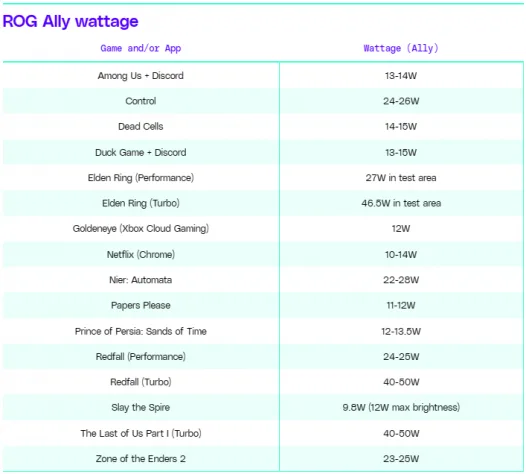
Power consumption in different games.
IGN — 8/10
The ASUS ROG Ally feels like the Game Pass handheld that many fans wanted. Despite the interface that is not the most inconvenient, the short battery life and the absence of Steam Deck-style touchpads, this device can surprise. Thanks to the wonderful 1080p screen, impressively bright and perfectly suited for playing on the go in any conditions, powerful hardware and an acceptable price, the ROG Ally really can become the Steam Deck competitor we have been waiting for.
Robert Anderson
The Verge — 5/10
I fundamentally believe that a handheld gaming PC cannot be called truly portable if its battery life and interface are not designed for play on the road. I also believe that most people interested in this device would do better to pay $300 more for our favorite gaming laptop (from ASUS, of course). If you really need a handheld device, save a couple of hundred dollars by buying a Steam Deck for $400 and adding your own small SSD to it.
Vjeran Pavic
Polygon — no score
I assumed that after the review I would go back to the Steam Deck out of habit. But so far it is still lying in my bedside table. I even kept playing Octopath Traveler 2 on the ROG Ally, whose lighter body and brighter screen make it ideal for long night adventures in fantasy worlds. So, dear reader, I cannot say which is better: the Steam Deck or the ROG Ally — both “handhelds” are simply magnificent.
Chris Plante
Based on material from StopGame. Original text by Ruslan Prisekin. Translated from Russian.