15 Best Games About Members of Royal Families
A roundup of fifteen games about royalty: from Prince of Persia and Xenoblade Chronicles to Hades, Fire Emblem, Fable 3, Final Fantasy 15, Crusader Kings, Reigns and Civilization.
Games constantly feature kings, princes and princesses, as well as their luxurious residences. Hardly any fantasy or story in a medieval setting does without wise rulers living in grand castles and their capricious children, who are often the main drivers of the plot.
Nevertheless, the main characters of many games are not the royals themselves but ordinary people who gradually make their way to the throne itself. Fortunately, the authors of some titles let us look at the world through the eyes of a monarch or their heir. Below are collected the best of such projects.
Prince of Persia
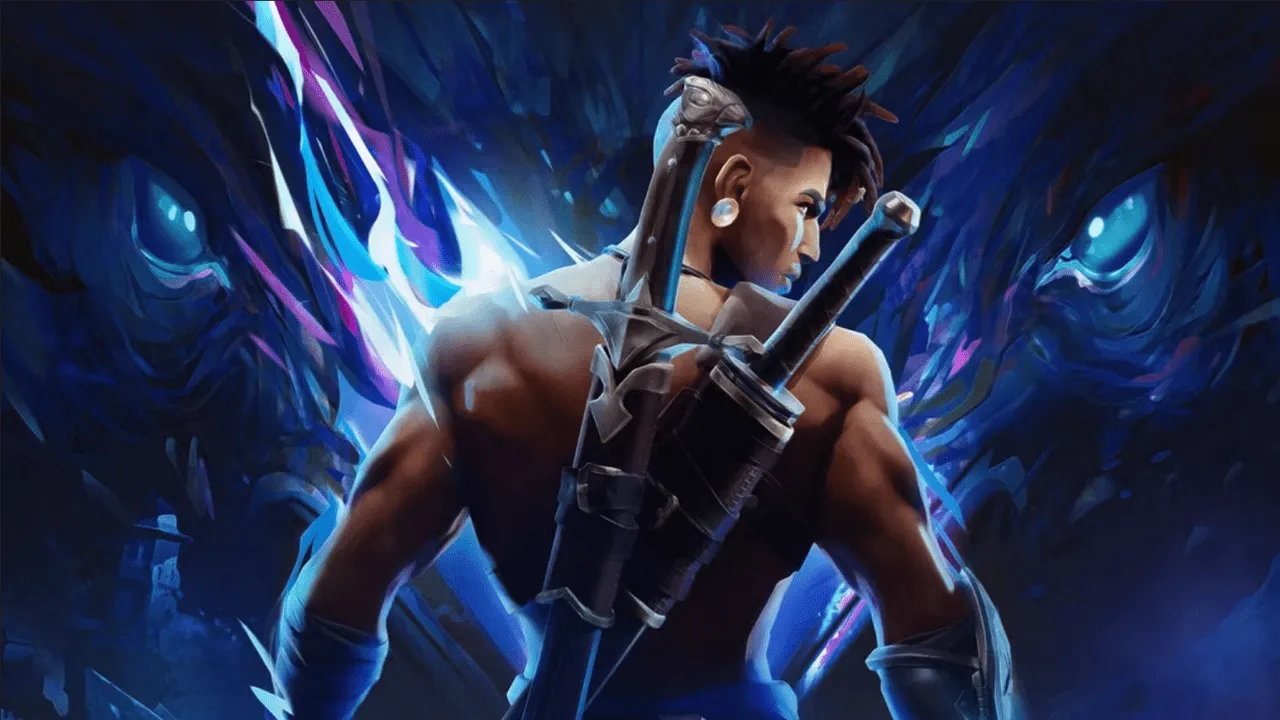
This franchise has a rather complicated history. On the one hand, the trilogy of the noughties gave us a memorable protagonist and engaging gameplay with excellently implemented parkour. On the other — the series went on a long hiatus because of a more successful replacement in the form of Assassin’s Creed. Interestingly, Persia itself hardly featured in these games at all.
In the recently announced The Lost Crown we will play as a completely new protagonist (unfortunately, no longer a prince). We can only hope that the authors of the new installment manage to worthily continue the iconic franchise that in its time had a huge influence on the adventure-action genre.
Xenoblade Chronicles
When the Xenoblade Chronicles series comes up, what first comes to mind is huge open worlds, grand stories and deep philosophical reflections on humanity. Or Pyra's and Mythra's legs, if you are Masahiro Sakurai. In any case this franchise is definitely not associated with royal families and their problems.
However, the beloved Melia is the future queen of High Entia, but this fact quickly evaporates from memory, especially when we watch how spectacularly she deals with enemies. Melia does not resemble stereotypical rulers: the heroine is not afraid to get her hands dirty and always tries to act in the interests of her people, along the way destroying entrenched prejudices.
Yes, Your Grace
This title is built on the model of Reigns. As the king of the country of Daveren we must manage our subjects and make difficult decisions, trying to catch a balance between justice and practicality. Naturally, our main task is to stay on the throne as long as possible, reacting in time to various dangers such as monsters.
Unique characters will regularly come to us for audiences, some of whom weave multi-step intrigues that unfold as the plot develops. And to stand up in the face of all threats, you will have to not only monitor the mood of your own people but also form profitable alliances with other states.
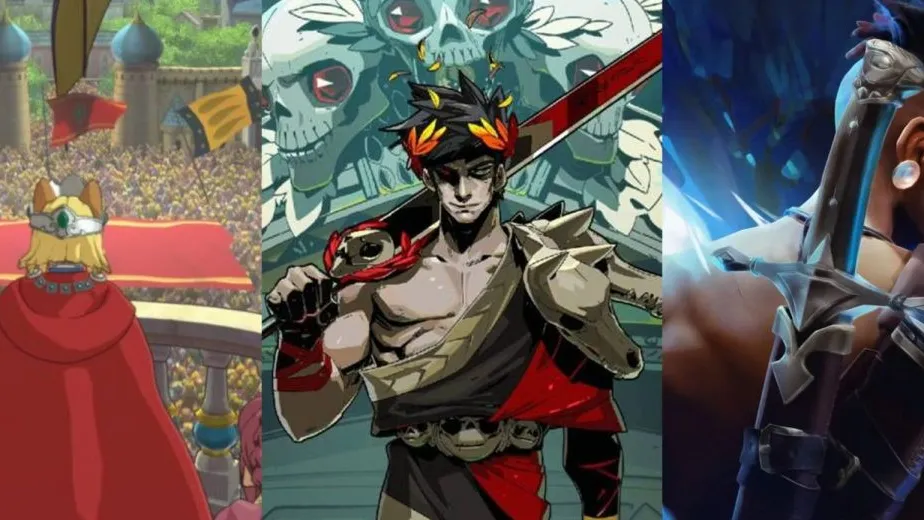
Hades
The studio Supergiant is rightly considered one of the best development teams. The company has managed to release only four indie games that can well compete in quality with many modern AAA projects. The studio's most iconic work became Hades, which brought the developers incredible popularity, and this is unsurprising given the abundance of vivid characters who have won the love of players around the world.
The action of Hades takes place in the Greek underworld, where we play as Prince Zagreus, the son of Hades. To tell the truth, Zagreus is not the most typical prince, since he essentially rebels against his own father. And his father, as is well known, rules the world of the dead and periodically meddles in the affairs of the Greek pantheon, so the main hero's rebellious mood is quite understandable.
Odin Sphere
Many gamers learned of the existence of the studio Vanillaware only after the success of the game 13 Sentinels: Aegis Rim, but even before that the company had released quite a few great titles that, unfortunately, went unnoticed. One of the studio's first projects was Odin Sphere, which later received a full remake. Unlike the 3D titles of that time, Odin Sphere is done in a classic 2D format and resembles an interactive play more than an ordinary video game.
The story of Odin Sphere is told from the point of view of a heroine named Alice, who reads various old books. Each of them tells the story of one character or another, many of whom are kings and queens. These stories, inspired by Norse mythology, intertwine with each other, and they contain enough political intrigue to please all lovers of complex plots. Incidentally, in the remake the authors reworked and even slightly expanded most of the stories.
Fire Emblem
Practically the entire Fire Emblem series fits the theme of this selection. The only exceptions are Byleth from Three Houses and Ike from Path of Radiance/Radiant Dawn. But Marth, Chrom, Corrin, Roy and all the other protagonists are royals through and through. However, most of them are not rulers and content themselves with the status of princes, princesses or heirs to the throne.
Sometimes these titles don't really affect anything and are needed more for show, and sometimes they genuinely grant you power that allows you to send entire royal armies into battle. One way or another, even before launching any installment of Fire Emblem you can be sure that you will end up controlling a character with serious influence over those around.
Kingdom
Released in 2015, Kingdom is a 2D side-scroller where we have to control a king or queen. During the daytime you must erect various buildings in your kingdom, and at night defend it from attacks by terrifying creatures. Some of Kingdom's gameplay mechanics echo the tower defense genre, since here too you need to build defensive structures around yourself to ensure the safety of your lands.
The sequel, subtitled Kingdom: Two Crowns, introduced a co-op mode, and the king and queen gained the ability to act together. The game acquired several vivid settings, and the level of responsibility for the kingdom you've built noticeably increased, since there are far more various enemies and other dangers in the sequel.
Fable 3
Here is another series with a long and interesting history. The original Fable came out in 2004, spawned several sequels and a reboot whose release is due in the coming months. The series spans many time periods and locations, and in Fable 3 the central role is given to the royal family.
As the prince or princess of Albion we are exiled from the kingdom for disobeying the king (who is also the protagonist's brother), after which the main hero decides to raise a rebellion, recruiting ordinary residents into their ranks. Thus the first half of the game is devoted to the ascent to the throne, after which until the very finale we have to rule our own kingdom, playing the role of a stern despot or a kind and just monarch.
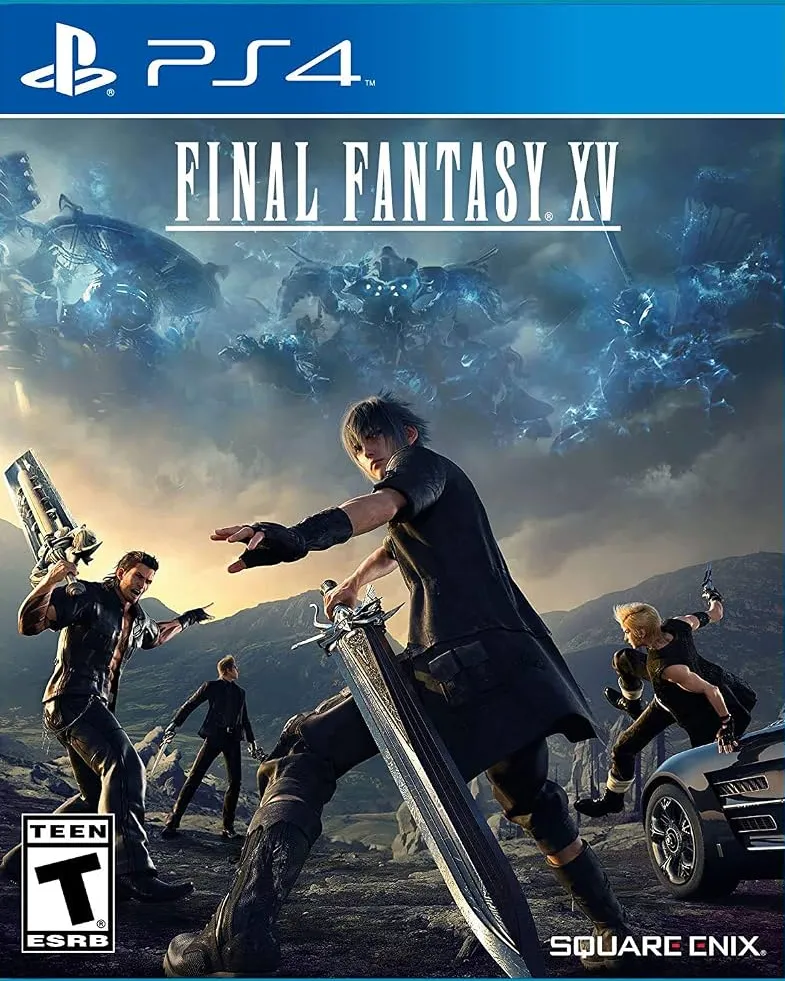
Final Fantasy 15
Over its long history the FF series has featured quite a few rulers and other royals, but Final Fantasy 15 presents a unique take on the very concept of power. The game is set in an alternate version of modernity where the Lucis dynasty is at the helm. Its representatives are literally endowed with a divine right to rule, since only they have the ability to stand against the darkness.
Nevertheless, Noctis is not particularly eager to rule his subjects. At the very start of the story he holds the title of prince, but soon becomes king, and for most of the game he is far from his kingdom, traveling with friends, to ultimately realize several important truths and then sacrifice himself for his people. It is a rather emotional journey, through which runs like a white thread the idea that a ruler must serve his people until death.
Crusader Kings
Surely all fans of grand strategies remember that the Crusader Kings series acquired all its signature features precisely with the second part. The sequel boasted an excellent implementation of many European kingdoms and their constantly changing borders, as well as amazing attention to detail — for example, even a simple conversation with an ordinary peasant could have far-reaching consequences affecting your reign. Such a level of detail both frightens and delights.
At the same time no one guarantees that you will ultimately manage to become king, though that is the unspoken goal for most players. Most likely you yourself will want to reach the highest office and seize as much land as possible, conquering almost the entire continent. And if you manage to do this in the sequel, try to repeat the trick in Crusader Kings 3, where characters have more complex personalities and more reasons to scheme against you.
Reigns
Nowadays many dating sites and apps (especially Tinder) resemble games more: we quickly browse photos and descriptions, swipe left or right, and then move on to the next candidate. This process turned out surprisingly addictive and, if desired, can go on indefinitely. So it's no surprise that Reigns appeared on the market — a game that uses in its gameplay exactly the same mechanics as dating apps.
Reigns is, in essence, Tinder where during swipes you have to monitor four characteristics of your kingdom. If even one of them rises too high or falls too low, your reign immediately comes to an end. But the game does not end there. After that you are given a new monarch, then the next, and this cycle continues until you get tired of it.
Civilization
In fictional universes royal families are usually depicted quite differently than if they existed in reality: authors embellish the characters of monarchs and their relatives, as well as various aspects of their daily lives. The Civilization series does the same, but with actually existing rulers. In any installment of the franchise you can meet dozens of outstanding people who at one time or another led whole peoples, countries and civilizations.
Of course, not all of them were in fact royals, since in many cultures this concept simply did not exist. One way or another you have the opportunity to play as Cleopatra and destroy Rome or, for example, seize huge territories as Tsar Peter, who ruled the Russian Empire. You can recreate real historical scenarios or set a completely new course of events — in Civilization everything depends only on you.
Dishonored 2
Both games are excellent immersive sims with a well-developed setting, interesting stealth mechanics and various abilities that let us feel cleverer and stronger than the numerous opponents. The plot deserves praise too, which in the original Dishonored starts with the main hero, named Corvo, being unjustly accused of murder and people trying to get rid of him.
Corvo, of course, cannot be called a member of a ruling dynasty: he was born into a poor family and managed to rise to the post of royal protector. However, in Dishonored 2 a second main heroine appears in the plot — Emily, who was effectively robbed of her father and throne, after which she sets out on a long adventure to reclaim her kingdom and deal with the conspirators.
Ni No Kuni 2: Revenant Kingdom
Despite the number in the title, Ni No Kuni 2: Revenant Kingdom is actually the fifth game in the series. Its action takes place hundreds of years after the events of the original title and tells the story of the young king Evan Pettiwhisker Tildrum, who sets out on a journey to reclaim his kingdom.
Here we are treated to exploring vast locations and plenty of real-time battles, and since the main role in the game went to the young king, we have to take an active part in building the kingdom. As the ruler we need to assign our subjects to various positions, build facilities and conduct research, and all of this is done solely on the player's initiative. It's an excellent way to demonstrate a ruler's influence on the world through gameplay mechanics.
Katamari
Games from this series boast completely crazy stories and strange yet addictive gameplay. Perhaps Katamari doesn't come to mind right away when it comes to titles devoted to royal families, but the series ended up in this selection for a reason. The main role went to the Prince of All Cosmos (and his father, as is easy to guess, is the King of All Cosmos).
The gameplay of Katamari is absurdly simple — you have to roll objects around the game world, creating from them a gradually growing ball. With every minute it gets bigger and bigger, swallowing cars, trees and other objects that come in its way. There is practically no point in this process, but there is fun in abundance.
Based on material from Genapilot. Translated from Russian.